Microplastics are a newish environmental scare but when added on to endocrine disruptors, virtual pollution, third-hand smoke, and weedkillers, it has become a good fundraising campaign for anti-science activists.
In the science world, you'll never ingest enough microplastics - the size of a single bacterium, or 1/100th a human hair in width - in 7,000 years of life to exceed the No Effect Level. But 'your food is safe' is a terrible call to action, terrifying people is where the money lives, which is why environmental groups outraise nonprofit science ones by 3,000X. (If you prefer science, you can make a tax-free donation here).
But if you are worried that microplastics will cause the disease you think more expensive Manwich cans with no BPA prevent, there is good news: climate change is being protested because it led no hurricanes this year, but that's actually a win for the microplastics world. Because hurricanes cause microplastics to get blown into one area.
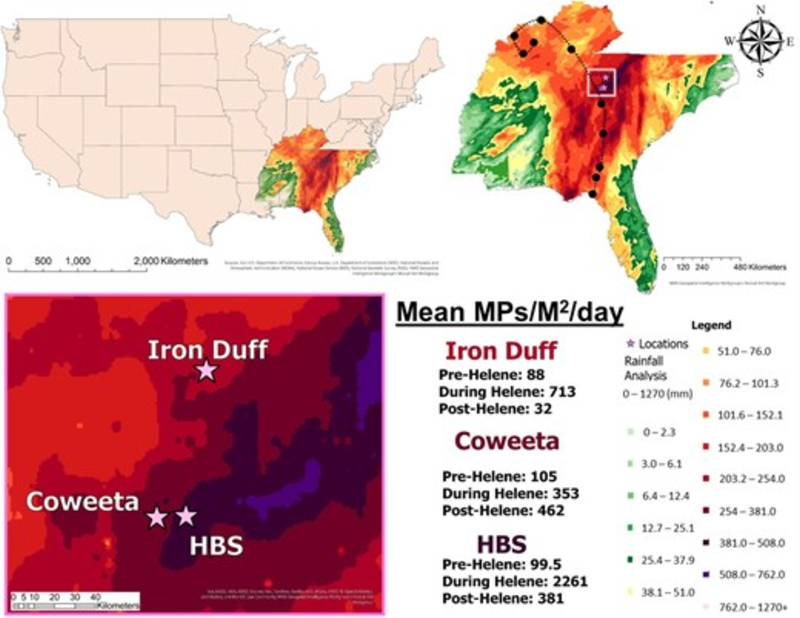
A new paper laments that Hurricane Helene caused a converge of microplastics at levels 3 to 22 times higher than before the storm. If a hurricane happened near you every day for 70 straight days, in just 100 years you'd be exposed to enough microplastic to perhaps be biologically meaningful. If you ate it all. So don't do that.
Because microplastics are the latest craze, scholars do study it. It's fine basic research, the same way shrimp on a treadmill are, and as long as policy decisions aren't made that way, it's a valid use of academia's time. In this North Carolina, they found that after the storm there was an increase of microplastics of about 20 percent of what there would otherwise be for the entire year. That's still a trivial amount, since we are talking about something the size of a bacterium, but we're in a world where activists issues press releases if a chemical is found in parts per billion, so 20 percent picoparticles more plus a credit card with $3,400 on it will get you a journal article.
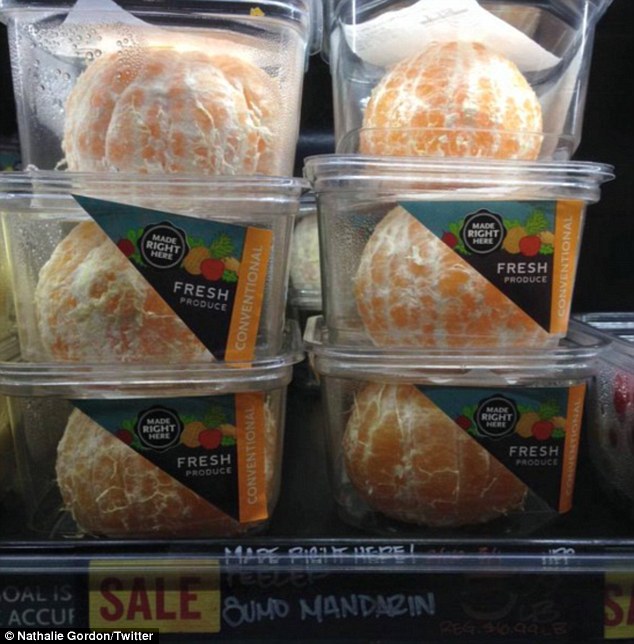
They also collected after the storm to estimate how microplastics might be circulating after a major storm in areas where it is less common. Normal aren't generally buying Whole Foods peeled oranges wrapped in plastics(1) at remote headwaters so that is a legitimate metric. Streams in the U.S. are dominated by small ones, around 70 percent of the total are tiny, so 300 to 2200 percent higher after a storm would be meaningful - if science was able to confirm it was a risk to human life or the Smurf-like "biodiversity" that means anything you want it to mean.
It isn't. Correlation is just that, and mixing in terms like "suggests", "linked to", and "emerging evidence" - not to mention computer simulations - doesn't change that.
What difference does it really make? We are in the world of estimates made using computer models that would get most people fired in the private sector so it's unclear, but plastic is bad. Yet, like pollution being bad and when that was solved activists moved from the real killer, smog, at PM10, all the way down to PM2.5 (you need an electron microscope to see it) so the 'safe level' was now 400 percent lower, continuing to make the perfect the enemy of the good erodes trust in science. Some think no pollution is bad because PM2.5 is epidemiological nonsense, and that could be the same result if we continue to claim pico-level plastic is bad for the environment because the real thing is.
But just like scaremongering is where the money is for environmentalists, researchers are smart to suggest that if storms worsen, it will have a cascade of possible effects, and get the next grant for a successful experiment. This year shows that climate change may mean far fewer severe storms, and that was not on anyone's Science Funding Bingo Card.
Citation: Austin Gray, Jason Love, Nathaniel Barrett, James Campbell, Jerry Miller, Radmila Petric, Robert Youker, Xinyue Huang, Hosein Foroutan, Influence of Hurricane Helene on microplastic deposition in the mountainous southeastern United States, Integrated Environmental Assessment and Management, 2026;, vjag130, DOI:10.1093/inteam/vjag130
NOTE:
(1) Wealthy progressive elites protested when Jeff Bezos bought Whole Foods, probably because he told the marketing department that oranges already have a natural protective wrapper, so the peeling and plastic cartons were an unnecessary higher cost. And they are paid bonuses on revenue so lower cost was a bad idea.