Among some people, a faith vacuum and distrust of AI has led to increased belief in suspect ideas like ghosts and astrology, while in others, a science vacuum has led to increased belief in suspect ideas like epidemiology and correlation.
Activist epidemiologists, enabled by gaining positions inside the International Agency for Research on Cancer in France, Ramazzini Institute in Italy, and the National Institute of Environmental Health Sciences in America, have created a crisis of confidence about science in the developed world. Because most people do not recognize epidemiology is not science. It is just correlation and therefore in the exploratory pile until science validates their belief. That is why they have to use terms like "suggests" and "linked to" along with "correlated" - their only evidence is in rows of data. Spreadsheets which can claim coin flips are biased against heads. Or tails.(1)
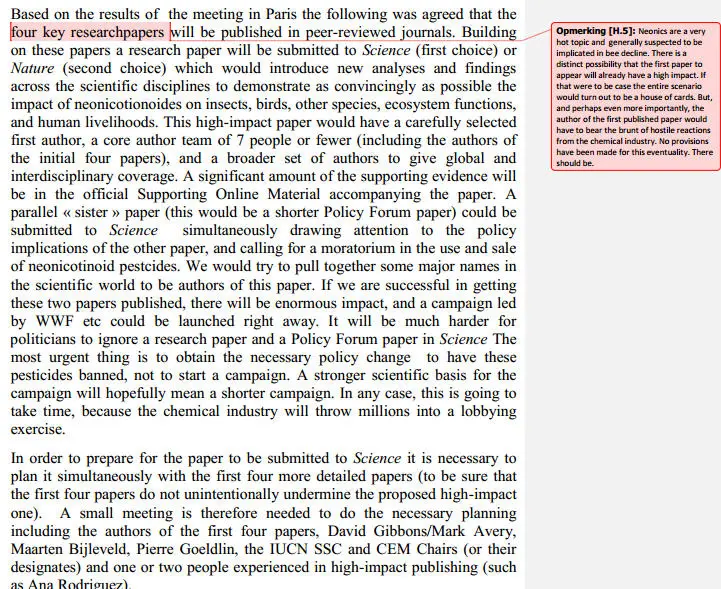
There is a reason environmental groups and others opposed to science are 3000X the revenue of the pro-science community; 'your food is safe' is a terrible call to action and 'you are doomed unless you help now' is a great one. The Precautionary Principle rules over common sense. Epidemiology feeds that revenue engine and so activists have written entire strategy documents detailing how to get a claim into a journal and then manufacture citations while getting an A-Team of allied journalists to write about it. They get puppet groups to bully scientists who disagree.(2)
The problem that has plagued epidemiology for 40 years is what now plagues AI; human bias. Epidemiologists, led by one of my personal heroes, Dr. John Higginson, confirmed what the 1964 U.S. Surgeon General's Report had shown; that smoking cigarettes causes cancer. Yes, it was epidemiology and still 'linked to' but the weight of evidence was so strong it was ridiculous to deny.
It was a huge win for public health but created a tonal shift in the field. An area that was once so methodologically conservative they were the last to acknowledge a hereditary cancer link achieved worldwide fame. That led to a generation of epidemiologists wanting to find the next 'Big Tobacco Smoking Gun.'
Now there are 9,000 papers per year claiming some chemical is killing us and nearly as many claiming some miracle diet will make us live longer. There is no science involved, but corporate media outlets need to sell advertising and doomscrolling sells well.
If you don't share their bias, you are being drummed out early. You are not getting into academia. And if you aren't in academia or at an allied environmental group but work for the private sector, you are banned from being a member of the International Agency for Research on Cancer - IARC. The U.N. body which designates itself the world cancer agency.
The private sector only hires best people to consult. IARC decrees that if you are among the best, you can't help the public understand how bacon is as hazardous to your health as plutonium. Because you might disagree with their Old Guard belief that the modern world is bad and only epidemiology sees the truth.
The bias their problem creates is the same thing that plagues LLMs - bias becomes a data pattern. If I get astrologers to peer-review a paper on astrology, am I really getting the critical view peer review should provide? A neutral epidemiologist at IARC seeing their "processed" meat claim would have noted that if never eating bacon means a 5% chance of getting colon cancer while eating 10,000 pieces of bacon creates a 6% chance of getting colon cancer, the bacon is not the problem. That is not exaggeration. IARC includes studies with five orders of magnitude for dose and then declares the hazard from 1 dose or 10,000 equivalent.
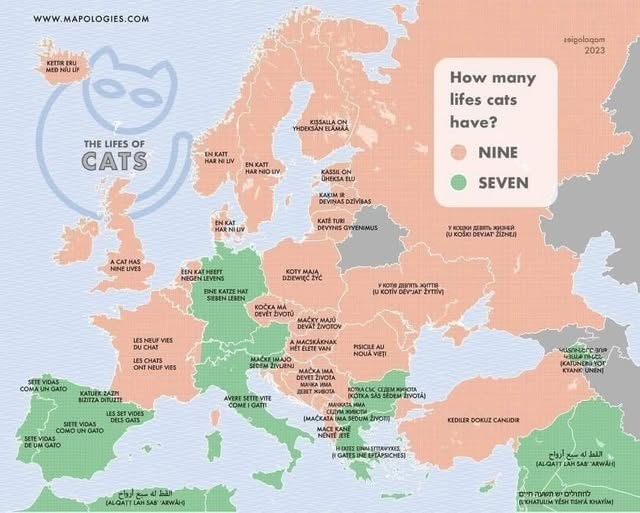
Using rows and tables of inputs and results, I can even show that lower melatonin in Germany is hazardous to cats. French cats have nine lives while German ones only have seven. Germany bans high-dose melatonin supplements.
Low melatonin, in epidemiology, is correlated to two fewer lives. Save the cats!
You see the problem right away but most do not, and AI certainly does not.
All humans have biases, not just epidemiologists. In experiments, if we ask humans to pick a random number between 1 and 10, they rarely pick 1 or 10 because those are the parameters and we want to seem random. So we humans are automatically not at a flat 10% random distribution. We start counting at 1 and seem to avoid 5 because that's the boring middle but seem to really love an odd prime, so 7 gets chosen 30% of the time.
LLMs (AI) optimize using gradient descent so a human bias becomes a consensus spike. It has created 'weight of evidence' as surely as papers produced by a human environmental cabal all citing each other do. Which means LLMs will make the distrust of science even worse. By not knowing that an unweighted random-effects meta-analysis is not just bad epidemiology, it is bad everything. Yet because it is really common in chemical claims it creates weight of evidence for AI.
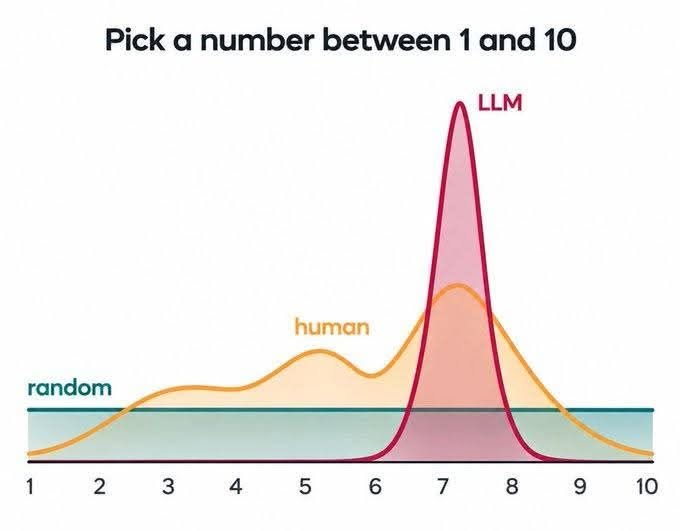
As Adam Zachary Wasserman on Twitter/X phrased it: "This is the least surprising graph in the world if you understand how gradient descent works."
Most people don't, which is why attorneys who want to sue companies over weedkillers by claiming they cause cancer, which means getting a jury to believe plants are tiny green people, file in a city like San Francisco where they hate science and love conspiracies.
They can cite weight of evidence while downplaying that none of the evidence is real. LLMs are only doing what activists have done for decades.
NOTES:
(1) And why nearly every product mentioned on content farms like WebMD can be 'linked' to cancer. Like meat, and food coloring, and weedkillers. Even though lots of other papers show the opposite.

(2) But if you are a sex predator waiting to happen, or Cock-Fixated Megalomanic as one outlet put it, and exploit a loophole as a journal like PNAS to get your paper claiming a weedkiller 'turns frogs gay' published without peer review, you get all-expenses-paid trips to groom elementary school kids to your cause without any worry about conflict of interest at all.
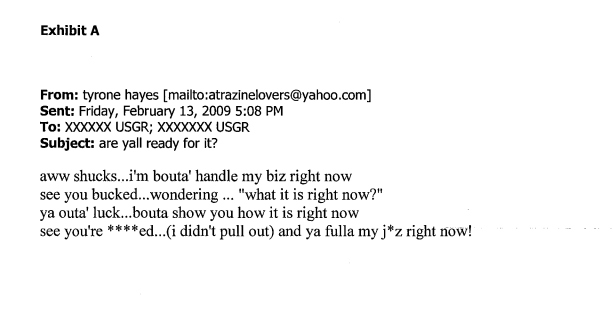
Yes, he writes stuff like this to women in government and the private sector and Pesticide Action Network sends him around talking to your children.