Fake Banner
Anxiety For Christmas: How To Cope

Christmas can be hard. For some people, it increases loneliness, grief, hopelessness and family...

The Enceladus Idea In The Search For Life Out There

A small, icy moon of Saturn called Enceladus is one of the prime targets in the search for life...

Deontological Decisions: Your Mother Tongue Never Leaves You

Ιf you asked a multilingual friend which language they find more emotional, the answer would usually...

Mummy Mia! Medicinal Cannibalism Was More Recent Than You Think

Why did people think cannibalism was good for their health? The answer offers a glimpse into the...

User picture.
The ConversationRSS Feed of this column.

The Conversation is an independent source of news and views, funded by the academic and research community and delivered direct to the public. The Conversation launched in Australia in March 2011.... Read More »

Blogroll

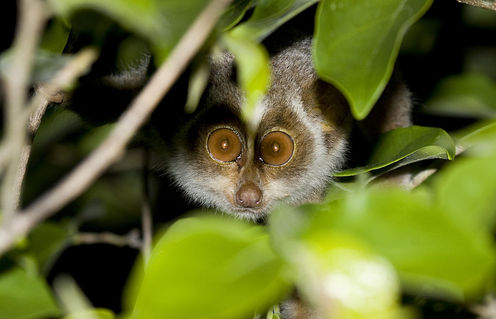
Going, going, gone: wildlife like the loris are disappearing. Credit: N. A. Naseer, CC BY-NC-ND

By Paul Jepson, University of Oxford


Giving publishing power to the people. Credit: Thinglass/Shutterstock

By Gillian Rudd, University of Liverpool


The need for caution when any anomaly is revealed in new research. Credit: Flickr/Adam Gerard, CC BY-NC-SA

By Michael J. I. Brown, Monash University

UNDERSTANDING RESEARCH: What do we actually mean by research and how does it help inform our understanding of things? What if research throws up a result that calls for a new way of thinking? How do we handle that?


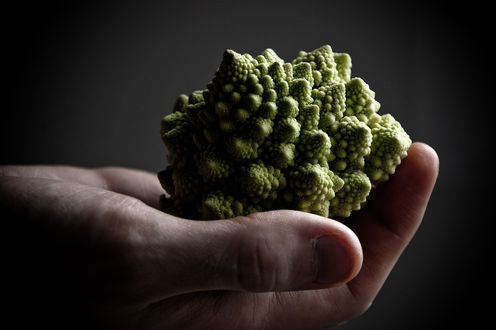
Patterns of emergence are all around us. Credit: Feliciano Guimarães/Flickr, CC BY

By Andy Martin, University of Melbourne and Kristian Helmerson, Monash University

From the fractal patterns of snowflakes to cellular lifeforms, our universe is full of complex phenomena – but how does this complexity arise?


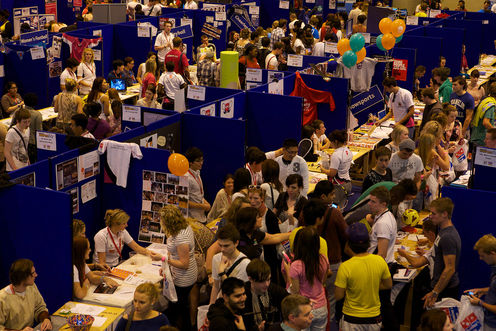
How many freebies can you carry? Credit: Nottingham Trent University, CC BY-NC-ND

By Kira Shaw, University of Sheffield


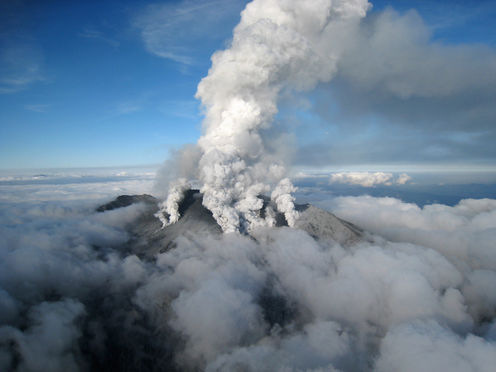
Phreatic eruption: Mount Ontake. Credit: EPA/Ministry of Land, Infrastructure

By Rebecca Williams, University of Hull

Mount Ontake, Japan’s second-highest volcano, erupted killing at least 31 people on September 27.

Since then, there has been feverish speculation about why tourists were on an active volcano and why the eruption wasn’t predicted.