Living At The Polar Circle
Since 2022, when I got invited for a keynote talk at a Deep Learning school, I have been visiting...
 Conferences Good And Bad, In A Profit-Driven Society
Nowadays researchers and scholars of all ages and specialization find themselves struggling with...
 USERN: 10 Years Of Non-Profit Action Supporting Science Education And Research
The 10th congress of the USERN organization was held on November 8-10 in Campinas, Brazil. Some...
 Baby Steps In The Reinforcement Learning World
I am moving some baby steps in the direction of Reinforcement Learning (RL) these days. In machine...
       |
Tommaso Dorigo Tommaso Dorigo is an experimental particle physicist, who works for the INFN at the University of Padova, and collaborates with the CMS and the SWGO experiments. He is the president of the Read More » |
Blogroll |

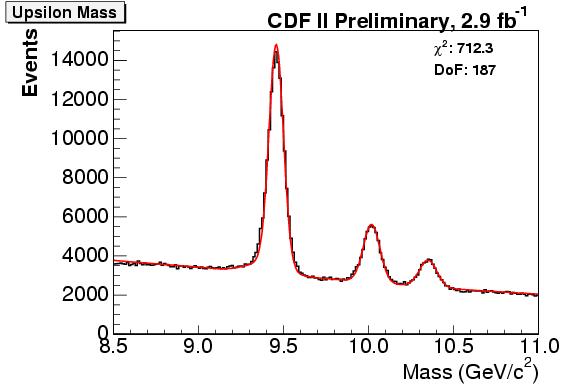
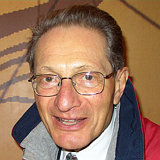
 I was saddened today upon hearing of the death of Franco Rimondi, a colleague in the CDF experiment. Franco was a professor of physics at the university of Bologna since 1980. His research in particle physics encompasses the last forty years, during which he collaborated with many experiments, starting with bubble chamber kaon decay studies in the late sixties, and then ADONE at Frascati in the seventies, and the split field magnet (SFM) at CERN. The experiment he spent most of his research career on was however probably CDF, at the Fermilab Tevatron collider.