Beamlines

Robert H Olley

Robert H Olley

Until recently, I worked in the Polymer Physics Group of the Physics Department at the University of Reading. I would describe myself as a Polymer Morphologist. I am not an astronaut, but I am a "Real Space Man" in the sense that I look down microsc…
RSS Feed
Gadflies and Geniuses

Gadflies and Geniuses

I gets weary, and sick of trying … the words almost taken from Ol' Man River.  But weary of what?  Trying to persuade the physics world from harping too much on about celebrity physicists.  This they do (at least in my reading) to an extent grossly exceeding that of mathematicians and chemists.  “How will we discover the African Einstein?” they ask, to which I reply that a wilderness of Einsteins would do Africa no good at all, whereas a widespread knowledge of basic physics might help the continent somewhat.  Even if Mariah Carey’s new album E=MC² inspires some to take up physics, most will fall exhausted before reaching such high levels.

Go Blue To Clear Those Office Blues!

Go Blue To Clear Those Office Blues!

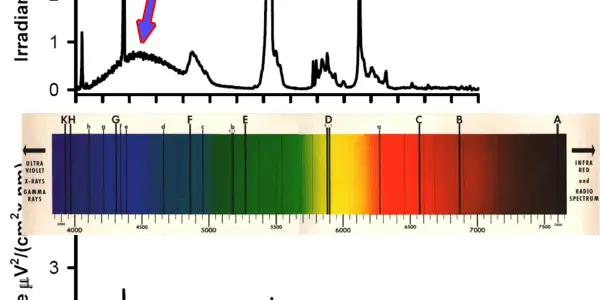
Does your office lighting make you feel weary and dreary?  The cure may be at hand!  Recently, Professor Derk-Jan Dijk of the Surrey Sleep Centre has led a team testing out new bulbs with a colour temperature of 17,000 Kelvin and found that they increase alertness as compared with more traditional types of lighting. But this sounds rather alarming.  17,000 Kelvin would be the temperature of a star close to B3 in the main sequence, somewhere between Alkaid and Regulus in properties.  The luminance of these stars is largely in the ultravio

Ethnomathematics and History

Ethnomathematics and History

Ethnomathematics! Doesn’t the very term conjure up visions of politically correct wallahs (and walis) trying to prove, in a postmodern way, that “all cultures are equal”?True, previous generations of math historians had tended to be unjustifiably Eurocentric, though the really great ones, like the Swiss-American Florian Cajori (1859 - 1930) were certainly not so. But to me there are two great benefits to be gained from the study of the maths of the East.Firstly, the achievements of China, India and the Middle East give the lie to any postmodern assertion (if that’s not an oxymoron) that mathematics is a culture-dependent thing without any fundamental underlying reality.

Was Hippasus pushed? (and other mysteries of mathematics)

Was Hippasus pushed? (and other mysteries of mathematics)

Was Hippasus pushed?

If you are even mildly interested in the history of mathematics, it is likely that you will have heard something like the following story. The Pythagoreans (who were also into music in a big way) worshipped numbers, and believed them to be the basis of everything. If one were to do a modern caricature of this, it might go:

Do you believe in Rock ’n’ Roll?
Can mathematics save your soul?

By numbers, they meant whole numbers or positive integers. Whether this included ‘one’ is a moot point, because later Greek mathematicians regarded ‘one’ as the ‘generator of numbers’. One day, a man called Hippasus discovered that the square root of 2 was irrational. This went so much against the Pythagorean world view that they took him out to sea and threw him overboard.

It didn’t stop there, though.

Fleming rules not-OK

Fleming rules not-OK

FLEMING DOES NOT RULE OK!

These could be what Physics World calls Lateral Thoughts, because I originally wrote this horizontally with my leg in plaster. Here follow some snapshots of my journey through Physics, which is not a straightforward one like that of Marco Polo, but a meandering one like that of the 14th century Moroccan traveller Ibn Battuta. But this is no random selection, but a selected album entitled “Electromagnetism.”

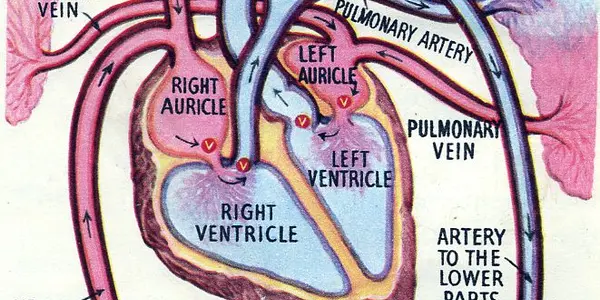
The prologue to this tale finds me as a pre-teenager in the mid 1950’s, poring over my Pictorial Encyclopaedia. I eagerly drink in the graphical information along with the textual, and today I still recall the story of our Earth being pulled out of our Sun, along with the other planets, by a passing star. My chief custard pie, though, is reserved for the illustrator who depicted the arteries and ventricles of the heart, on both sides, as blue, and similarly the veins and auricles in red.

TS2 on Target – view from the LOQ cabin

TS2 on Target – view from the LOQ cabin

Recently some people have disputed the existence of the NEUTRON, which if this had any sound basis would cast doubt on some of my recent activities. Maybe this is because the neutron has not had much of an impact in popular culture. The only item that I remember is a song Yes to the Neutron Bomb (1981) by the Liverpool Group “Moderates”.

I first went a-neutron scattering about three years ago. I arrived at the Rutherford Appleton Laboratory near Oxford, and went to the ISIS facility. After getting my badge and doing the safety test, I walked through the experimental hall (picture) and found myself entering a room entitled “LOQ CABIN”, although it did not look at all as if Abraham Lincoln had been born there. But what is the point of scattering neutrons?

"I Hate Work!" (and I don't do Applied Mathematics)

"I Hate Work!" (and I don't do Applied Mathematics)

A bizarre title, but nothing to do with the fact that I am constitutionally lazy. Rather, it is related to the war I and a colleague are attempting to wage against the way physics is (in the UK at least) treated as a form of applied mathematics.

It also has direct application to astrophysics – I know one student who went to study physics at university in 2002, in large part attracted by astronomy, but after a second year including astrophysics was saying "I hate stars." He was quite reasonable at maths, but it is the way that the subject was presented that put him off.

Is the Ring destined for the Cracks of Doom?

Is the Ring destined for the Cracks of Doom?

I first came across the word synchrotron in connection with the Crab Nebula, as well explained here at Hyperphysics. However, the phenomenon is these days very much down-to-earth: last weekend I returned from our last ever session at the Daresbury Synchrotron, which is soon to be shut down (final public use Saturday 1st August 2008).

It first came on-line for experiments in 1981: prior to that, intense X-ray and hard UV synchrotron radiation was obtained as a by-product through “parasitic” operation on particle storage rings. Among others, Reading’s own Keith Codling had shown that much more useful science was being obtained from the synchrotron radiation than from the particle experiments. As a result of their concerted effort, the first Second-Generation light source was built at Daresbury.

Mathematical Tomb Raiding ... or Symmetry and the Standard Model (2)

Mathematical Tomb Raiding ... or Symmetry and the Standard Model (2)

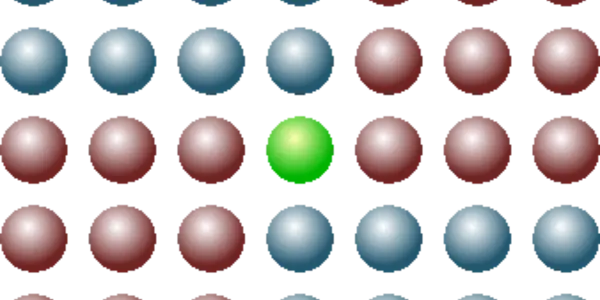
Have you ever been puzzled by a statement like this: “Rotating a spin-1/2 particle by 360° does not bring it back to the same quantum state, but to the state with the opposite quantum phase; this is detectable, in principle, with interference experiments. To return the particle to its exact original state, one needs a 720° rotation.” (Wikipedia). Last week I zoomed back to 1820 and introduced Ørsted and his famous experiment, and left you with a promise of going mathematical tomb raiding.

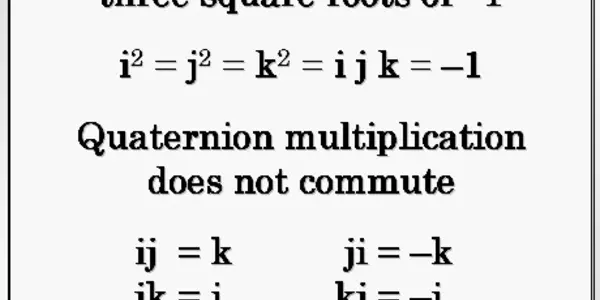
Tomb Raider was first released in 1996 for the Sega Saturn, and other platforms followed. The lore has it that this was the first mass market video game to be programmed using quaternions. Prior to that, rotations had been represented by Euler Angles or similar. Imagine you are flying an aeroplane. You are going in direction A, heading up or down at angle B, and your wings are tilted at angle C. Euler’s achievement in introducing these to the worlds of mechanics, astronomy, etc., in the mid-18th century was a landmark in itself. But they do come with mathematical problems when you are flying and tumbling at the speed of Lara Croft, one of which is that in certain orientations you can get a bad case of gimbal lock. Step in quaternions: the mathematical tomb raider who brought these to the worlds of video gaming and flight simulation appears to be Ken Shoemake, of the University of Pennsylvania, with a seminal paper in the journal Computer Graphics, 1985. But whom exactly did he, so to speak, “excavate”?

Symmetry and the Standard Model (1)

Symmetry and the Standard Model (1)

It’s Physics World time again, folks!
This month’s (July 2008) issue has a cover headline “On reflection: Symmetry and the Standard Model”, and a diagram of the 8-dimensional E8 group squashed flat like a beached jellyfish on the 2-dimensional page. The article itself (by Stephen Maxfield of Liverpool University) is as good a summary of the development the Standard Model as I’ve come across, and does serve to persuade me that those guys, by and large, really do know what they’re talking about. But what are they talking about?

Pi or 2 Pi – that is the question

Pi or 2 Pi – that is the question

In February this year there appeared in Physics World an article entitled Constant Failure by Robert P Crease of Stony Brook University, in which he showed in how many formulae of physics and mathematics 2π turns up, rather than π. This article struck a chord with me, since even after many years I remember the feeling of “cognitive dissonance” when being taught that the formula was 2πR rather than πD.
I felt it a bit much, though, suggesting that Archimedes might have been mistaken in choosing to calculate the ratio of circumference to diameter rather than to radius. In those days, the fundamental dichotomy seems to have been between the geometers who thought of circumference, diameter and their ratio, and the astronomers who used the radius in their calculation of chord tables.
Hipparchus used a radius of 3438 which is the nearest integer to the number of minutes in 1 radian, but Ptolemy preferred 3600 as this is easier to calculate within the sexagesimal system. The work of these astronomers, further developed by Hindu and Arabic mathematicians, gives us our trigonometry of today.