BrinStorming

DavidBrin

DavidBrin

David Brin is a scientist, public speaker, technical consultant and author of books including The Postman, Startide Rising, The Uplift War and Existence. His novels, translated into more than twenty languages, have been New York Times Bestsellers, wi…
RSS Feed
A Sudden Burgeoning Into Space? From Astronomy To SETI And The Commercialization Of Space...

A Sudden Burgeoning Into Space? From Astronomy To SETI And The Commercialization Of Space...

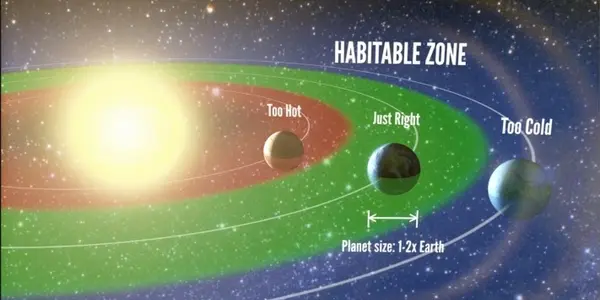
The Exoplanet next door: Astronomers have discovered the lowest-mass planet yet orbiting a Sun-like star. But the even-more exciting news is that it orbits α Centauri B, a member of the stellar system that is our Solar System’s nearest neighbour. Although nearly identical to Earth in mass, the planet is much closer to its star than Mercury is to the Sun, meaning that it is likely a scorched and barren rock.

Crowd-Sourcing Citizen Science, Ideas And Innovation

Crowd-Sourcing Citizen Science, Ideas And Innovation

Citizen engagement is essential to our fast-changing civilization. Politics could certainly use more empowerment of common citizens. So could innovative commerce, and even national defense relies on a robust citizenry. But one area with especially bright prospects, is crowd-sourced -- or individual participation in -- inventiveness and science.

Intelligence, Uplift And Our Place In A Big Cosmos

Intelligence, Uplift And Our Place In A Big Cosmos

A balanced and well-researched Wired article by Jason Kehe reveals the latest "yoo-hoo transmission to aliens"  stunt.  Of course I consider these things to be, at best, dopey, with a small but significant chance of being thoughtlessly dangerous for all of humanity.  Above all, to cast such noises outward, based on untested assumptions, without at least offering to discuss it first with our planet's population and its greatest sages?  That is simply rude.

The New Modernism: Blending Science, Engineering, Art And Human Imagination

The New Modernism: Blending Science, Engineering, Art And Human Imagination

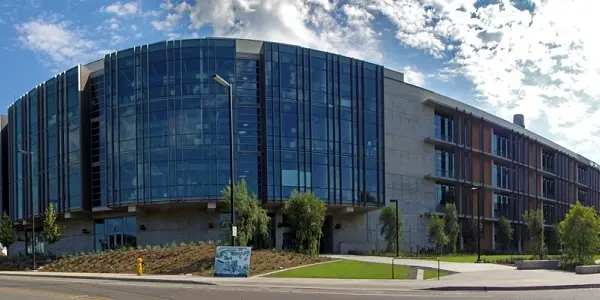
INTRO:  On September 14, 2012, I served as the guest speaker at the grand opening and dedication of the new Structural/ Materials Engineering Building at UC San Diego (UCSD).  Present also and offering remarks were Frieder Seible, Dean of the Jacobs School of Engineering; Pradeep Khosla, the new Chancellor of UCSD; Nathan Fletcher, State Assemblyman; Seth Lerer, dean of UCSD's Division of Arts and Humanities; and Karl Beucke, President of Weimar's famed Bauhaus Universit

The Near Future Of Manned Spaceflight

The Near Future Of Manned Spaceflight

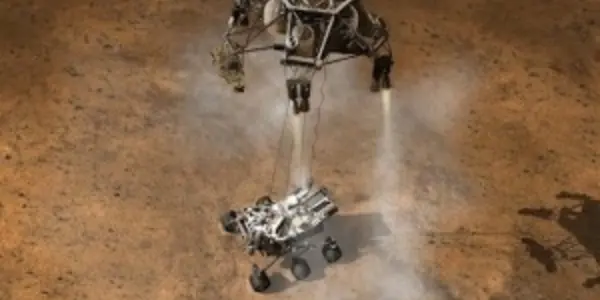
I've been feeling a bit inspired about our prospects in space, lately.  Foremost (of course) by the incredible competence displayed by the makers of the Curiosity probe that landed on Mars, last week, and the JPL controllers and the citizenry that backed such a wonderful venture.  

Are Animals Intelligent ... Enough?

Are Animals Intelligent ... Enough?

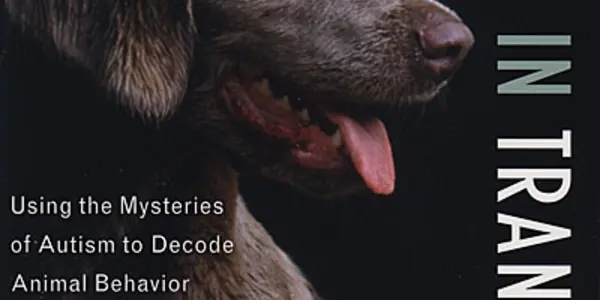
A recent, fascinating recent study is Decoding Animal Languages, by Con Slobodchikoff.  At one level, it is an inspiring demonstration of how new technologies can liberate us from preconceptions and open new avenues of empathy, helping humans to understand the other species who co-inhabit this planet with us.

Human Evolution: Speeding? Splitting? Borging? And The Future Of The Olympics

Human Evolution: Speeding? Splitting? Borging? And The Future Of The Olympics

A number of recent web-notables all seem to revolve (eccentrically) around the question of human evolution.  Whether it continues. Whether there is such a thing as "selection in groups." Whether our technological (cyborg) augmentations and/or increasing numbers of "non-neuro-typical" society members portend a new splitting of human destiny. And it looks as if I should have set Existence just five years in the future, instead of 35!

Where Are The Extraterrestrials? The People Speak...

Where Are The Extraterrestrials? The People Speak...

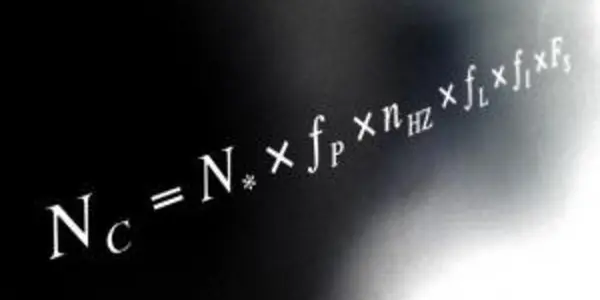
We

live in times of extraordinary discovery. Exoplanets appear to be quite common

in our galaxy. NASA’s Kepler Telescope has identified over 2,000 planetary

candidates orbiting other stars. And yet the universe appears to be silent – at

least when it comes to any detectable signs of alien civilizations, either at

present in our galaxy or their remnants from the last couple of billion

years.  

Is Our Time In Outer Space Finally At-Hand?

Is Our Time In Outer Space Finally At-Hand?

Last week it was asteroid mining, as Peter Diamandis and his partners showed us their bold new venture, Planetary Resources,

aiming eventually to start harvesting trillions of dollars worth of

materials that would then no longer have to be ripped out of Mother

Earth.