Hydrogen - Without The Nasty Carbon Footprint

Hydrogen - Without The Nasty Carbon Footprint

Penn State researchers say they can produce greener, less expensive hydrogen for fuel using water, solar energy and nanotube diodes that use the entire spectrum of the sun's energy. Currently, the…
The Problem is Too Much Biological Complexity

The Problem is Too Much Biological Complexity

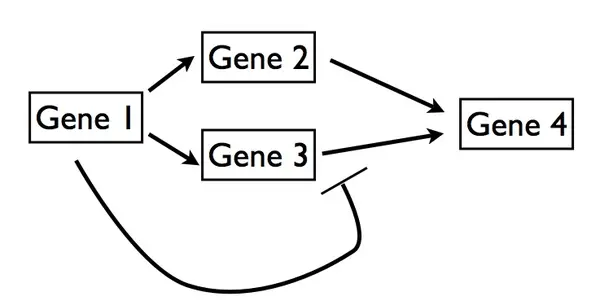
We like to talk about the amazingly complex machinery of the cell: flagella that resemble finely tuned outboard motors, or complex information processing circuits that help a cell process information…
Evolution: Education and Outreach online

Evolution: Education and Outreach online

As many of you are aware, a new journal entitled Evolution: Education and Outreach was launched in late 2007, with three issues now available.  What you may not know is that the journal also…
The Downside To Plant Sterols

The Downside To Plant Sterols

Plant sterols have been touted as an effective way to lower cholesterol and reduce the risk of heart disease. However, a research study in the July JLR has uncovered that these compounds do have…
Iceland's Magma Chambers

Iceland's Magma Chambers

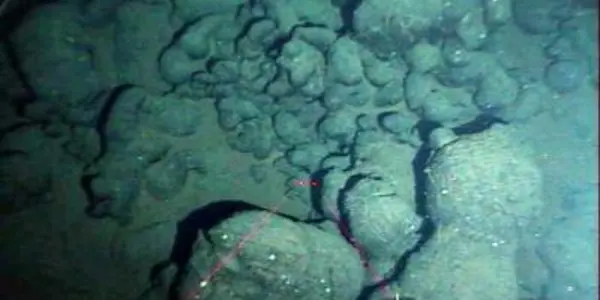
For the first time, researchers have taken a detailed look at what lies beneath all of Iceland's volcanoes – and found a world far more complex than they ever imagined. They mapped an elaborate maze…
Wordle fun!

Wordle fun!

Carl Zimmer has posted a spiffy summary of the word usage in his book Microcosm using the super cool Wordle site. For fun, I put in the text of two recent papers (one in press, one in review).…
Target: Ocean Methane

Target: Ocean Methane

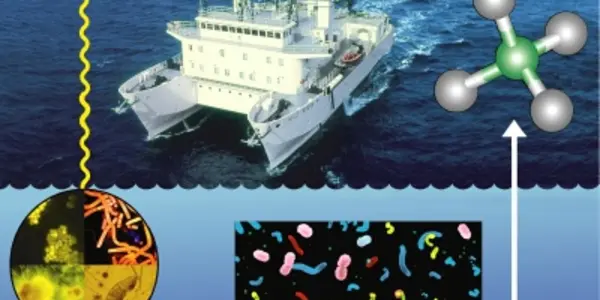
A new pathway for methane formation in the oceans has been discovered, with significant potential for advancing our understanding of greenhouse gas production on Earth, scientists believe. A paper on…
Can Microbial Ecology Solve The Energy Crisis?

Can Microbial Ecology Solve The Energy Crisis?

Nothing knows how to survive changes on Earth like bacteria. Microorganisms once reigned supreme on the Earth and they thrived by filling every nook and cranny of the environment billions of years…