Genetic clue in heart disease

Genetic clue in heart disease

Geneticists have discovered a new gene that may put individuals at higher risk of developing cardiovascular disease. The identification of the gene, called kalirin, implicates a biological…
Degrading ionic liquids

Degrading ionic liquids

Ultrasonic irradiation can break down ionic liquids into more environmentally benign compounds, say scientists. Ionic liquids are widely regarded as a greener alternative to many commonly used…
Fingerprinting the Milky Way

Fingerprinting the Milky Way

Using ESO's Very Large Telescope, an international team of astronomers has shown how to use the chemical composition of stars in clusters to shed light on the formation of our Milky Way. This…
Making mice with enhanced color vision

Making mice with enhanced color vision

Researchers at the Johns Hopkins School of Medicine and their colleagues have found that mice simply expressing a human light receptor in addition to their own can acquire new color vision, a sign…
Fishing for Organic Chemists

Fishing for Organic Chemists

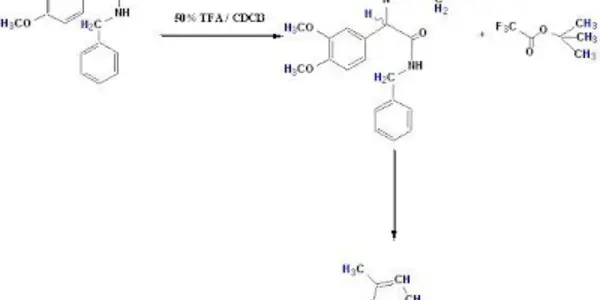
I realize that the audience for this blog tends to be more broad based than on UsefulChem but once in a while I'll throw in an organic chemistry puzzle to see if there are any organic chemists out…
New views of Saturn

New views of Saturn

The Hubble Space Telescope (HST) has produced some of the most famous still images in astronomy (e.g., the pillars of creation in the Eagle Nebula). The latest images from HST are movies of…
Genetics for the public

Genetics for the public

Marie Godfrey has left a comment on one of my posts recently, and asked me whether I’d like to write about her blog and the Genetic Alliance non-profit organization. They both try to make genetics…