Mark Pierce

Mark Pierce

Retired geologist and earth scientist, specialising in ore deposits and isotope geochemistry. Before retirement, I led the Australian government's pre-competitive geoscience programs for minerals and energy.
RSS Feed
AI And The End Of Human Exceptionalism

AI And The End Of Human Exceptionalism

Over the last two years, generative AI has smashed our ideas of what intelligence means, what AI can and cannot do, and of our place in the cosmos. A two-thousand year old journey from Aristotle to today, has culminated in a moment where human exceptionalism has finally been challenged.

Bringing Climate Change Into Physics Classrooms

Bringing Climate Change Into Physics Classrooms

Physics is one of the most remarkable scientific subjects there is. It incorporates many incredible discoveries, like The Quantum Leap, the Law of Falling Bodies, Universal Gravitation, and the Laws of Motion. 

Science Communication In Cosmetics

Science Communication In Cosmetics

Cosmetics have been used for millennia, and in every family, there are mythical beauty treatments, and all over social media, there are skincare routines that belong in a dystopian science fiction novel, and not on your skin. Dr.

Enhanced Weathering And Protecting The Climate

Enhanced Weathering And Protecting The Climate

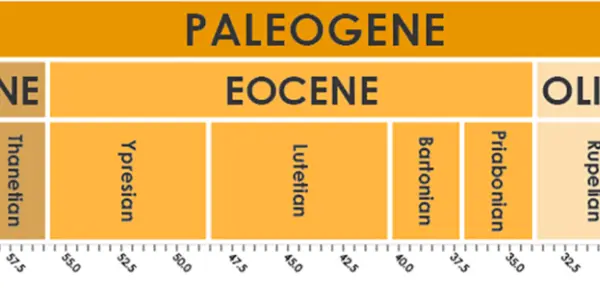
Global warming is not new to the history of our planet, and so, by studying previous periods of global warming, scientists hope to uncover secrets that can be used to combat global warming today. The Middle Eocene Climatic Optimum, which occurred some 40 million years ago, has attracted particular scrutiny because of its unique properties.

Why Including Self-Advocating Autistic People In Research Is Key To Effective Autism Treatments: A Look At Applied Behavior

Why Including Self-Advocating Autistic People In Research Is Key To Effective Autism Treatments: A Look At Applied Behavior

Autism is a neurodevelopmental disorder that affects communication, social interaction, and behavior, with a prevalence of one in 54 children in the United States. While there is no cure for autism, there are several therapies that can help children with autism improve their communication, social skills, and behavior. However, autism is often discussed in ways that suggest that autistic people are subjects who cannot actively participate in their own treatment, and this has led to autism treatments that do not benefit autistic people being promoted.What is Autism?

Uncovering The Genetic Roots Of ADHD: How Early Brain Development And Dopamine Play A Role

Uncovering The Genetic Roots Of ADHD: How Early Brain Development And Dopamine Play A Role

The complexities of the human brain and its underlying genetic and biological mechanisms are truly fascinating. A recent study by scientists at Aarhus University sheds new light on the genetic factors underlying attention-deficit/hyperactivity disorder (ADHD), a common neurodevelopmental disorder affecting millions of people worldwide. By studying over six million genetic variants in nearly 40,000 people with ADHD and almost 187,000 without ADHD, the researchers identified 27 genetic risk variants for the disorder. These risk genes are expressed in the brain and neurons, particularly dopaminergic neurons, which play a role in reward response and the concentration of dopamine in different brain regions.The Importance of the Study