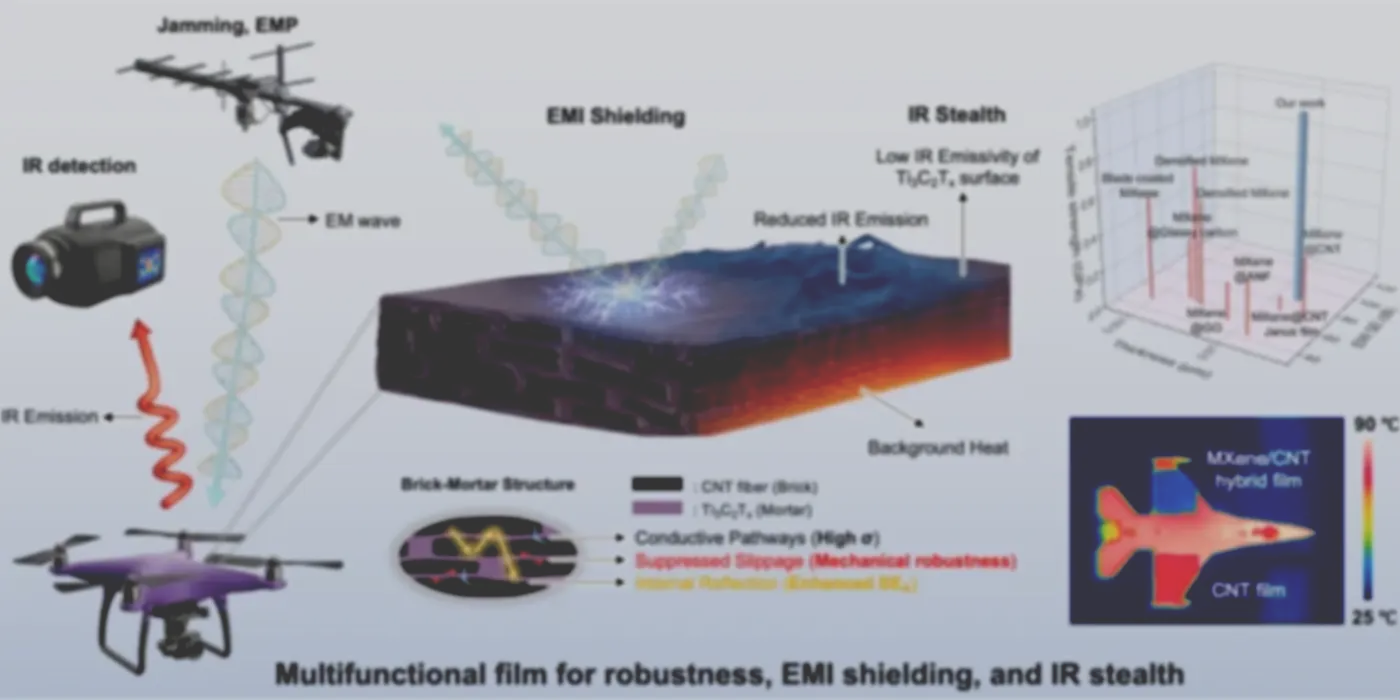
Carbon Nanotube Has EMI And Hides Heat
Researchers have developed a composite film that combines electromagnetic interference shielding, infrared stealth, and high mechanical strength using carbon nanotube fibers and MXene.
Researchers have developed a composite film that combines electromagnetic interference shielding, infrared stealth, and high mechanical strength using carbon nanotube fibers and MXene.


While showing impressive growth prenatally, the human brain is not completed at birth. There is considerable brain growth during childhood with dynamic changes taking place in the human brain throughout life, probably for adaptation to our environments.
Evidence is accumulating that brain structure is under considerable genetic influence [Peper et al., 2007]. Puberty, the transitional phase from childhood into adulthood, involves changes in brain morphology that may be essential to optimal adult functioning. Around the onset of puberty gray matter volume starts to decrease, while white matter volume is still increasing [Giedd et al., 1999].
The presence in the environment of large quantities of toxic metals such as mercury, lead, cadmium, zinc or others, poses serious health risks to humans, and this threat puts the scientific community under pressure to develop new methods to detect and eliminate toxic contaminants from wastewaters in efficient and economically viable ways.
Resulting from the combination of water treatment investigations with the latest in material science, a new type of nanomaterial called nanostructured silica has been found to fulfill the requisites necessary for these applications.
Aspirin is a common recommendation for heart attack prevention, but new research suggests that this may really only be a man's drug.
Scientists have long puzzled over why the protective effects of aspirin vary so widely between clinical trials. Some trials show no difference between aspirin and placebo, whilst others report that aspirin reduces the risk of a heart attack by more than 50%.
This latest study, from The James Hogg iCAPTURE Centre for Cardiovascular and Pulmonary Research, highlights the influence of gender on aspirin's protective powers. Investigators examined the results of 23 previously published clinical trials for the effect for aspirin in heart attack prevention, involving more than 113,000 patients.
Health insurance reform plans that build on a mix of private and public health insurance, where costs are shared among government, employers, and enrollees would have great potential to move the system to high performance and would be the most practical to implement according to a new report released today by The Commonwealth Fund Commission on a High Performance Health System.
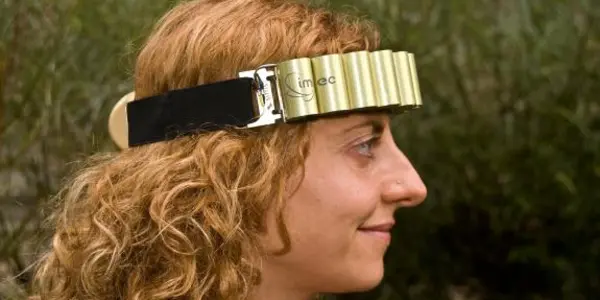
Interuniversity Microelectronics Centre (IMEC) has developed a 2-channel wireless EEG (electroencephalography or monitoring of brain waves) system powered by a thermo-electric generator. It uses the body heat dissipated naturally from the forehead. The wearable EEG system operates completely autonomous and maintenance-free with no need to change or recharge the batteries. This is a major advantage for body-worn sensors, a key theme in the Human++ program within the Holst Centre.
The entire system is wearable and integrated into a headband. The small size, low power consumption of only 0.8mW and autonomous operation increase the patient’s autonomy and quality of life.
It’s hard to think of scientists in laboratories working toward solutions for medical problems without mice or other laboratory animals, but animals’ roles in at least one major research laboratory may soon be minimal.
Researchers at the University of Missouri-Columbia's Comparative Orthopaedic Laboratory (COL) have developed an in vitro model using small sections of joint capsule and cartilage typically discarded that mimics arthritic joints. This "joint in a test tube" model can be used to investigate causes and mechanisms for the development and progression of arthritis and to screen new treatments such as pharmaceuticals.
The MU research team which developed this model has shown that the results have valid and direct clinical implications for arthritis in dogs and humans.

As the weather cools and Halloween approaches, creaks in the stairs and scary stories become more believable -- but not to physics professor Costas Efthimiou.
The laws of physics and math debunk popular myths about ghosts and vampires, according to a paper published by Efthimiou and Sohang Gandhi last year.
Using Isaac Newton's Laws of Motion, Efthimiou demonstrates that ghosts would not be able to walk and pass through walls.
Basic math disproves the legend of humans turning into vampires after they are bitten, Efthimiou explains, because the entire human population in 1600 would have been wiped out in less than three years.

Astronomers have located an exceptionally massive black hole in orbit around a huge companion star. This result has intriguing implications for the evolution and ultimate fate of massive stars.
The black hole is part of a binary system in M33, a nearby galaxy about 3 million light years from Earth. By combining data from NASA’s Chandra X-ray Observatory and the Gemini telescope on Mauna Kea, Hawaii, the mass of the black hole, known as M33 X-7, was determined to be 15.7 times that of the Sun. This makes M33 X-7 the most massive stellar black hole known. A stellar black hole is formed from the collapse of the core of a massive star at the end of its life.
Cashew nut fossils have been identified in 47-million year old lake sediment in Germany, revealing that the cashew genus Anacardium was once distributed in Europe, remote from its modern “native” distribution in Central and South America.
It was previously proposed that Anacardium and its African sister genus, Fegimanra, diverged from their common ancestor when the landmasses of Africa and South America separated. However, groundbreaking new data in the October issue of the International Journal of Plant Sciences indicate that Europe may be an important biogeographic link between Africa and the New World.

A new paper estimates that fires in the continental United States and Alaska release about 44 metric tons of mercury into the atmosphere every year. It is the first study to estimate mercury emissions for each state, based on a new computer model developed at NCAR.
The authors caution that their estimates for the nation and for each state are preliminary and are subject to a 50 percent or greater margin of error.
Forest fires and other blazes in the United States likely release about 30 percent as much mercury as the nation's industrial sources, according to initial estimates in a new study by scientists at the National Center for Atmospheric Research (NCAR).
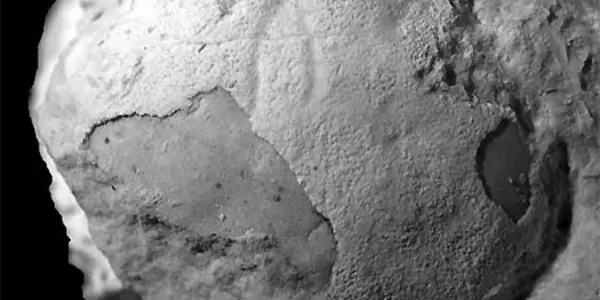
Researchers from Kent State University and the University of Bucharest, Romania, have discovered a new primitive crab species Cycloprosopon dobrogea in eastern Romania. Previously unexamined, these ancient crabs from the Prosopidae family existed more than 150 million years ago during the Jurassic period.
“Studying primitive and extant crabs helps determine various aspects of biodiversity and patterns of evolution, such as when arthropods diversified,” says Dr. Carrie Schweitzer, associate professor of geology at Kent State University.
Have you ever wondered why you inherited your mother’s smile but not your father’s height? Researchers at the Universities of Leeds and Dundee are one step closer to unravelling how nature combines both maternal and paternal DNA to create genetically unique offspring.
In a world first, Leeds researchers Professor Simon Phillips, Dr Stephen Carr and Dr Jonathan Hadden, together with Professor David Lilley at Dundee, have mapped the 3 dimensional structure of an enzyme responsible for splitting DNA strands – a process at the heart of human individuality.
The discovery of the T7 endonuclease 1 enzyme’s structure was made by using x-ray crystallography techniques.