Carbon Nanotube Has EMI And Hides Heat
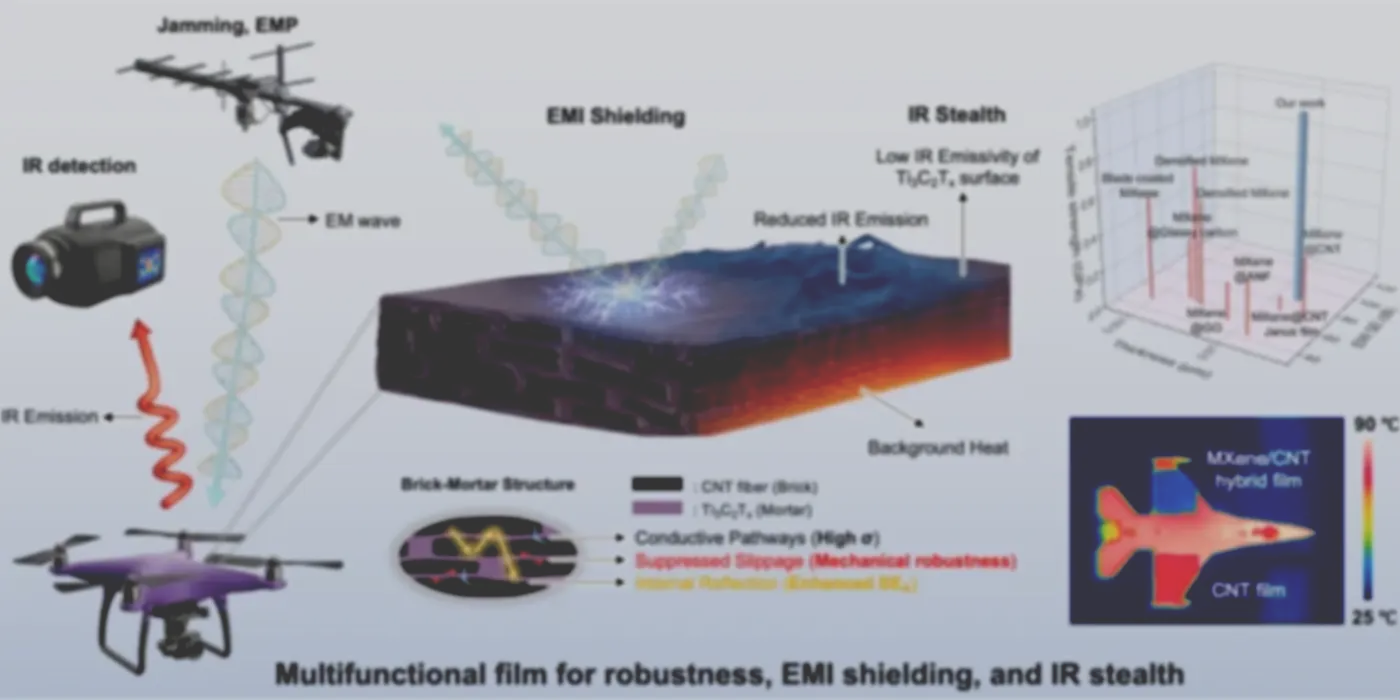
Researchers have developed a composite film that combines electromagnetic interference shielding, infrared stealth, and high mechanical strength using carbon nanotube fibers and MXene.
Researchers have developed a composite film that combines electromagnetic interference shielding, infrared stealth, and high mechanical strength using carbon nanotube fibers and MXene.


When most people look at a window they see solid panes of glass but to physicists it isn't so simple. Window glass has always been a puzzle but an Emory University research team led by physicist Eric Weeks has found another clue.
Weeks has devoted his career to probing the mysteries of "squishy" substances that cannot be pinned down as a solid or liquid. Referred to as "soft condensed materials," they include everyday substances such as toothpaste, peanut butter, shaving cream, plastic and glass.
Scientists fully understand the process of water turning to ice.

A nuclear physicist from Florida State University collaborated with other scientists from the United States, Japan and England in an experiment that illustrated how the “normal” rules of physics don’t apply for some unstable elements.
Kirby W. Kemper, the Robert O. Lawton Distinguished Professor of Physics and vice president for Research at FSU, took part in an experiment at the National Superconducting Cyclotron Laboratory, a national user facility located at Michigan State University in East Lansing, Mich. In the experiment, Kemper and his colleagues found that the structure of atomic nuclei of one radioactive isotope in particular -- magnesium-36, or Mg-36 -- is odd and unexpected.
“Ten years ago, complicated experiments like this one were a dream,” Kemper said.

Computer scientists from UC San Diego have developed a way to generate images like smoke-filled bars, foggy alleys and smog-choked cityscapes without the computational drag and slow speed of previous computer graphics methods.
“This is a huge computational savings. It lets you render explosions, smoke, and the architectural lighting design in the presence these kinds of visual effects much faster,” said Wojciech Jarosz, the UC San Diego computer science Ph.D. candidate who led the study.

The long-held belief that plant-eating insects in tropical forests are picky eaters that stay “close to home” – dining only on locale-specific vegetation – is being challenged by new research findings that suggest these insects feast on a broader menu of foliage and can be consistently found across hundreds of miles of tropical forestland.
These findings have significant implications related to the sustainability and conservation of these globally-important areas.
Michigan State University scientist Anthony Cognato and graduate student Jiri Hulcr were part of an international team that conducted this groundbreaking research, the results of which are described in the Aug.ust 9 online issue of the journal Nature.
Reductants, sometimes referred to as antioxidants, are elements or compounds that easily give up an electron to become “oxidized,” while oxidizing agents readily accept electrons. In the body, such oxidation-reduction (redox) reactions are integral to the release and storage of energy. Many cellular pathways are also sensitive to the prevailing redox condition.
Despite the popular notion that antioxidants, such as vitamins C and E, offer health-promoting benefits by protecting against damaging free radicals, a new study in the August 10 issue of the journal Cell reveals that, in fact, balance is the key.

“Terra Firma -- A Journey from Migrant Farm Labor to Neurosurgery” chronicles Johns Hopkins neurosurgeon Alfredo Quinones’ amazing journey from illegal immigrant, migrant farm worker to prominent Johns Hopkins neurosurgeon and brain cancer researcher. The compelling story will appear in the August 9 issue of the New England Journal of Medicine.
Quinones’ remarkable odyssey began at a small family-owned gas station in a poor rural Mexican town. With more faith in his abilities than in his opportunities in his village, Quinones entered the United States illegally with almost no money or knowledge of English. Once inside the country, he managed to find employment pulling weeds in the cotton and tomato fields outside Fresno, Calif., and working as a welder for the railroads.
Scientists with the Institute of Stem Cell Biology and Medicine at UCLA were able to produce from human embryonic stem cells a highly pure, large quantity of functioning neurons that will allow them to create models of and study diseases such as Alzheimer’s, Parkinson’s, prefrontal dementia and schizophrenia.
Researchers previously had been able to produce neurons - the impulse-conducting cells in the brain and spinal cord - from human embryonic stem cells. However, the percentage of neurons in the cell culture was not high and the neurons were difficult to isolate from the other cells.
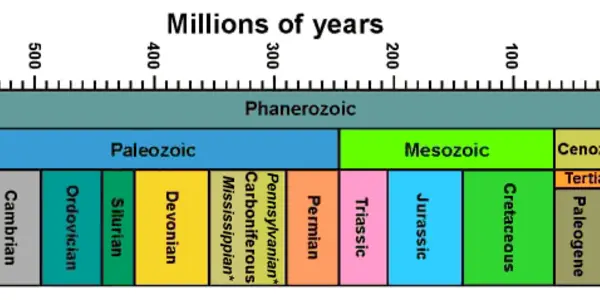
Extinctions happened in periodic cycles in Earth's history but approximately 250 million years ago vast numbers of species disappeared from Earth and life changed from simple to complex. According to Jonathan Payne, assistant professor of geological and environmental sciences at Stanford, a massive, rapid release of carbon may have triggered that extinction and it may tell us something about current global carbon cycle changes.
Payne studies the Permian-Triassic extinction and the following 4 million years of instability in the global carbon cycle.
"People point to the fossil record as a place where we can learn about how our actions today may affect the future course of evolution," Payne said.
Estrogen plays an important role in determining how sensitive a person is to pain, and the estrogen receptor known as ER-beta is particularly significant in this context. These are the conclusions of a study from the Swedish medical university Karolinska Institutet.
"This may mark the beginning of the production of a new class of analgesic drugs", says Professor Jan-Åke Gustafsson, Department of Biosciences and Nutrition.
Earlier studies have shown that estrogen affects how we experience pain, but the mechanisms behind this have been unclear. Estrogen can bind to two different receptors, known as ER-alpha and ER-beta, and the new study describes results obtained concerning the expression of these two receptors in the spinal cord.
Following World War II, the U.S. began increasing its commitment to publicly-funded science. The responsibility of the scientist was thought to be a straightforward process: if the scientists asked the “right” questions, their answers would help policy makers to make the “right” decisions.
However, the questions asked by researchers do not always translate easily into policy.
Which genes are passed on from mother to child is decided very early on during the maturation of the egg cell in the ovary. In a cell division process that is unique to egg cells, half of the chromosomes are eliminated from the egg before it is fertilised. Using a powerful microscope, researchers from the European Molecular Biology Laboratory (EMBL) have now revealed how the molecular machinery functions that is responsible for chromosome reduction of egg cells in mice. In the current issue of Cell they report the assembly of this machinery, which is very different from what happens in all other cells in the body. The process is likely conserved across species and the new insights might help shed light on defects occurring in human egg cell development.
Oregon Health & Science University researchers have figured out how to turn a mouse into a factory for human liver cells that can be used to test how pharmaceuticals are metabolized.
The technique could soon become the gold standard not only for examining drug metabolism in the liver, which helps scientists determine a drug's toxicity.