Carbon Nanotube Has EMI And Hides Heat
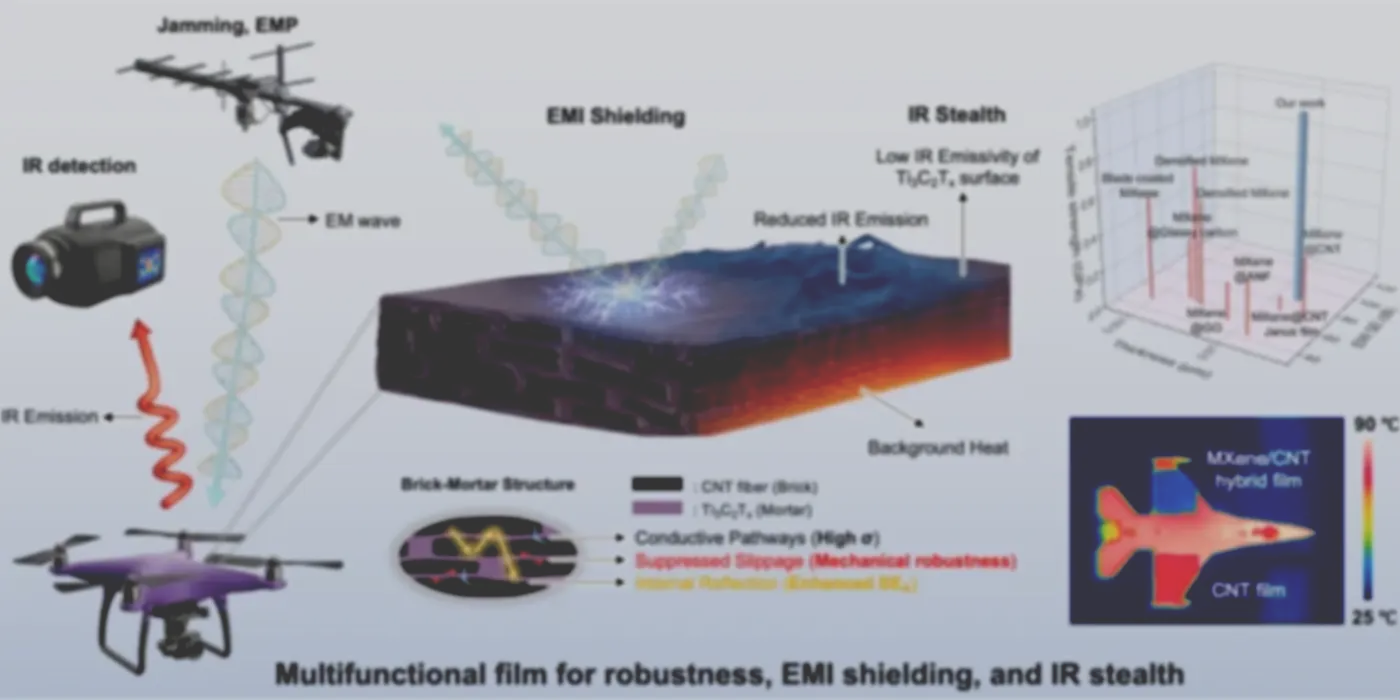
Researchers have developed a composite film that combines electromagnetic interference shielding, infrared stealth, and high mechanical strength using carbon nanotube fibers and MXene.
Researchers have developed a composite film that combines electromagnetic interference shielding, infrared stealth, and high mechanical strength using carbon nanotube fibers and MXene.


Plasmodium falciparum is responsible for the most severe forms of human malaria. Invasion of host red blood cells is an essential step of the complex life cycle of this parasite.
During the process of invasion, P. falciparum, which appears in the stage of a “merozoite”, is exposed to antibodies from the immune system. Consequently, the proteins of the merozoite that interact with red blood cells are a possible weak point, and thus a very clear target to develop vaccines.

A new UC Davis study that explains the actions of a gene mutation that causes early onset cancer provides a fundamental insight into the mechanism of DNA-break repair.
People with Bloom's syndrome, a rare genetic disease, typically develop cancer in their twenties. The underlying cause is a mutation in a gene called Blm, which encodes a member of the RecQ family of DNA-unwinding enzymes, or helicases, that are involved in repairing DNA.
Neil Hunter, assistant professor of microbiology at UC Davis, and his colleagues studied the equivalent protein in yeast, SGS1.
A group of Chemists from the University of Leicester have developed a way of purifying biodiesel made from vegetable oils, which is cheap, simple and low in toxicity.
The team, led by Professor Andrew Abbott is able to remove glycerol, the main by-product of vegetable oil-based biodiesel, using ionic liquids made in part by vitamin B4 (choline chloride).
.
If left in biodiesel, glycerol (a syrupy sugar alcohol) would damage engines but this technique simply washes it out of the fuel. The ionic liquid developed by Professor Abbott uses a complex of choline chloride with glycerol to extract more glycerol out of the biodiesel.
“The monopolar radiofrequency (RF) technology, which was introduced five years ago and which is credited as the first non-surgical skin-tightening device, has been the catalyst for what is now an explosion in non-invasive skin tightening with different technologies and areas of the body that we can treat,” said David J. Goldberg, MD, JD, FAAD, clinical professor of dermatology and director of laser research at the Mount Sinai School of Medicine in New York.
“Originally used to lift the eyebrows, monopolar RF was found to be effective in tightening the jowls and neck area with its unique approach of cooling the outer layer of skin while heating the deeper layers to cause tightening.
Autistic children are doubly stigmatized. On the one hand, they are often dismissed as “low functioning” or mentally retarded, especially if they have poor speaking skills as many do. Yet when autistics do show exceptional abilities—uncanny visual discrimination and memory for detail, for example—their flashes of brilliance are marginalized as aberrations, mere symptoms of their higher order cognitive deficit. They often earn a dubious promotion to “idiot savant.”
The theoretical justification for this view is that prototypical autistic skills are not true intelligence at all, but really just low-level perceptual abilities. Indeed, in this view autistics are missing the big picture because they are obsessed with the detail.
One of the unique characteristics of humans that distinguish us from the animal kingdom is the ability to represent others’ beliefs in our own minds. This sort of intuitive mind-reading, according to experts, lays the cognitive foundations of interpersonal understanding and communication.
Despite its importance, scientists have yet to reach a consensus on how this psychological function develops. Some argue that this complex and flexible ability is acquired at the age of 3-4 years and only after prerequisites such as language grammar are fulfilled. Others suggest specialized developmental mechanisms are in place at birth, allowing infants to refine this ability very early in life.
The length of heat waves in Europe has doubled and the frequency of extremely hot days has nearly tripled in the past century, according to new research. The new data shows that many previous assessments of daily summer temperature change underestimated heat wave events in western Europe by approximately 30 percent.
Paul Della-Marta and a team of researchers at the University of Bern in Switzerland compiled evidence from 54 high-quality recording locations from Sweden to Croatia and report that heat waves last an average of 3 days now—with some lasting up to 4.5 days—compared to an average of around 1.5 days in 1880.

Special effects in movies have always had a problem: water drops are a consistent size. The one thing that always tips a viewer off in old movies are water drops that look huge next to scaled models.
It hasn't improved much in the last 50 years. Water looks fake and beer is even harder because of the bubbles but computer animation is a $55 billion global industry so it's only a matter of time before someone meets the challenge. A group of scientists think they have done it.
“As you pour beer into a glass, you see bubbles appearing on what are called nucleation sites, where the glass isn’t quite smooth,” CSIRO fluids researcher Dr Mahesh Prakash says.

On the night of 21 July, ESO astronomer Yuri Beletsky took images of the night sky above Paranal, the 2600m high mountain in the Chilean Atacama Desert home to ESO's Very Large Telescope. The amazing images bear witness to the unique quality of the sky, revealing not only the Milky Way in all its splendour but also the planet Jupiter and the laser beam used at Yepun, one of the 8.2-m telescopes that make up this extraordinary facility.
"The images are not composite", emphasises Yuri Beletsky. "The camera was being tracked on the stars, which can be easily noticed if you look at the telescope domes on the image (they look a little fuzzy).

There are a number of things which can damage DNA - toxic chemicals are the primary concern on earth but, in space, ionized radiation is the worry. Unrepaired DNA can lead to mutations, which in turn can lead to diseases like cancer. Intricate DNA repair mechanisms in the cells' nuclei are constantly working to fix what's broken, but whether the repair work happens "on the road" — right where the damage occurs — or "in the shop" — at specific regions of the nucleus — is an unanswered question.
NASA scientists are working on understanding where and how DNA is repaired so they can be prepared for long distance space travel.
The dream of theoretical physics is to unite behind a common theory that explains everything, but that goal has remained highly elusive.
String theory emerged 40 years ago as one of the most promising candidates for such a theory, and has since slipped in and out of favor as new innovations have occurred. Now Europe is fortunate to have one of the world’s leading experts in string theory working on an ambitious project that could make significant progress towards a unified theory, and at least help resolve two mysteries.
One is how the universe emerged in the beginning as a random fluctuation of a vacuum state, and the other is a common explanation for all sub-atomic particles.

Greenhouse gas emissions from power stations could be cut to almost zero by controlling the combustion process with tiny tubes made from an advanced ceramic material, claim British engineers.
The material, known as LSCF, has the remarkable property of being able to filter oxygen out of the air.