News Releases

News Releases

The latest from the scientific community across the world. These are unedited and unfiltered so caveat emptor, even though this is all free.
RSS Feed
Waist size found to be predictor of heart failure in both men and women

Waist size found to be predictor of heart failure in both men and women

BOSTON – Adding to the growing evidence that a person's waist size is an important indicator of heart health, a study led by investigators at Beth Israel Deaconess Medical Center (BIDMC) has found that larger waist circumference is associated with increased risk of heart failure in middle-aged and older populations of men and women.
The findings, published online in the April 7 Rapid Access Report of the journal Circulation: Heart Failure, showed that increased waist size was a predictor of heart failure even when measurements of body mass index (BMI) fell within the normal range.

More intense bladder cancer treatment does not improve survival, U-M study finds

More intense bladder cancer treatment does not improve survival, U-M study finds

ANN ARBOR, Mich. — Despite enduring more invasive tests and medical procedures, patients who were treated aggressively for early stage bladder cancer had no better survival than patients who were treated less aggressively. Further, the aggressively treated patients were more likely to undergo major surgery to have their bladder removed, according to a new study from researchers at the University of Michigan Comprehensive Cancer Center.
Because bladder cancer is often treated as a chronic disease requiring lifelong surveillance, it is among the most expensive cancers to treat in the United States. Urologists vary widely in how they approach early stage, or non-muscle-invasive, bladder cancer.

Exercise is safe, improves quality of life in patients with chronic heart failure

Exercise is safe, improves quality of life in patients with chronic heart failure

Regular exercise is safe for heart failure patients and may slightly lower their risk of death or hospitalization, according to results from the largest and most comprehensive clinical trial to examine the effects of exercise in chronic heart failure patients. Supported by the National Heart, Lung, and Blood Institute (NHLBI) of the National Institutes of Health, the study also found that heart failure patients who add regular, moderate physical activity to standard medical therapy report a higher quality of life compared to similar patients who receive medical therapy only.

Digital album puts focus on kids' health

Digital album puts focus on kids' health

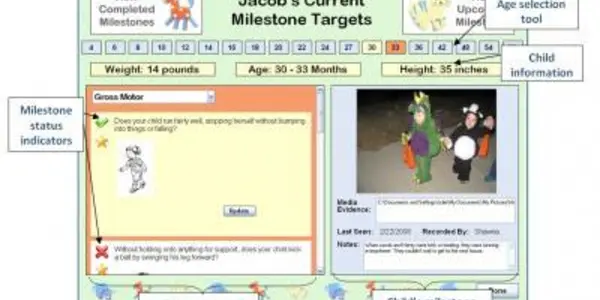
Modern moms and dads snap thousands of photos, recording every drooling smile and flailing attempt to crawl. Until now, this frenzy of activity could be one more thing distracting parents from monitoring their child's health and developmental progress.

Now Julie Kientz at the University of Washington has built a high-tech tool that takes photos and video, creates an online diary and family newsletters, and at the same time tracks a child's developmental milestones. The multimedia system, called Baby Steps, combines sentimental snapping with medical record-keeping. Baby Steps feels like a fun toy for parents, but researchers found in a small pilot study that having it on their home computers doubled the parents' collection of medically relevant information.

New medications show promise in treating drug-resistant prostate cancer

New medications show promise in treating drug-resistant prostate cancer

A new therapy for metastatic prostate cancer has shown considerable promise in early clinical trials involving patients whose disease has become resistant to current drugs.

Of 30 men who received low doses of one the drugs in a multisite phase I/II trial designed to evaluate safety, 22 showed a sustained decline in the level of prostate specific antigen (PSA) in their blood. Phase III clinical trials are planned to evaluate the drug's effect on survival in a large group of patients with metastatic prostate cancer.

Teaching autistic teens to make friends

Teaching autistic teens to make friends

During the first week of class, the teens' eyes were downcast, their responses were mumbled and eye contact was almost nonexistent. By Week 12, though, these same kids were talkative, responsive and engaged.
That's the result of a special class designed at UCLA to help teens with autism spectrum disorders (ASD) learn to interact appropriately with their peers. ASD includes a range of pervasive developmental disorders characterized by problems with communication and socialization; it's estimated that one in 150 children born in the United States has some form of ASD.

Desert woodrats switch one dietary poison for another

Desert woodrats switch one dietary poison for another

As the U.S. Southwest grew warmer between 18,700 and 10,000 years ago, juniper trees vanished from what is now the Mojave Desert, robbing woodrats of their favorite food.
Now biologists have narrowed the hunt for detoxification genes that let the rodents eat the toxic creosote bushes that replaced junipers.
"It was either eat it or move out," says biologist Denise Dearing of the University of Utah, lead author of a paper detailing the results, published on-line on April 7, 2009, in the journal Molecular Ecology.

Gene therapy appears safe to regenerate gum tissue

Gene therapy appears safe to regenerate gum tissue

ANN ARBOR, Mich.---Scientists at the University of Michigan have developed a method of gene delivery that appears safe for regenerating tooth-supporting gum tissue---a discovery that assuages one of the biggest safety concerns surrounding gene therapy research and tissue engineering.
Gene therapy is an accepted, viable therapeutic concept, but safety is a major hurdle, said William Giannobile, professor at the U-M School of Dentistry. The most notable incident highlighting the safety concerns of gene therapy research and treatment occurred several years ago when a teenager died when given the adenovirus during a gene therapy clinical trial at the University of Pennsylvania.

UIC biologists use DNA to study migration of threatened whale sharks

UIC biologists use DNA to study migration of threatened whale sharks

Whale sharks -- giants of the fish world that strike terror only among tiny creatures like the plankton and krill they eat -- are imperiled by over-fishing of the species in parts of its ocean range.
That threat is underscored in a new study from geneticists led by Jennifer Schmidt, University of Illinois at Chicago associate professor of biological sciences, reported online April 7 in the journal PLoS One.
Schmidt and her colleagues studied the DNA of 68 whale sharks from 11 locations across the Indian and Pacific Oceans and the Caribbean Sea -- an area that covers most of the shark's known range. Results showed little genetic variation between the populations, which indicates migration and interbreeding among far-flung populations of the big fish.

Human impacts on coral reefs of Northwestern Hawaiian islands revealed

Human impacts on coral reefs of Northwestern Hawaiian islands revealed

Results of a new study shed light on how threats to the world's endangered coral reef ecosystems can be more effectively managed.
In the current issue of the journal Coral Reefs, authors Kimberly Selkoe and Benjamin Halpern, both of the National Center for Ecological Analysis and Synthesis (NCEAS) at the University of California at Santa Barbara, explain how maps of the Northwestern Hawaiian Islands (NWHI)--a vast area stretching across more than 1,200 miles of Pacific Ocean--can be used to make informed decisions about protecting the world's fragile coral reefs.