News Releases

News Releases

The latest from the scientific community across the world. These are unedited and unfiltered so caveat emptor, even though this is all free.
RSS Feed
First tri-continuous mesoporous Silica complex structure developed in Singapore

First tri-continuous mesoporous Silica complex structure developed in Singapore

Singapore's Institute of Bioengineering and Nanotechnology (IBN) has developed the first tri-continuous mesoporous material using a unique surfactant template. This completely new porous structure previously been predicted only mathematically (see reference below).
In the current Nature Chemistry (see reference below), the IBN scientists report that this novel material, named IBN-9 after the research institute, is the first hexagonal nanoscale construct with 3 unconnected interwoven channels. It is by far the most complex mesoporous nanostructure to have been synthesized in real-life and represents a new class of mesoporous materials, which consist of pores of 2-50 nanometers in size.

New strategy improves stem cell recruitment, heart function and survival after heart injury

New strategy improves stem cell recruitment, heart function and survival after heart injury

A new study in mice shows that a dual therapy can lead to generation of new blood vessels and improved cardiac function following a heart attack. The research, published by Cell Press in the April 3rd issue of the journal Cell Stem Cell, provides an explanation for the ineffectiveness of current stem-cell-mobilizing therapies and may drive design of future regenerative therapies for the heart.

Cancer stem cells generated by cancer outgrowth

Cancer stem cells generated by cancer outgrowth

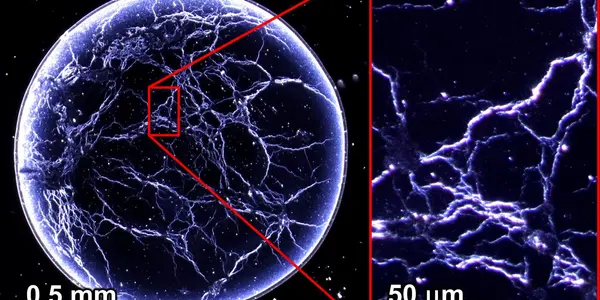
Scientists have discovered that growing mouse skin cells in spheres can lead to generation of cells with properties of cancer stem cells, even without genetic manipulation of stem cell genes. This unexpected finding, published by Cell Press in the April 3rd issue of the journal Cell Stem Cell, provides a potential pathway for generation of cancer stem cells from differentiated cells and may even eventually lead to safer strategies for creation of induced pluripotent stem cells for use in regenerative therapies.

Diseased cartilage harbors unique migratory progenitor cells

Diseased cartilage harbors unique migratory progenitor cells

A new study finds previously unidentified fibrocartilage-forming progenitor cells in degenerating, diseased human cartilage, but not in cartilage from healthy joints. The research, published by Cell Press in the April 3rd issue of the journal Cell Stem Cell, provides valuable insights into the reparative potential of cartilage and may lead to development of regenerative therapies for arthritis.

Modification of mutant huntingtin protein increases its clearance from brain cells

Modification of mutant huntingtin protein increases its clearance from brain cells

A new study has identified a potential strategy for removing the abnormal protein that causes Huntington's disease (HD) from brain cells, which could slow the progression of the devastating neurological disorder. In the April 3 issue of Cell, a team of researchers from the MassGeneral Institute for Neurodegenerative Disease (MGH-MIND) describes how an alteration to the mutated form of the huntingtin protein appears to accelerate its breakdown and removal through normal cellular processes.

Gene protects against neurotoxins that spur inflammation and Parkinson's disease

Gene protects against neurotoxins that spur inflammation and Parkinson's disease

A new study in the April 3rd issue of the journal Cell, a Cell Press publication, helps to explain why people who carry mutations in a gene known as Nurr1 develop a rare, inherited form of Parkinson's disease, the most prevalent movement disorder in people over the age of 65.
They have found evidence that the gene normally acts to suppress an inflammatory response and, in turn, the production of neurotoxins in the brain. Those neurotoxins can otherwise spawn the damage to dopaminergic neurons that is characteristic of Parkinson's disease. The findings not only offer new insight into the causes of the disease, but also may point to new avenues for therapy, according to the researchers.

Prions serve as important source of variation in nature

Prions serve as important source of variation in nature

Special proteins known as prions, which are perhaps best known as the agents of mad cow and other neurodegenerative diseases, can also serve as an important source of beneficial variation in nature, confirms a new study in the April 3rd issue of the journal Cell, a Cell Press publication. After an extensive search through the genome of yeast for proteins with prion-like character, the researchers found two dozen prion-forming proteins, most of which had never been seen before.

Researchers unravel role of priming in plant immunity

Researchers unravel role of priming in plant immunity

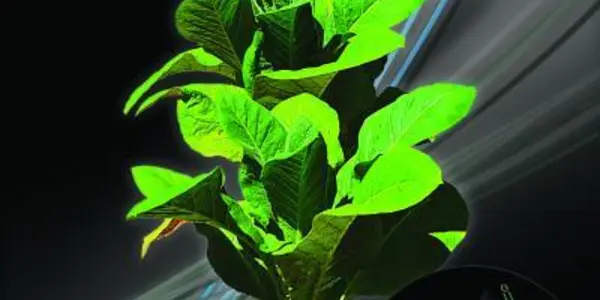
Scientists have discovered a naturally occurring compound that triggers a plant's immune system, thereby protecting the plant from a secondary bacterial infection.
The patent-pending discovery could lead to an effective, inexpensive and environmentally safe way to improve plants' resistance to disease, according to research to be published in Science on April 3, 2009.
"The potential for crop protection for organic and conventional farming is strong," said Jean Greenberg, associate professor of molecular genetics and cell biology at the University of Chicago and corresponding author of the study. "This could lead to better food quality and higher agricultural yields.

Robot scientist becomes first machine to discover new scientific knowledge

Robot scientist becomes first machine to discover new scientific knowledge

Scientists funded by the Biotechnology and Biological Sciences Research Council (BBSRC) have created a Robot Scientist which the researchers believe is the first machine to have independently discovered new scientific knowledge. The robot, called Adam, is a computer system that fully automates the scientific process. The work will be published tomorrow (03 April 2009) in the journal Science.
Prof Ross King, who led the research at Aberystwyth University, said: "Ultimately we hope to have teams of human and robot scientists working together in laboratories".

Alzheimer's disease linked to mitochondrial damage

Alzheimer's disease linked to mitochondrial damage

LA JOLLA, Calif., April 3, 2009 -- Investigators at Burnham Institute for Medical Research (Burnham) have demonstrated that attacks on the mitochondrial protein Drp1 by the free radical nitric oxide—which causes a chemical reaction called S-nitrosylation—mediates neurodegeneration associated with Alzheimer's disease. Prior to this study, the mechanism by which beta-amyloid protein caused synaptic damage to neurons in Alzheimer's disease was unknown. These findings suggest that preventing S-nitrosylation of Drp1 may reduce or even prevent neurodegeneration in Alzheimer's patients. The paper was published in the April 3 issue of the journal Science.

Sleep: Spring cleaning for the brain?

Sleep: Spring cleaning for the brain?

MADISON — If you've ever been sleep-deprived, you know the feeling that your brain is full of wool.
Now, a study published in the April 3 edition of the journal Science has molecular and structural evidence of that woolly feeling — proteins that build up in the brains of sleep-deprived fruit flies and drop to lower levels in the brains of the well-rested. The proteins are located in the synapses, those specialized parts of neurons that allow brain cells to communicate with other neurons.

Being Isaac Newton: Computer derives natural laws from raw data

Being Isaac Newton: Computer derives natural laws from raw data

If Isaac Newton had access to a supercomputer, he'd have had it watch apples fall – and let it figure out the physical matters. But the computer would have needed to run an algorithm, just developed by Cornell researchers, which can derive natural laws from observed data.
The researchers have taught a computer to find regularities in the natural world that become established laws – yet without any prior scientific knowledge on the part of the computer. They have tested their method, or algorithm, on simple mechanical systems and believe it could be applied to more complex systems ranging from biology to cosmology and be useful in analyzing the mountains of data generated by modern experiments that use electronic data collection.