News Releases

News Releases

The latest from the scientific community across the world. These are unedited and unfiltered so caveat emptor, even though this is all free.
RSS Feed
U of Minnesota researchers test new ways to involve people in news through social media

U of Minnesota researchers test new ways to involve people in news through social media

University of Minnesota researcher Christine Greenhow, Seattle-based news aggregator NewsCloud and student newspaper The Minnesota Daily today announced the launch of the Minnesota Daily Facebook application. The Minnesota Daily application aims to become the hub of news and sharing for U of M students and community, combining both professional student and citizen journalism. Researchers will use it to test new ways to engage youth in news and information through social media.

Time of conception linked to birth defects in United States

Time of conception linked to birth defects in United States

INDIANAPOLIS – A study published in the April 2009 issue of the medical journal Acta Pædiatrica is the first to report that birth defect rates in the United States were highest for women conceiving in the spring and summer. The researchers also found that this period of increase risk correlated with increased levels of pesticides in surface water across the United States.

Mice and men should have more in common in clinical trials

Mice and men should have more in common in clinical trials

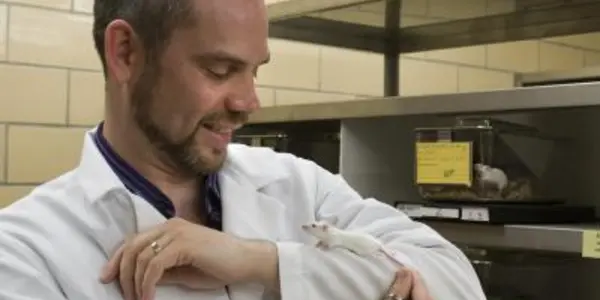
WEST LAFAYETTE, Ind. - Just as no two humans are the same, a Purdue University scientist has shown treating mice more as individuals in laboratory testing cuts down on erroneous results and could significantly reduce the cost of drug development.

Mice have long been used as test subjects for treatments and drugs before those products are approved for human testing. But new research shows that the customary practice of standardizing mice by trying to limit environmental variation in laboratories actually increases the chance of getting an incorrect result.

Cancer Genomics Browser gives cancer researchers a powerful new tool

Cancer Genomics Browser gives cancer researchers a powerful new tool

SANTA CRUZ, CA--A Cancer Genomics Browser developed by researchers at the University of California, Santa Cruz, provides a new way to visualize and analyze data from studies aimed at improving cancer treatment by unraveling the complex genetic roots of the disease.
The browser consists of a suite of web-based tools designed to help researchers find patterns in the huge amounts of clinical and genomic data being gathered in large-scale cancer studies. Medical researchers hope to identify genetic signatures and other "biomarkers" in cancer cells that can be used to predict how individual patients will respond to different therapies throughout the course of their treatment.

A 'bionic nose' that knows

A 'bionic nose' that knows

Both cancer cells and the chemicals used to make bombs can foil detection because they appear in trace amounts too small for conventional detection techniques. Tel Aviv University has developed the ultimate solution: a molecule that can magnify weak traces of "hidden" molecules into something we can detect and see.

Genes that make bacteria make up their minds

Genes that make bacteria make up their minds

Bacteria are single cell organisms with no nervous system or brain. So how do individual bacterial cells living as part of a complex community called a biofilm "decide" between different physiological processes (such as movement or producing the "glue" that forms the biofilm)?

Fish oils reduce greenhouse gas emissions from flatulent cows

Fish oils reduce greenhouse gas emissions from flatulent cows

The benefits to animals of omega 3 fatty acids in fish oils have been well documented – helping the heart and circulatory system, improving meat quality and reducing methane emissions.
These last two benefits may only apply to cows but lowering emissions is important for the environment, as methane given off by farm animals is a major contribution to greenhouse gas levels. Today (Monday 30 March) researchers from University College Dublin reported that by including 2% fish oil in the diet of cattle they achieved a reduction in the amount of methane released by the animals.

Microbes in mud flats clean up oil spill chemicals

Microbes in mud flats clean up oil spill chemicals

Micro-organisms occurring naturally in coastal mudflats have an essential role to play in cleaning up pollution by breaking down petrochemical residues. Research by Dr Efe Aganbi and colleagues from the University of Essex, presented at the Society for General Microbiology's meeting at Harrogate today (Monday 30 April), reveals essential differences in the speed of degradation of the chemicals depending on whether or not oxygen is present. In aerobic conditions (where oxygen is present), benzene, toluene and naphthalene, which all occur in petroleum, were rapidly degraded by microbes.

New high-throughput screening technique makes probing puzzling proteins possible

New high-throughput screening technique makes probing puzzling proteins possible

Understanding the tens of thousands of proteins that compose the human proteome has emerged as a key challenge of this century, and research efforts to date have already enabled major advances in drug discovery and understanding basic biology. But many potential avenues have been blocked by lack of information about how the majority of these proteins function.
The bulk of these so far enigmatic proteins may now be open to study, thanks to research by a team at The Scripps Research Institute and its Molecular Screening Center.

Getting down to cancer basics

Getting down to cancer basics

Researchers have identified a new cancer gene - one that is common to many cancers and affects the most basic regulation of our genes. The new example - a gene on the X chromosome called UTX - is found in 10% of cases of multiple myeloma and 8% of esophageal cancers.
UTX plays a role in overall regulation of the activity of many genes and it is possible that other genes with similar roles will also be found to be involved in different tumor types. This is the first example of mutations in a gene of this functional class. The finding arose from a study of mutations in 4000 genes in kidney cancer.

Dust may settle unanswered questions on Antarctica

Dust may settle unanswered questions on Antarctica

Dust trapped deep in Antarctic ice sheets is helping scientists unravel details of past climate change.
Researchers have found that dust blown south to Antarctica from the windy plains of Patagonia – and deposited in the ice periodically over 80,000 years – provides vital information about glacier activity.
Scientists hope the findings will help them to better understand how the global climate has changed during the past ice age, and so help predict environmental changes in the future.
The study indicates that the ebb and flow of glaciers in the Chilean and Argentinian region is a rich source of information about past climates – which had not until now been fully appreciated by scientists.

Action video games improve vision

Action video games improve vision

Video games that involve high levels of action, such as first-person-shooter games, increase a player's real-world vision, according to research in today's Nature Neuroscience.

The ability to discern slight differences in shades of gray has long been thought to be an attribute of the human visual system that cannot be improved. But Daphne Bavelier, professor of brain and cognitive sciences at the University of Rochester, has discovered that very practiced action gamers become 58 percent better at perceiving fine differences in contrast.