Main navigation

  • Home
  • Culture
    • Humor
    • Mathematics
    • Random Thoughts
    • Science & Society
    • Sports Science
    • Technology
  • Earth Sciences
    • Atmospheric
    • Energy
    • Environment
    • Geology
    • Oceanography
    • Paleontology
  • Life Sciences
    • Ecology & Zoology
    • Evolution
    • Immunology
    • Microbiology
    • Neuroscience
  • Medicine
    • Aging
    • Cancer Research
    • Clinical Research
    • Pharmacology
    • Public Health
    • Vision
  • Physical Sciences
    • Aerospace
    • Applied Physics
    • Chemistry
    • Optics
    • Physics
    • Space
  • Social Sciences
    • Anthropology
    • Archaeology
    • Philosophy & Ethics
    • Psychology
    • Science History
  • Contributors

User menu

  • Log in

Breadcrumb

  1. Home
Underwater Photography In Sudan

When you think of underwater photography, you probably think of the clear ocean waters of the Bahamas or other exotic tropical locales - certainly that's where I would go.Andrej Belic has other ideas.  The whole site is done in Flash so it's impossible to navigate but this is a guy who does things the hard way and, like the pictures he takes, the effort is worth it.

The Skeptical Movement: A Dysfunctional Corporation with a Nightmare PR Problem

It was many years ago we pointed out some real flaws in the 'skeptic' movement - first is that it is mostly about ridiculing religion and Bigfoot and if those are the only things you can be skeptical about, you aren't really skeptics, you're just a front for militant atheists who want to cover their cultural agenda with a veneer of science.  The second issue is that, for being  progressives who coo about tolerance and diversity, women sure are not in it.

Why The Space Shuttle Was A Failure

Under 5 launches per year instead of the 65 launches per year NASA projected. $450 million per shuttle launch instead of $50 million NASA projected. A risk of catastrophic failure of 1 in 100 instead of the 1 in 100,000 NASA projected and an actual failure rate of 2 out of 135.

The space shuttle era is over and it was an unquestioned failure. Finally, with its passing, at least a few science writers have stopped being science cheerleaders and are echoing what I have said for a decade plus - the shuttle was a glorified delivery truck that had no value at all in advancing science, and the money could have been used better on real science projects.

15 Organic Foods That Are An Even Bigger Scam Than Most Organic Foods

Finally, someone outside science has caught on to this 'organic food is better' nonsense.   It isn't nutritionally any different, it isn't structurally any different, it is just marketing - they pay a fee and fill out paperwork.  Small farmers that actually are completely 'organic' in their methods, with no pesticides (including organic ones that will kill you just the same, like strychnine and ricin) can't actually afford the fee to be labeled organic.

Paper On Genetics Of Longevity Retracted

A study that set out to reveal the genetic factors that help people live to ages 100 and older (see Identified: Genetic signatures of exceptional longevity in humans) has been retracted. The researchers reported 150 genetic variations that could be used to predict whether a person was genetically inclined to live to be 100, based on the genomes of over 1,000 centenarians, but geneticists noted that the control samples and the samples from centenarians were analyzed in different ways.   

An Environmentalist Embraces Science

We can only confuse science and environmentalism when science happens to match their cultural agenda - ethanol, for example, was lousy science and the anti-science positions embraced by environmentalists to combat pollution were firmly in the anti-science camp; biology and the energy sector have terrific solutions available right now but if 'stop CO2' is instead a cult-like mantra, they can't be part of the policy discourse.

Nepal To Re-Measure Mount Everest

Snow height or rock height?   Chinese and Indians disagree on even how to measure the height of the world's highest mountain, since if you have ever had one of those 'why can't they just talk to each other?' moments about actual serious geopolitical issues, you know it is never that simple.Mount Everest is in both countries and its official height 29,029 feet and both sides agree that is the official height, but the pesky Chinese still use their rock height number instead of the snow height number, which is 12 feet higher.  So Nepal says it will take an accurate measurement.Both countries could be wrong.   The US Geological Survey used GPS in 1999 and say it is approximately two feet higher than the official number.

World's biggest McDonald's to open on 2012 Olympics site

Nothing says celebrating athletic perfection like a McDonald's hamburger.Actually, elite athletes likely can eat all the hamburgers they want but you get the idea - a McDonald's, nay the world's largest McDonald's, at the site dedicated to athletic excellence is pretty funny.But Brits are nothing if not funny.  And so they get a 3,000-square-meter McDonald's restaurant,  on two floors and equivalent to half the length of an American football field. Olympic chiefs have moved quickly to reject claims that the new McDonald's will deter from aims to promote a healthy and active lifestyle, which London chiefs have been pushing since winning the Olympic bid.

Harvard Psychology Professor Marc D. Hauser Announces Resignation

It's not easy to get a tenured professor to leave his job - unless he is caught dog-fighting or saying girls might be different than boys, there isn't a lot off-limits, especially at a progressive bastion like Harvard.But bad press is not always good press and Harvard evolutionary psychology Professor Marc D. Hauser has announced his resignation.  A three-year investigation said he fudged data in his research on monkey cognition and he was on the wrong side a Psychology Department vote in February to disallow him from teaching in the upcoming academic year.

The Neuroscience of the Debt Debate

Partisans on each side will claim some vast conspiracy in the debt ceiling debate - Republicans are bought by corporations and hate poor people because they want to lower their taxes, Democrats are bought by unions and hate poor people because they want to give them stuff for free - but it may be simpler than that.    Cooperation is in our nature but morality can undercut the tendency, writes Jason Castro in Scientific American, and game theory can tell us some things about why - at least academically.

Pagination

  • Previous page ‹‹
  • Page 178
  • Next page ››

Donate

Please donate so science experts can write for the public.


At Science 2.0, scientists are the journalists, with no political bias or editorial control. We can't do it alone so please make a difference.

We are a nonprofit science journalism group operating under Section 501(c)(3) of the Internal Revenue Code that's educated over 300 million people.

You can help with a tax-deductible donation today and 100 percent of your gift will go toward our programs, no salaries or offices.

More reads

Featured Image

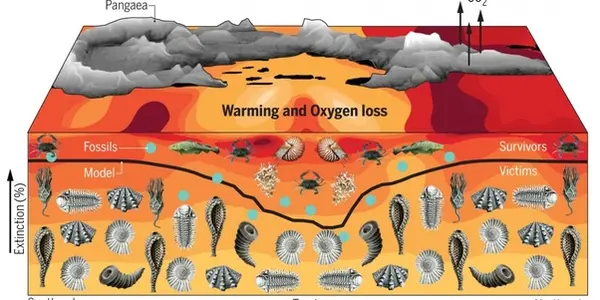
No Need To Worry About ‘Great Dying’ - About Permian Extinction 262 Million Years Ago

This is running as a scary story in the news today. I’m asked if it means we are all going to die. No, it does not. That was a 10 °C rise and we are headed towards 3.6 °C at maximum with the Paris…
Featured Image

Vitamin D Linked To Bladder Cancer In Systematic Review

Vitamin D, which is produced by the body through exposure to sunshine, helps the body control calcium and phosphate levels, important for healthy bones. It can also be obtained from food sources…
Featured Image

Cellular Respiration: An Alternate Version Of The Famous Krebs Cycle?

The Krebs cycle is named after Hans Krebs, who discovered it in 1937, part of the race to discover the central hub of cellular metabolism. In a cell’s mitochondria, it is a core part of the process…
Featured Image

Gender Inequality Has Been Around Since The Stone Age

The Neolithic period, the end of the Stone Age and the beginning of civilizations, began about 12,000 years ago with the advent of agriculture in the Epipalaeolithic Near East. It spread to other…

Footer

  • About Us
  • Copyright and Removal
  • Privacy Policy
  • Terms

© 2006-2026 Science 2.0. All rights reserved.