Main navigation

  • Home
  • Culture
    • Humor
    • Mathematics
    • Random Thoughts
    • Science & Society
    • Sports Science
    • Technology
  • Earth Sciences
    • Atmospheric
    • Energy
    • Environment
    • Geology
    • Oceanography
    • Paleontology
  • Life Sciences
    • Ecology & Zoology
    • Evolution
    • Immunology
    • Microbiology
    • Neuroscience
  • Medicine
    • Aging
    • Cancer Research
    • Clinical Research
    • Pharmacology
    • Public Health
    • Vision
  • Physical Sciences
    • Aerospace
    • Applied Physics
    • Chemistry
    • Optics
    • Physics
    • Space
  • Social Sciences
    • Anthropology
    • Archaeology
    • Philosophy & Ethics
    • Psychology
    • Science History
  • Contributors

User menu

  • Log in

Breadcrumb

  1. Home
The mystery of Wednesday's radiation spike at Fukushima

Is Fukushima now more serious than the 1979 Three Mile Island incident in the U.S.A., as US Energy Secretary Steven Chu recently claimed?     Hard to say yet.  But a mysterious rise in radiation Wednesday is certainly cause for concern.   It seems to have been big enough to force technicians to leave the plant, according to the BBC.  Over the days of the Fukushima crisis, attention has switched from reactor building 1 to 3, to 2, back to 3 - and now, to 4.

Kylie Minogue Vs Mike Tyson: What Radiation Does To The Human Body

Gia Milinovich is a science writer who has access to a pretty good physics resource - her husband, Science 2.0 fave Dr. Brian Cox.  But even Cox, who can make sense of why E=MC^2, can't help with what radiation means.  So Milinovich did it herself in 2006.  The problem?  The site is dead.

Earthquakes In Japan, Nuclear Power And Capitalizing On Disaster

In a 24-hour news cycle, it's hard to know what is real and what is not.  In a situation like Japan, all there is left for outsiders is concern.   And some groups with an anti-science agenda want to capitalize on that concern.Not an hour has gone by that a spokesperson for Greenpeace hasn't hinted that a magnitude 9 earthquake(!) is an indictment of nuclear power.  It's just too darn risky.   Well, what isn't risky if Mother Nature can never be involved?  Greenpeace and other anti-science activists also claim oil is bad, coal is bad, natural gas is bad - everything is bad except for solar which, given today's technology, actually is really bad.


Lost City Of Atlantis Found? In Spain?

Tsunamis are big news for the last few days and there may be an ancient reason along with a current one.  A group of researchers are saying a tsunami likely destroyed the fabled lost city of Atlantis...and it is underneath mud flats in southern Spain. 

"Ferris Bueller's Day Off" recut as an indie coming-of-age movie for mopey grad students

"Ferris Bueller's Day Off" is a pretty good movie until, like with many movies, the final third, where it becomes alarmingly like an indie coming-of-age movie that will wash over film festivals again this year.  Really.    If you can't spot every possible 2000s indie film cliché, right down to the music, the cut scenes and the faux drama, you just don't watch enough movies.

Google - Where Republicans And Democrats Are Skeptical Together

In science, Democrats and Republicans agree on very little, or at least the things they value in science debates are different.   Republicans don't think stunting the economy today is a good fix for climate change and Democrats don't agree vaccines are a good fix for keeping healthy kids.One thing both sides to seem to agree on today is Google: Reps. Edward Markey and Joe Barton, co-chairmen of the Bipartisan Privacy Caucus, are making Google a target after the online giant was caught acquiring social security numbers of kids in its doodling contest.  It is one thing for Barton, a Republican, to criticize them but Google is a financial and cultural darling of Democrats so Markey looks bad for them.

Progesterone - a common pregnancy drug could soon cost thousands of dollars

Progesterone, prescribed for decades to prevent premature birth in high-risk mothers and made by specialty drug stores known as compounding pharmacies, could soon change in cost from $10 a dose to $1,500.Why?  The FDA has approved a branded version of the medication and KV Pharmaceutical Company, the maker of the new drug called Makena, has warned compounding pharmacies that they face FDA action if they continue to sell nonbranded versions of 17-hydroxyprogesterone caproate. That's $30,000 extra per pregnancy.  

Implementing Ambiguity In The Science Classroom

It sounds great - teach ambiguity by introducing complex questions that do not have easy answers.    The problem is that a lot of students aren't going to get what they need out of classes that way, notes Chad Orzel of Scienceblogs.com.   I quickly run up against two major problems: first, that we have certain material that we need to cover for our own courses, and second that we have certain material that other people expect us to cover when their students take our classes.

A Celebration Of Pee Power

It may not be in favor today but urine was used in medicine for millenia. In Rome,  Richard Sugg at the Guardian tells us, Pliny the Elder recommended fresh urine for the treatment of "sores, burns, affections of the anus, chaps and scorpion stings", while stale urine mixed with ash could be rubbed on your baby for nappy rash. In early-modern Europe numerous medical luminaries went further. Pioneering French surgeon Ambroise Paré noted that itching eye-lids could be washed in the patient's urine – provided that it had been kept "all night in a barber's basin" first. 

Biodegradable Clothing And Electronics Try To Gain Ground

Biodegradable sneakers?   Anything with 'green' slapped on it is going to sell to a certain audience but, as science always knew and the public discovered about ethanol, just because activists and a politician or two talks a lot about it doesn't make it better for the environment.Plastics are essential in modern life and a biodegradable version that uses less petroleum would be terrific, but are they a net gain for the environment?   The iameco, billed as the world's first biodegradable computer, had a frame made from wood pulp and its panels contained seeds so that when thrown away it would eventually grow new trees.   

Pagination

  • Previous page ‹‹
  • Page 196
  • Next page ››

Donate

Please donate so science experts can write for the public.


At Science 2.0, scientists are the journalists, with no political bias or editorial control. We can't do it alone so please make a difference.

We are a nonprofit science journalism group operating under Section 501(c)(3) of the Internal Revenue Code that's educated over 300 million people.

You can help with a tax-deductible donation today and 100 percent of your gift will go toward our programs, no salaries or offices.

More reads

Featured Image

Honeybees Are Boutique Agriculture: Here's What Keepers Want Almond Farmers To Do

Despite nearly two decades of marketing campaigns insisting bees are in decline and science is to blame, the data show otherwise. Bees are not entirely irrelevant in the food supply, and do valuable…
Featured Image

FDA Blasts Chiropractor Cade Copeland Of Rooted Apothecary For Claiming His CBD Helps Autism, ADHD, Parkinson’s, Alzheimer’s

Fresh off poisoning thousands by introducing tainted, illegal additives into vaping devices (including dangerous synthetic marijuana, which just resulted in a conviction), the marijuana supplement…
Featured Image

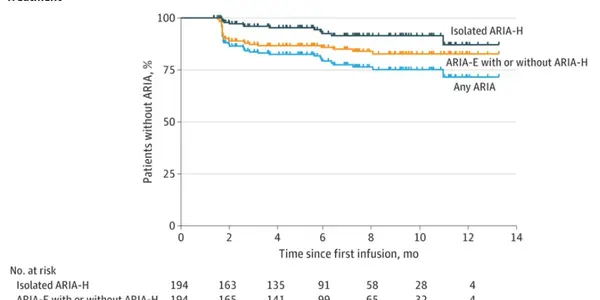
Side Effects Update: Lecanemab To Slow Alzheimer's

In 2023, the U.S. Food and Drug Administration an Alzheimer’s therapy shown in clinical trials to modestly slow disease progression but side effects, brain swelling and bleeding, occurred in some.
Featured Image

The Science Of The Midday Siesta - Why Heat Makes Us Sleepy

If you get sleepy in the middle of hot days, you are not alone. You are not even alone in the animal kingdom. Biology may be behind it. We know that many people have a harder time sleeping in the…

Footer

  • About Us
  • Copyright and Removal
  • Privacy Policy
  • Terms

© 2006-2026 Science 2.0. All rights reserved.