Clark Kent Was Right: Subtle Disguises Are Effective
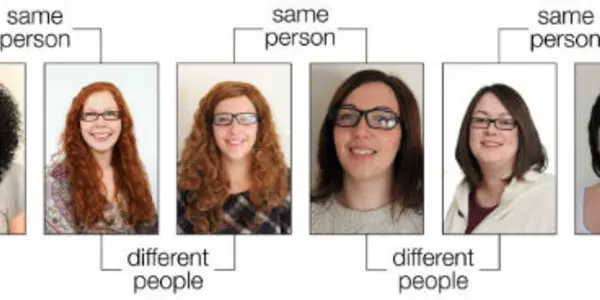
In the comics and films, Clark Kent wore reading glasses while Superman had no glasses but sported a lock of hair on his forehead - and no one figured it out. Ridiculous, it was later said.
Microfinancing is a term most commonly used to describe the financial services provided to help people out of poverty. Now the term is being applied to research projects funded by numerous small contributions of money. Over the last 3 years, a number of microfinancing initiatives for science research have emerged in the US. One example is the Open Source Science Project.Pop science? Sure, people will donate to cool stuff or pet beliefs, but it also will increase science literacy, says the article in Chemistry World.
I can't speak for any of you but the only thing worse than going to a coffee shop and not being able to find a seat because the mid-1990s fad of 'free Wi-Fi' in there made slackers hang out all day has been, in 2010, having them talk on their cell phones while we order the coffee to go.Have you been to Spain? You will get shot doing using a laptop and talking on a cell phone in a coffeeshop there. Sitting in a Spanish cafe for two hours and drinking a tiny espresso while girl watching is a time-honored ritual and one of the only things we should emulate about Spain.
What do you do when you get stuck with no pay by a crappy publisher? Not much, except never work without a contract again. Freelancer DeLene Beeland dispels the notion that it's always balloons and ponies out there - though the 4 years I have done this have been a total blast.
Patrick Lockerby has been discussing the break-off of part of the Petermann shelf for a while and others have noticed. A Daily Kos blogger has links to it and the BBC notes Patrick's article.
Click image to see full size
You remember Friendster, right? No? It is a social media cautionary tale about hubris and taking the money while it's good. Friendster was one of the original social media networks, long before Facebook, and in 2003 they were offered $30 million in pre-IPO Google stock and in 2008, a year before it sold for under $30 million, Friendster turned down a $150 million buyout. The Google stock would have been worth $200-800 million. Basically, it was run stupidly. When you get acquired by Kuala Lumpur-based MOL, a payment systems seller heard of nowhere outside Asia, you have fallen far.
Alexey Bersenev does not mean Scientific Blogging as in, you know, us, but rather scientific blogging in general, when he writes on his perspectives in Scientific blogging as a model for professional networking online.
I don't think this needs a lot of introduction - but if it does, they are talking about electro-surgery instead of old-fashioned scalpels. Electro-surgery, which uses concentrated electric currents, has been around since 1914 but this is a new ... area of experimentation.Who are the test subjects for this? And why not use a laser? You'll have to read to find out, but Dr. Tsai said no penises were harmed during the course of the experiment.
Foldit, the company that has made protein folding mastery into a game used by more than 75,000 people, has had an article accepted in Nature and they want all of their participants to be with them on the cover. Yes, all 75,000. Sounds like Science 2.0 to me. It will look something like this:Why is this cool? Foldit is a company that is squarely in the heart of the participation aspects of Science 2.0. Making protein structure prediction and protein design into a fun game means the whole world can help, and still have a good time doing it.
In case you are one of those people running out to buy a copy of Andrew Morton's new unauthorized (whatever that means) biography of Angelina Jolie and are unsure of the many subtexts that just have to exist in each event of her life because she is famous, Jen Chaney and Liz Kelly of the Washington Post are here to help guide you with meaningful questions to ask at the next Book Club meeting. Take that, Oprah!You can probably even relate the events to your own life to make it more interesting. To wit:Did you let your 14 year old daughter take over your bedroom and have her boyfriend move in with you?