Science 2.0

Hank Campbell

Hank Campbell

I founded Science 2.0® in 2006 and since then it has become the world's largest independent science communications site, with over 300,000,000 direct readers and reach approaching one billion. Revolutionizing the way scientists Communicate, Part…
RSS Feed
Amanita Muscaria Mushrooms Are An Alternative Medicine Fad More Toxic Than Fentanyl

Amanita Muscaria Mushrooms Are An Alternative Medicine Fad More Toxic Than Fentanyl

Online supplement marketers prey on consumers by exploiting the margins of President Bill Clinton's 1994 Dietary Supplement Health and Education Act, which exempts supplements from FDA oversight if they state in fine print, "This statement has not been evaluated by the Food and Drug Administration. This product is not intended to diagnose, treat, cure, or prevent any disease" right after making claims that read like they replace medicine.

Is It Safe To Buy Food At A Farmers Market?

Is It Safe To Buy Food At A Farmers Market?

There is populist rhetoric about Buy Local but what few in the public realize is that the definition is subjective. Restaurants in Manhattan often claim they buy local, but in the fine print it reads 'when available', and they don't tell you when it was not locally available, and local to them may be up to 500 miles away.

COVID-19 Made Stereotyping Of Asians Uncool - Mostly To Gain Political Traction

COVID-19 Made Stereotyping Of Asians Uncool - Mostly To Gain Political Traction

Only a few years ago, American colleges used a "secret sauce" of race in admissions that voided test scores and replaced those with arbitrary demographic selection. Due to such clear racism, and despite being a minority with less than 5 percent of the population, Asians were least likely to be admitted to elite colleges if the alternatives were a more-favored minority with lower scores or qualifications. Asians were even less likely to be admitted than white students.

Is Sharing A Bed With A Partner Better Or Worse? Yes

Is Sharing A Bed With A Partner Better Or Worse? Yes

Once upon a time, young Baby Boomers ridiculed television programs that showed married couples in separate beds. They used terms like 'prudish' and 'Victorian' and 'repressed.'Actually, those shows were representative of culture for most of human history. Humans have rarely shared a bed with a spouse or relative if they had a choice. Only in the 1950s did sharing a bed in larger rooms in larger houses become common. By the 1980s, California took the concept of a King-Sized bed (invented in 1890 to sleep 15) and marketed it for wealthy elites on the coasts; a California King, 7 feet long.

The Upside To AI And Young Creativity

The Upside To AI And Young Creativity

Artificial Intelligence - AI - isn't really AI at all, which may be why it has been so disappointing to companies that aren't trying to sell you a new leaf blower. Instead of doing something practical, like the dishes or laundry so you have more time to do art or music, AI is doing music and art for you.Basically, it's an over-hyped grift.

Glyphosate Impact On Soil Microbes - The 1% Can Worry But Scientists Do Not

Glyphosate Impact On Soil Microbes - The 1% Can Worry But Scientists Do Not

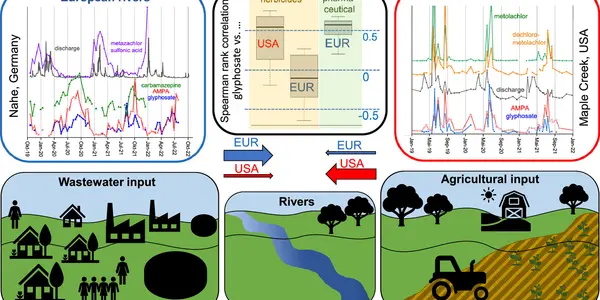
Is glyphosate damaging essential microbes in soil? A multi-year study sought to answer the question using real-world conditions.Glyphosate (e.g Roundup) is the most popular weedkiller in the world, and that has made it a target for some disreputable competitors, primarily those in the organic food segment, who promote their own chemicals as alternatives. Their chemicals, they claim, don't harm soil but glyphosate does.

45 Percent Of People Try Diets And That's A Good Thing, Even If They Fail

45 Percent Of People Try Diets And That's A Good Thing, Even If They Fail

Most people who try a diet don't succeed in keeping weight off long-term and that is trumpeted as a huge failure of dieting by people who, wait for it, are often selling a competing diet.The health truth is that even if you fail, you improved your health. Claims that people whose weight go up and down are dying earlier are just the same bad epidemiology that has journalists lamenting that International Agency for Research on Cancer activists claim pickle juice and aloe vera cause cancer.(1)

Physician Burnout Is Common - And Informal Rationing Is One Big Cause

Physician Burnout Is Common - And Informal Rationing Is One Big Cause

If the government promises every home a great gardener, most people recognize they won't get a great gardener at all, they will probably get someone who couldn't get a better job while the lawn service they used to use is priced out of reach.There has always been disparity in health care, but that was aggravated when President Franklin Roosevelt instituted wage caps during World War II. Companies who wanted to compete for quality workers could no longer offer more money so they offered "benefits." Like health insurance. 

Cancel Culture Prevents The Best Researchers From Engaging With The Food Industry

Cancel Culture Prevents The Best Researchers From Engaging With The Food Industry

After Chris Wild took over the International Agency for Research on Cancer (IARC), a UN-funded body in France that looks for statistical links between food/chemicals and cancer, they made a switch in their policies regarding participation; an epidemiologist who had ever consulted for industry could no longer vote on what to label a carcinogen.Even though it was hypocritical - epidemiologists working for trial lawyers or environmental groups were recruited - few inside IARC objected. Nor did anyone think they might. Environmental groups have manufactured an ethical halo so well that even their lawyers look like better people than other lawyers. They are, they assure us, poorly paid evangelists for health and safety against Evil Corporations. 

Penny Stock Peer Review

Penny Stock Peer Review

Penny stock peer review - sell science to each other under the stock rises enough they all cash inThere used to be a joke about selling swampland in Florida, and the concept later migrated to small capitalization (penny) stocks. The idea was to gather a group, take a plot of land or a small stock and keep selling it at higher prices to another member of the group, driving up the valuation. Swamp land in Florida or stock in a chain of three office supply stores became valuable.