Space

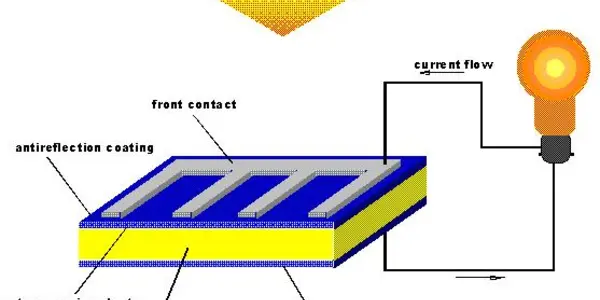
Solar cells are fragile

Solar cells are fragile

Greetings, true believers. I've not let a week pass yet without some tidbit of amateur satellite relevance, and this week is no exception.  Being pleasantly mired in work-work, I'll be…
Flattery?

Flattery?

A music project has cropped up that is very much like Project Calliope, if you swap out 'one man show' and replace it with 'crowdsourced'.  The core concept is Calliope's "convert space to music…
Will NASA Feel The Love Tonight?

Will NASA Feel The Love Tonight?

Around the pink- and red-hued madness of overpriced flowers and heart-shaped everything that is Valentine's Day, even a rocket man1 needs a little love.2 Unfortunately for NASA, the Stardust…
Black Holes May Be Younger Than They Look

Black Holes May Be Younger Than They Look

Super-massive black holes in the universe vary in mass from about one million to 10 billion times the size of our sun, and they're continuing to grow. Now astronomers from Tel Aviv University say…
Arp 147 And Valentine's Day Black Holes

Arp 147 And Valentine's Day Black Holes

Since Valentine's Day is approaching, it's a good time to combine X-rays from the NASA's Chandra X-ray Observatory (pink) and optical data from the Hubble Space Telescope (red, green, blue) produced…
STEREO Brings Us The Sun In 3-D

STEREO Brings Us The Sun In 3-D

Two STEREO spacecraft are now 180 degrees apart from each other and providing scientists with a 360-degree view of the Sun. NASA's STEREO (Solar Terrestrial Relations Observatory) spacecraft were…
Found: 54 Potentially Habitable New Planets

Found: 54 Potentially Habitable New Planets

New papers in arXiv show that the Kepler space telescope continues to fulfill its mission of searching for exoplanets, especially those in the 'habitable' zone, a region where liquid water could…
Hubble Looks Even Farther 'Back In Time'

Hubble Looks Even Farther 'Back In Time'

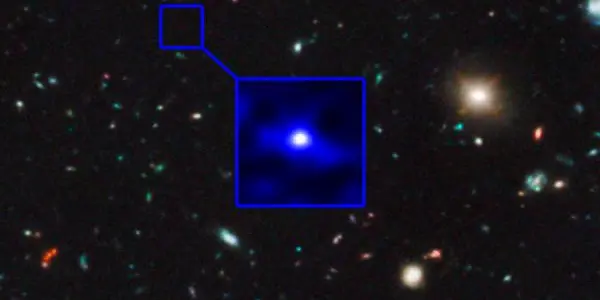
Astronomers at the Hubble Space Telescope believe they have found the most distant object ever seen in the universe, 13.2 billion light years away, some 3% of the age of universe, making it roughly…