Space

Scientific Clogging

Scientific Clogging

Scientific Clogging A recent story about NASA's water recycling system is clogging Google search results.  Apparently, excess calcium in astro-urine is clogging the International Space Station's…
I want to be hit by a crusty meteorite, too!

I want to be hit by a crusty meteorite, too!

A doctor's office in nearby Virginia, just one state down from me, got clobbered by a 'mango-sized' meteorite this week.  Where others see disaster, I see envy. My envy.  My favorite…
What To Do About Near-Earth Objects?

What To Do About Near-Earth Objects?

In a recently released report the National Research Council lays out several options NASA could pursue in order  to detect more near-Earth objects (NEOs) – asteroids and comets that could pose a…
Science & Social Media (AAS 215)

Science & Social Media (AAS 215)

I enjoyed presenting on Project Calliope two weeks ago, at the 215th AAS meeting.  I have a partial podcast of my talk in preparation, but in the meantime, here are the visual slides from my…
AAS:  The Astronaut and the Astronomer

AAS: The Astronaut and the Astronomer

Wednesday 6 January 2010 There have been only two standing ovations at the AAS in his memory, said Society president John Huchra, and the other heralded a presenter who later won the Nobel Prize.…
Demon Star Rainbow

Demon Star Rainbow

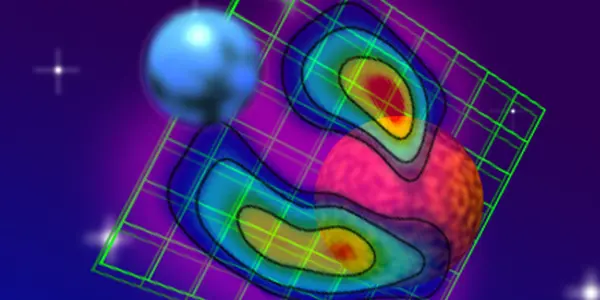
University of Iowa (UI) astronomers have made the first clear, rainbow-like, radio telescope images of a distant stellar coronal loop, at the eclipsing, non-nova binary star Algol, found in the…
On The Trail Of Herschel's Cosmic Cat: NGC 6334

On The Trail Of Herschel's Cosmic Cat: NGC 6334

The European Southern Observatory (ESO) has just released a new image of NGC 6334, an emission nebula discovered by astronomer John Herschel in 1837 and dubbed the Cat's Paw Nebula.  This new…
AAS day two

AAS day two

Tuesday, 5 January 2010 There are several ways to spot an exoplanet.  The two most common are the radial velocity and transit techniques.  Radial velocity measurements detect changes in the…
Go Higher or Go to Antarctica

Go Higher or Go to Antarctica

You can (and should) listen to my first ever podcast, at "365 Days of Astronomy", which is either about a) why we put telescopes on mountains and in space or b) why science in Antarctica rocks!…