Many people exercise to improve the health of their hearts. Now, researchers have found a link between your heart rate just before and during exercise and your chances of a future heart attack. Just the thought of exercise raises your heart rate. The new study shows that how much it goes up is related to the odds of you eventually dying of a heart attack.More than 300,000 people die each year from sudden cardiac arrest in the U.S., often with no known risk factors. Being able to find early warning signs has been the goal of researchers like Professor Xavier Jouven, of the Hopital Européen Georges Pompidou in Paris.
Welcome to Sports Are 80 Percent Mental! Visit me on Twitter and Facebook!
For many years, I have had an interest in cognitive science and sports science. More specifically, how do we learn to perform all of the individual motor skills necessary to c…
When was the last time you listened to a sporting event on the radio? If given a choice between watching the game on a big screen HD or turning on the AM radio, most of us would probably choose the visual sensation of television. But, for a moment, think about the active attention you need in order to listen to a radio broadcast and interpret the play-by-play announcer's descriptions. As you hear the words, your "mind's eye" paints the picture of the action so you can imagine the scene and situations. Your knowledge of the game, either from playing it or watching it for years helps you understand the narrative, the terms and the game's "lingo".
Stop eating all of that junk food. Why? So, you can live longer, of course. Get off the La-Z-Boy and go run five miles. Why?! So, you can enjoy your old age. No more drinking and smoking. Why?!! So, you can live to be 100 years old.The rationale often given for converting to healthy habits has been to give you a longer life. Who better to know about long lives than those that are closing in on the big 100. The U.S. Census Bureau estimates there were nearly 425,000 people aged 95 and older living in the U.S. in 2010 − still only a small percentage of the 40 million U.S. adults 65 and over.
An athlete’s level of greatness is often measured by the opinions of his or her peers while they’re playing and especially when they retire. Being recognized as one of the best by those who understand what it takes is rare. This week, one of the world’s greatest soccer players of the last 30 years retired, yet he could walk down most streets in America without being recognized. After 17 seasons, Paul Scholes of Manchester United played in his final tribute game last week and will become a coach at the club he’s been part of since his teens.While not a household name in the U.S. like Messi or Ronaldo or Beckham, he has earned the respect of the greatest players of his time.
As Tiger Woods returns to action this weekend at the WGC-Bridgestone Invitational, mortal golfers wonder what's inside his head that makes him so much better than us. Well, chances are his brain actually has more gray matter than the average weekend duffer.Researchers at the University of Zurich have found that expert golfers have a higher volume of the gray-colored, closely packed neuron cell bodies that are known to be involved with muscle control. The good news is that, like Tiger, golfers who start young and commit to years of practice can also grow their brains while their handicaps shrink.
For the crowd watching an Illinois high school football game last fall, it was a sickening feeling watching one of their Unity High School cornerbacks collapse to the ground after delivering a heads-down tackle on an opposing running back (see video here.) For Steven Broglio, an assistant professor of kinesiology at the University of Michigan, it was a mixed feeling of concern and curiosity as to the extent of the injury. Since 2007, Broglio has been collecting data on the violent collisions that occur in high school football and their contribution to concussions and other head injuries.
Just as struggling calculus students wonder if they will ever actually use their new proof-finding skills in real life, developing athletes may be curious if their endless practice drills will ever serve them off the field or court? Well, researchers at the University of Illinois have found at least one real life task that will benefit from an athlete’s unique cognitive abilities; crossing the street.
The problem with your diet is not that you’ve been eating the wrong food, but rather you’ve been thinking about your food all wrong. According to Alia Crum, a clinical psychology researcher at Yale University, our mind’s opinion of food labeled or thought of to be “diet” or “low fat” can actually affect our body’s physiological response after eating it, which changes our metabolism. Her sneaky research team told 46 volunteers that they were getting two milkshakes to drink. In the first test, they were told they were sampling a “health” shake that had no fat, no added sugar and a skinny 140 calories. At a separate test, the same group were told they were rewarded with an “indulgent” shake weighing in at a guilt-inducing 620 calories and full of fat.
There was a time when I could hide my gray hairs with some strategic combing. Now, I have succumbed and describe my new hair color as “executive blond.” Of course, that also means that the important stuff under my scalp is getting older too. Brains start to “go gray” about the same time the hair does, which is why exercise for older adults has become the new anti-aging fix for our senior cerebellums. Several new studies provide more evidence that a brain in motion tends to remain... young.
Last week, the Cubs made a rare visit to Fenway Park to face the Red Sox in a Major League Baseball inter-league series. Things got a little nasty when Sox pitcher Alfredo Aceves put a fastball into the face of the Cubs’ Marlon Byrd, causing multiple fractures. As is “tradition” in baseball, the Red Sox batters knew the score would be settled in the following game. After just missing Jed Lowrie with an inside pitch in the eighth inning, Cub pitcher Kerry Wood made sure he connected with his target and plunked Lowrie in the behind on the very next pitch.
To reach the NBA Finals, Russell Westbrook of the Oklahoma City Thunder needs to pass more, especially to his teammate Kevin Durant. That would be the message that two researchers would send to Thunder coach, Scott Brooks, if given the chance. Matt Goldman, a graduate student at the University of California, San Diego, and Justin Rao, a research scientist at Yahoo Labs recently named Westbrook as the biggest “chucker” in the NBA because of statistics showing that he shoots much more often than he should, while Durant is classified as an undershooter, whose team would benefit from him taking more chances.
Recently,
while I was taking up my normal Saturday position on a youth soccer
game sideline, I overheard a conversation between two parents as they
watched the players warm-up. “I just love watching Billy play soccer.
He’s just one of those natural talents.” “I agree. Even though his
parents never played growing up, he just seems to have inherited all the
right genes to be a top player.”
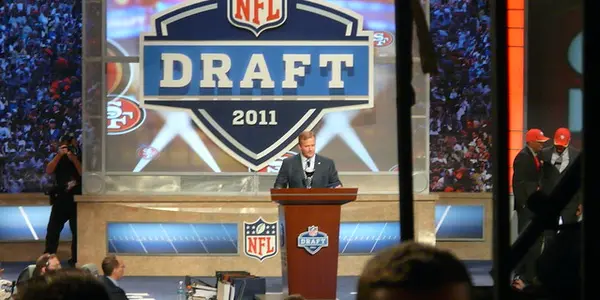
Thankfully,the NFL Draft and all its hype is behind us. The matchmaking is complete but the guessing game begins as to which team picked the right combination of athletic skill, mental toughness and leadership potential in their player selections. Hundreds of hours of game film can be broken down to grade performance with X’s and O’s. Objective athletic tests at the NFL combine rank the NCAA football draftees by speed and strengths, just as the infamous Wonderlic intelligence test tries to rank their brain power.