The Chatter Box

Patrick Lockerby

Patrick Lockerby

Retired engineer, 73 years young. Computer builder and programmer. Linguist specialising in language acquisition and computational linguistics. Interested in every human endeavour except the scrooge theory of accountancy.
RSS Feed
DNA : When Is A Code Not A Code ?

DNA : When Is A Code Not A Code ?

DNA : When Is A Code Not A Code ?Stephen C. Meyer is an intelligent design advocate and a co-founder of the Discovery Institute.

A Science Of Human Language - Part #2

A Science Of Human Language - Part #2

A Science Of Human Language - Part #2Quistic Grammar : A New Universal GrammarIn Part #1 of this series, I suggested that a grammar heavily based in syntax was not sufficiently scientific as a general theory of how language functions.  In developing the current theory I shall try to demonstrate that various observations about human language can be tied together into an inclusive theory of how language functions.  The first, and to my mind most important observation about human language is its redundancy, its apparent inefficiency in the use of the resources of sounds and symbols.

A Science Of Human Language - Part #1

A Science Of Human Language - Part #1

A Science Of Human Language - Part #1Quistic Grammar : A New Universal GrammarIn this series of articles I hope to build, on a sure foundation, a theory which explains language as a means by which evolution can encode information of value to the survival of a species so that it may be transmitted between individuals without the use of genes.  The core of the theory suggests that language, in order to transmit information most effectively, encodes that information as 'packets of ideas' which form the answers to simple questions.Introductory Remarks

Did Language Invent Humans ?

Did Language Invent Humans ?

Did Language Invent Humans ?Writing is a human invention.  We have plenty of evidence of its invention and of its improvement down the ages.  It would make no sense to assume that writing somehow 'just appeared'.  A magical origin of writing would presuppose that our brains are hard wired to read, but we all know that reading and writing are skills that must be taught in a formal manner.  Again, if we were 'hard wired' for written language then we would all use a single writing method, regardless of language.  Writing is most definitely invented.

A Brief History of the English Language Part 3 - Orthography

A Brief History of the English Language Part 3 - Orthography

A Brief History of the English Language Part 3The historical development of English is an excellent model of how a grammar naturally develops.  I am trying to capture some of that history in this short series.  Part of the problem of understanding how language works evaporates completely if one can see the beauty in a flow of words, the magic in a few blots of ink.Part 1 briefly covered the period from the 5th century CE to the 14th century.Part 2 describes Chaucer's influence on the development of English.

A Brief History of the English Language Part 2 - The Age Of Change

A Brief History of the English Language Part 2 - The Age Of Change

A Brief History of the English Language Part 2Part 1 of this Brief History of English  describes the suppression of the English language under  the Normans who imposed Norman French as a national language.   As French declined and English revived there were briefly two languages in the one nation."Before Chaucer wrote, there were two tongues in England, keeping alive the feuds and resentments of cruel centuries; when he laid down his pen, there was practically but one speech -- there was, and ever since has been, but one people."D. Laing Purves

A Brief History of the English Language

A Brief History of the English Language

This is part 1 of 6 in a brief series describing the history of English and its grammar.What is Grammar?A grammar is a set of rules for the communal use of a language. A language can never become a truly national language unless all users of that language share common rules for how words are invented, used and strung together in sentences.  When by some means the users of a language no longer share these rules, the language fragments into dialects and eventually, new languages.  It is useful to think of dialects as not being quite so large an obstacle as different languages are to trade, commerce and exchange of ideas between regions.

Ice, Polar Bears & Penguins

Ice, Polar Bears & Penguins

There is an old gag which asks: "Why don't polar bears eat penguins?" The answer is that polar bears inhabit arctic regions, whereas penguins inhabit antarctic regions, as shown here.There is a saying that the poles are where weather is made. Weather is a heat-driven system, the temperature difference between the poles and the equator, amongst other things, drives our weather. Air is constantly being either warmed or cooled in a planet-wide system, but air is warmed much more in the equatorial regions and cooled more in the polar regions.  (Please note: this is a deliberate oversimplification for purposes of explanation.)

Human Timescales & Global Climate Change

Human Timescales & Global Climate Change

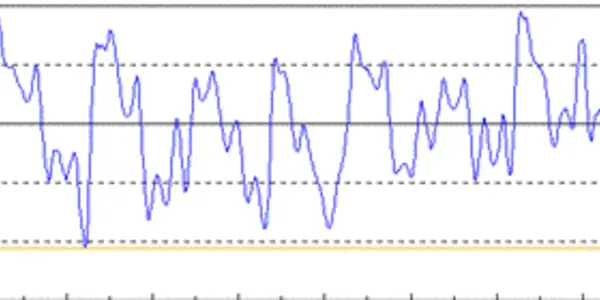
The climate change skeptic asks - 'Given that the climate changes over millenia due to powerful natural forces, how could humans possibly contribute any significant effect to climate change, given our brief existence in geological time?'I shall try to answer that question with examples from engineering which show how short-term pulse events can significantly affect long-term cyclic events.The Influence of Short-Term Events on Long-Term Events.

Be Afraid! - Be Very Afraid! - Subject to the Following Provisos:

Be Afraid! - Be Very Afraid! - Subject to the Following Provisos:

Scientific HedgingA favourite theme in disaster movies is the political figure who tries to keep the local population from being alerted to some impending catastrophe.  Usually, the political figure tries to impede the publication of findings by one or more scientists.  In real life, it is more commonly the scientists themselves who create a barrier that stands between them and non-scientists. That barrier, the 'hedge' is a linguistic device.

What Is Grammar? - A Critique

What Is Grammar? - A Critique

Grammar is supposedly a holistic account of how meaning is expressed by using words in categories and in sequences. It is supposed to be a meld of syntax and semantics. Unfortunately, most writers on grammar focus on the syntax to the exclusion of the semantics. For me, that is like focusing on a carrier wave to the exclusion of the superimposed signal. Spoken language is meaning conveyed by the modulation of a sound signal. It is not the modulation, but the meaning that is master. 'When I use a word,' Humpty Dumpty said in rather a scornful tone, 'it means just what I choose it to mean - neither more nor less.' 'The question is,' said Alice, 'whether you CAN make words mean so many different things.'