The Evilutionary Biologist

jdennehy

jdennehy

I'm an evolutionary biologist and assistant professor at Queens College, City University of New York, who studies bacteriophage life history stochasticity and the population dynamics of host/pathogen interactions. I employ techniques from ecology, m…
RSS Feed
Science Citation Classics: Sanger Sequencing

Science Citation Classics: Sanger Sequencing

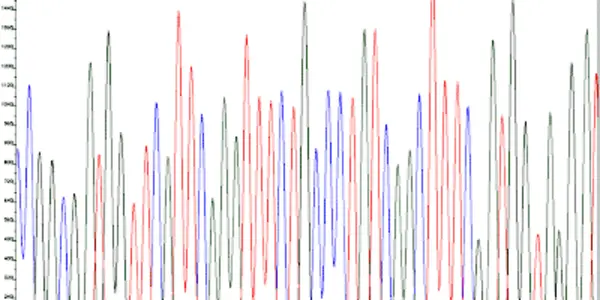
Sanger F, Nicklen S, Coulson AR. 1977. DNA sequencing with chain-terminating inhibitors. Proceedings of the National Academy of Sciences, U S A 74: 5463-7. This paper describes the most important (IMHO) technical breakthrough in the biological sciences:  DNA sequencing using a single-stranded DNA template, a DNA primer, a DNA polymerase, radioactively or fluorescently labeled nucleotides, and modified nucleotides that terminate DNA strand elongation.

Science Citation Classic: Beadle and Tatum

Science Citation Classic: Beadle and Tatum

Behind every major scientific effort is a story. Beadle and Tatum's story is one of persistence. They began with a hypothesis: each gene causes the production of a single enzyme, and that enzyme catalyzes a biochemical reaction within an organism. The seeds of this hypothesis were spawned by Sir Archibald Garrod, who reported in 1909 that alkaptonuria - an inherited condition in which the urine is colored dark red by the chemical alkapton - results from a single recessive gene, which causes a deficiency in the enzyme that normally breaks down alkapton.

I Am Convinced That It Is The Light And The Way

I Am Convinced That It Is The Light And The Way

This statement about natural selection is the last sentence of Adaptation and Natural Selection, George Williams' masterpiece about evolution. George Williams is one of the unsung heroes of 20th century science. An evolutionary biologist I know (who shall remain anonymous to spare him/her public shaming) claimed not to know who was George Williams. I was/still am aghast. This anonymous evolutionary biologist is the inspiration for this post, indeed for my series of citation classics (see also here).

Classic Papers in Biology

Classic Papers in Biology

One of the things I enjoyed most about my time at Yale was the history of the place. I was pleasantly surprised to discover the famous scientists that worked there, including Lederberg, Tatum, Altman, Palade, Gilman etc.  It gave me a sense of being part of a long tradition, part of something important.

Foundations of Epigenetics

Foundations of Epigenetics

Today epigenetics is all the rage, but it has its roots in a pair of papers that appeared nearly simultaneously in 1952-1953. Luria SE and Human ML. 1952. A nonhereditary, host-induced variation of bacterial viruses. J. Bact. 64: 557-569 and also Bertani G and Weigle JJ. 1953. Host controlled variation in bacterial viruses. J. Bact. 65: 113-121.  Luria & Human and Bertani & Weigle independently discovered that bacterial hosts can affect the growth and phenotypic properties of their bacteriophages.

Epic Fail: Evolution and Creationism in America's Classrooms

Epic Fail: Evolution and Creationism in America's Classrooms

It is no exaggeration to call evolution “the central concept of biology.” So why is the fact of evolution denied by half of our population? A new article in PLoS Biology by Michael Berkman, Julianna Pacheco, and Eric Plutzer suggests it might be on account of their lack of education at the high school level. Since only ~25% of the US population obtains a college degree, it is the duty of high school teachers to provide a proper scientific education to our citizens. Model high school curriculum guidelines provided by the National Science Teachers Association, the National Research Council, and the American Association for the Advancement of Science, strongly suggest that teachers “provide evidence that evolution has attained its status as a unifying theme in science.”

How The Influenza Virus Is Like An M&M

How The Influenza Virus Is Like An M&M

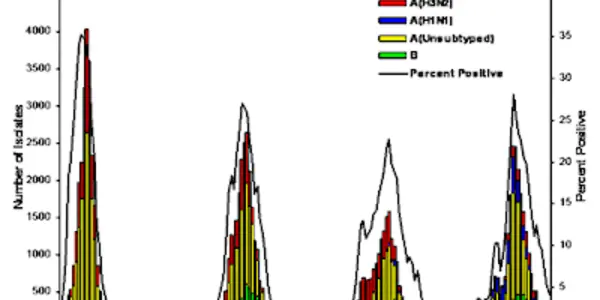
In the Northern hemisphere, winter is the time for the flu. Every year 5% to 20% of us catch "the bug". So predictable is the influenza virus that "flu season" has entered the vernacular. This year, flu cases peaked around the end of February (see chart). Perhaps you've wondered "Why?".Hypotheses for flu season are numerous and include:

Are Bacteriophages picky eaters?

Are Bacteriophages picky eaters?

I don't often see bacteriophage ecology and evolution papers in the open source literature, but there is a nice one in next month's American Naturalist (occasionally Am Nat selects papers for open access).

Whither Nanobacteria

Whither Nanobacteria

Supposedly nanobacteria are cell-walled organisms much smaller than the generally accepted lower limits for cell size. The existence of nanobacteria has been a hot topic because of their putative roles in and heart disease and kidney stones.

Microbes and Chronic Disease

Microbes and Chronic Disease

In the US, most deaths are attributable to chronic afflictions, such as heart disease and cancer. Typically the medical community has attributed these diseases to accumulated damage, such as plaque formation in arteries or mutations in genes controlling cellular replication.

This view is changing.

Scientists are now beginning to recognize that many of these chronic illnesses are due to microbial infections.

Evolution of skin colors of the world

Evolution of skin colors of the world

A favorite book of mine is Evolution: A Scientific American Reader, a collection of articles on astronomy, cell biology, paleontology and anthropology from the print magazine. One of my favorite chapters, "Skin Deep" by Nina Jablonski and George Chaplin, covers the evolution of human skin color.

Skin color results from the presence of the pigment melanin, an organic molecule that absorbs UV radiation and neutralizes free-radicals produced by UV radiation. Why do we need worry about UV radiation? UV radiation causes mutations in skin cells leading to skin cancer, and also destroys the essential B vitamin, folate, which is involved in DNA synthesis. The more melanin, the more protection against UV radiation and the darker the skin.

Hmm, if that is the case, why do not all humans have dark skin? Better to protect against cancer then, isn't it?

Figure from Barsh GS (2003) What Controls Variation in Human Skin Color? PLoS Biol 1(1): e27 doi:10.1371/journal.pbio.0000027. A traditional skin color map based on the data of Biasutti. Reproduced from http://anthro.palomar.edu/vary/ with permission from Dennis O'Neil.

Even Bacteria Get Old...

Even Bacteria Get Old...

Did you know even bacteria get old? Scientists traditionally assumed that bacteria were immortal, since these single-celled organisms split into two apparently identical daughter cells, which in turn divide, and so on. We now believe that this is not true.

Eric Stewart of Northeastern University, and his colleagues took fluorescent images of individual E. coli cells over ten generations. Each generation the E. coli cells divide down the middle, giving each daughter cell one new tip and an old tip from its mother, or grandmother, or some older ancestor.