The possibility that autism is more common in offspring of older parents has generated considerable interest. To investigate the theory, a study using data from 10 US study sites participating in the Centers for Disease Control and Prevention's Autism and Developmental Disabilities Monitoring Network, was developed to examine the relation between parental age at delivery and the prevalence of autism spectrum disorder (ASD). Confirmation of such an association has important public health implications in light of increasing trends in recent decades for couples to delay having children.
I'm a mother of three, with an aeronautical engineering degree. Although it's been a while since I've done any aircraft design, there are surprising applications of my scientific background in my current role as a full-time mom. So whenever possibl…
Scientific happenings, big and small, on this day in history
But first: today’s quiz. What inventor, who died on this day in 1902, developed and patented a highly popular (and much beloved) item of clothing in 1873? Trust me, you most likely have this item of clothing in your wardrobe, and in fact may be wearing it right now – especially since it’s Friday. The answer can be found at the end of this article.
On to other historic happenings…
What happened to my jugs? They’re huge! I’m talking about my milk jugs, of course. No, seriously -- those large, plastic, gallon-sized jugs that you buy at the store that are filled with milk. It seems that they’ve gone through quite a growth spurt all of the sudden.
Why the sudden design change? Transitioning to the new “squared off” jugs saves money, materials, time, and fuel… all things that are good for businesses, consumers, and the environment. The new-fangled jugs started showing up in selected Costco, WalMart, and Sam’s Club stores last fall. But because of the savings they represent, they are certain to start appearing in grocery stores all around the country before long.
Scientific happenings, big and small, on this day in history
First, let’s get started with today’s quiz:
What common household item, used in more than 90 percent of American homes, was developed on this day in 1930 by Richard G. Drew? As a little hint, despite its name it did not originate in Scotland. The answer can be found at the end of this article.
In the meantime, here are some other significant happenings that have occurred on this day:
1504
Michelangelo's David is unveiled in Florence
In autumn 1504 the citizens of Florence, Italy witnessed an exceptional event. After four days of traveling around the city inside a wooden cage running on greased beams, Michelangelo’s David finally reached its destination: the Piazza della Signoria.
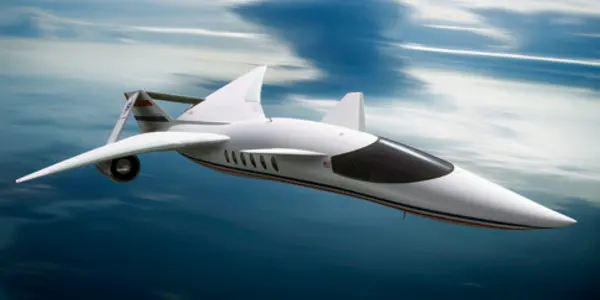
A new age for air travel is dawning; at least if you’re one of the lucky few in the market for supersonic luxury travel. Lockheed Martin's advanced Skunk Works unit is designing a small, 12-seat passenger jet that would travel at 1,200 mph (Mach 1.8) but which would produce only a whisper of the annoying crack once emitted by the retired Concorde.
Aimed at business executives and diplomats, the QSST will fly at nearly twice the speed of conventional business jets and have a range of 4,600 miles nonstop -- Los Angeles to New York in just over two hours. The sleek, 130-foot-long QSST (for "quiet supersonic transport") aircraft is being designed for a Nevada consortium called Supersonic Aerospace International, or SAI, at an estimated cost of $2.5 billion. According to the company, it could be ready for boarding by 2013.
It seems that this is a technology that is long overdue, and it may seem curious that domestic supersonic travel doesn’t already exist. But it’s been the pesky sonic boom that accompanies supersonic flight that has prevented development in this area -- until now.
Scientific happenings, big and small, on this day in history
But first, today’s quiz:
The answer may seem obvious, but don’t be fooled – it’s not what you think. On this day in 1886, the first earthquake on record with significant human consequence (over 100 deaths) took place. In what U.S. state did it occur? Just to confirm, it’s NOT California. You can discover the answer at the end of this article.
Now on to other events:
Scientific happenings, big and small, on this day in history…
But first, today’s quiz:
What event, which took place on this day in 1883, produced the most violent explosion known in human history? You probably know the answer; it’s just a matter of thinking about it for a moment. But just to be sure, you can check the answer at the end of the article.
And on to other historic happenings…
Scientific happenings, big and small, on this day in history.
For today’s quiz you’ll not only need to know a bit about science history, but need to have some familiarity with our military history as well. Which American aeronautics pioneer, born on this day in 1834, is the namesake for the Virginia military base that houses the United States Air Force’s 1st Fighting Wing? It’s not that hard really. Seriously, how many Virginia military bases do you know? But just to be sure, you can check the answer at the end of this article.
And more on this day in science…
Scientific happenings, big and small, on this day in history
But first, today’s quiz:
What famous inventor, born on this day in 1871, will forever be famous for something he did for only 12 seconds? Think you know…? You might be right. To be sure check out the answer at the end of the article.
Every day is a historic day, as this column will attest. In the world of science, what has happened on this day? Here’s just a glimpse of some of the milestones, big and small, that have occurred on this date.
To start things off, here’s a little quiz:
What common item found in any toolbox, was patented by Solymon Merrick on August 17 in 1835? Don’t let it drive you “nuts”, the answer will appear at the end of the article.
In the meantime, here are some other happenings from this day in science history:
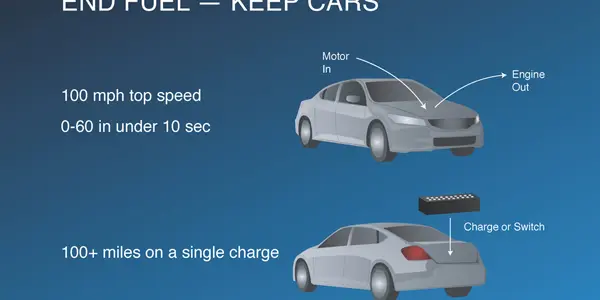
A good friend of mine recently introduced me to an effort that is currently underway that is very ambitious, but also very promising: Project Better Place… the brainchild of Shai Agassi, former President of the Products and Technology Group at SAP AG. The vision of Project Better Place is an oil-free future where personal transportation is no longer dependent upon gasoline-burning vehicles, but by the next generation of battery powered cars. This of course is not a new idea, but what is new about Project Better Place (PBP) is the detailed plans in place to implement that vision.
Mr. Agassi has developed the design of PBP not around the vehicles involved, but around the consumers.
These are great In-flight Photos of the F/A-22 as the first Aircraft Delivery
was being made to Langley AFB in Va. . Langley is to be first Operational AFB
for the F/A-22. It is a very beautiful AFB, located in a picturesque
location, as you can see in these photos, near Norfolk and Hampton , Va.
The Aircraft flying along with the F/A-22 in the last of these photos is the F-15, which will be replaced by the F/A-22 which is several times better
than the F-15.
In Actual In-flight (simulated) Combat Operations against the F-15, two
F/A-22's were able to operate without detection while it went Head to Head
against (8) F-15's.
Baking soda is one of those wonder substances with useful applications far beyond simple baked goods. We all know we can open a box and leave it in our fridge to combat odors. But as a result of innovative work done by Skyonic Corporation in Texas, baking soda may become one of our greatest weapons against carbon emissions and global warming as well.
Skyonic has developed a “post-combustion carbon capture and sequestration technology that works with any large-scale stationary CO2 emitter” (e.g.- coal, natural gas or oil fired power plant). The process removes heavy metals, acid gasses, and carbon dioxide from conditioned at-temperature flue gas. The carbon emissions are then stored as stable sodium bicarbonate (better-than-food-grade baking soda) for long-term storage as land or mine fill. The clean flue gas is then returned to the plants stack for release.