
Main navigation

  • Home
  • Culture
    • Humor
    • Mathematics
    • Random Thoughts
    • Science & Society
    • Sports Science
    • Technology
  • Earth Sciences
    • Atmospheric
    • Energy
    • Environment
    • Geology
    • Oceanography
    • Paleontology
  • Life Sciences
    • Ecology & Zoology
    • Evolution
    • Immunology
    • Microbiology
    • Neuroscience
  • Medicine
    • Aging
    • Cancer Research
    • Clinical Research
    • Pharmacology
    • Public Health
    • Vision
  • Physical Sciences
    • Aerospace
    • Applied Physics
    • Chemistry
    • Optics
    • Physics
    • Space
  • Social Sciences
    • Anthropology
    • Archaeology
    • Philosophy & Ethics
    • Psychology
    • Science History
  • Contributors

User menu

  • Log in

Breadcrumb

  1. Home
  2. Emmanuel Lipmanov
Bimaximal Pattern Links Color Quark and Neutrino Mixing-Angle Approximations
Flavor-Geometric Duality and Pseudo-Euclidean Symmetry of Neutrino Mixing in Semi-Empirical Phenomenology
On Neutrino CP-Violation Idea
Basic Connection Between Neutrino Flavor and Geometry: Absolute Masses and CP-Violation Model
Summing up My New Semi-Empirical Neutrino Physics Ideas from 2016 Year, and some further clarifications
From Data: -- Neutrinos are Related to Geometry Unique Particles
Crazy Enough to be True?
Metaphors in Quantum Mechanics
Nonzero Theta13 and Neutrino Mixing Deviation from Bimaximal Geometric Symmetry
Neutrino Mixing CP-violating Phenomenology with only Two Free Parameters
Dirac CP-violating phase from deviotion neutrino mixing off geometric bimaximal approximation
Complementarity relation between CP-violating phase and neutrino mixing reactor angle
New Physics from Regularities of the Many Standard Model Free Parameters
Geometric Contrast of Quark and Neutrino Mixing Hierarchies
Quantum Mechanics Started with Semi-Empirical Phenomenology – Important Lesson
Publication censorship of new physics ideas – a sort of pseudo-science
Motivating Zero Neutrino Mass Scale
New Physics Complete Neutrino Mass Specter from Oscillation Data
Common Sense and Cosmology
Zero Neutrino Mass Scale in Semi-Empirical Phenomenology
Euclidean 3-Space Geometry Organizes SM-Higgs Free Parameters
Dirac or Majorana Neutrino Mass Type?
Absolute Neutrino Masses in Geometric Phenomenology of Standard Model Hierarchies
Geometric Phenomenology of Higgs Sector Empirical Parameters
Methodical Comment on the Number of Flavors in Standard Model

Pagination

  • Current page 1
  • Page 2
  • Next page Next →

Donate

Please donate so science experts can write for the public.


At Science 2.0, scientists are the journalists, with no political bias or editorial control. We can't do it alone so please make a difference.

We are a nonprofit science journalism group operating under Section 501(c)(3) of the Internal Revenue Code that's educated over 300 million people.

You can help with a tax-deductible donation today and 100 percent of your gift will go toward our programs, no salaries or offices.

More reads

Featured Image

Choosing Between Inquiry-Based Learning And Direct Learning

Featured Image

With No Bee Deaths Happening, Activists Now Say Birds Are Dying From Neonicotinoids

Though periodic deaths of bees continue to happen, and have been documented for as long as records of bees have been kept, over 1,000 years, efforts to blame the most recent statistical blip on a…
Featured Image

New Study Questions The Safety Of Caspase Inhibitors For The Treatment Of Liver Disease

Philadelphia, PA, September 9, 2016 - Many acute and chronic liver diseases, including alcoholic hepatitis, result from apoptotic (programmed) cell death mediated by the enzyme caspase. Caspase…
Featured Image

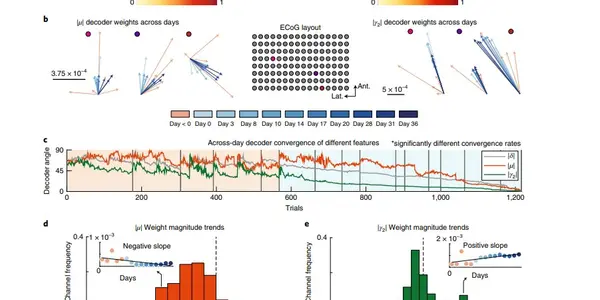
'Plug And Play' Brain Prosthesis Debuts In Paralyzed Person

A brain-controlled prosthetic limb have shown that machine learning techniques helped an individual with paralysis learn to control motion using their brain activity without requiring extensive daily…

Footer

  • About Us
  • Copyright and Removal
  • Privacy Policy
  • Terms

© 2006-2026 Science 2.0. All rights reserved.