Main navigation

  • Home
  • Culture
    • Humor
    • Mathematics
    • Random Thoughts
    • Science & Society
    • Sports Science
    • Technology
  • Earth Sciences
    • Atmospheric
    • Energy
    • Environment
    • Geology
    • Oceanography
    • Paleontology
  • Life Sciences
    • Ecology & Zoology
    • Evolution
    • Immunology
    • Microbiology
    • Neuroscience
  • Medicine
    • Aging
    • Cancer Research
    • Clinical Research
    • Pharmacology
    • Public Health
    • Vision
  • Physical Sciences
    • Aerospace
    • Applied Physics
    • Chemistry
    • Optics
    • Physics
    • Space
  • Social Sciences
    • Anthropology
    • Archaeology
    • Philosophy & Ethics
    • Psychology
    • Science History
  • Contributors

User menu

  • Log in

Breadcrumb

  1. Home
  2. News
Neuroscientists May Be Able To Predict Our Spending Habits
Fermi Telescope Closes In On Source Of Cosmic Rays
Subtropical Waters Flushing Through Greenland, Driving Glacial Melting
Study May Solve Mystery Of Arthropod Origins
Business Owners Say TV Entrepreneurs Don't Reflect Real Life
Why Don't Galaxies Make As Many Stars As They Used To? Astronomers Explain
Ill-Fitting Condoms Are Cause For Concern, New Study Says
Oh No! Secondhand Smoke In Bars 'Exceptionally Hazardous'
Egyptian Pharaoh May Have Died From Malaria, Bone Abnormalities
Resilient Coral Reefs Could Survive Climate Change
Mosquito Nose Transplant May Help Fight Malaria
Decreasing Fog Threatens Redwoods Along California's Coast
Stem Cells Sabotage DNA To Produce New Tissues
Blocking IspH Enzyme May Lead To New Antibacterial Drugs
Sleepy Teenagers Get In More Car Accidents
Infants With Flat Head Syndrome At Risk For Developmental Delay - Study
Urbanization, Global Trade Drive Deforestation, Study Says
Are Your Kids Overweight? Blame It On Product Placement
Common Chromatin Proteins Link Multiple Cognitive Disorders
ToxT Protein Explains Cholera's Virulent Nature
Low Levels Of PC Antibodies Linked To Stroke Risk
Bonobos Show Sharing's Not Exclusive To The Human Experience
Restrict Sodium Consumption? Not Without Evidence, Researcher Argues
New Evidence Links Exploration Well To Lusi Mud Volcano
AGN 3C 33 - Unraveling Black Hole Spin

Pagination

  • Previous page ← Prev
  • Page 651
  • Page 652
  • Page 653
  • Page 654
  • Current page 655
  • Page 656
  • Page 657
  • Page 658
  • Page 659
  • Next page Next →

Donate

Please donate so science experts can write for the public.


At Science 2.0, scientists are the journalists, with no political bias or editorial control. We can't do it alone so please make a difference.

We are a nonprofit science journalism group operating under Section 501(c)(3) of the Internal Revenue Code that's educated over 300 million people.

You can help with a tax-deductible donation today and 100 percent of your gift will go toward our programs, no salaries or offices.

More reads

Featured Image

Mpox Vaccine Effective In Preventing Infection

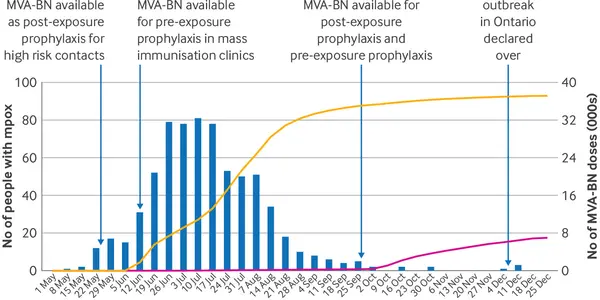
A health data simulation has concluded that a single dose of the Modified vaccinia Ankara-Bavarian Nordic (MVA-BN) was 58% effective in protecting again mpox infection, a disease caused by infection…

Featured Image

I Made Smirnoff Vodka Concede Its Non-GMO Label Is Just A Marketing Gimmick

Smirnoff, the vodka brand owned by Diageo of Great Britain, recently undertook an ad campaign starring celebrities Ted Danson and Jenna Fischer touting how they
Featured Image

How Climate Change Impacted Diets Over 7,000 Years

Before the invention of modern science and technology, where many diverse foods can be grown in areas once considered inhospitable, the whims of nature determined what you ate, and if you ate at all.…
Featured Image

Acinus: Engineers Have Built A Pancreatic Cancer Time Machine

Pancreatic cancer tends to develop from chronic inflammation that happens when a mutation has caused digestive enzymes to digest the pancreas itself. What if we could go 'back in time' and reverse…

Footer

  • About Us
  • Copyright and Removal
  • Privacy Policy
  • Terms

© 2006-2026 Science 2.0. All rights reserved.