
Main navigation

  • Home
  • Culture
    • Humor
    • Mathematics
    • Random Thoughts
    • Science & Society
    • Sports Science
    • Technology
  • Earth Sciences
    • Atmospheric
    • Energy
    • Environment
    • Geology
    • Oceanography
    • Paleontology
  • Life Sciences
    • Ecology & Zoology
    • Evolution
    • Immunology
    • Microbiology
    • Neuroscience
  • Medicine
    • Aging
    • Cancer Research
    • Clinical Research
    • Pharmacology
    • Public Health
    • Vision
  • Physical Sciences
    • Aerospace
    • Applied Physics
    • Chemistry
    • Optics
    • Physics
    • Space
  • Social Sciences
    • Anthropology
    • Archaeology
    • Philosophy & Ethics
    • Psychology
    • Science History
  • Contributors

User menu

  • Log in

Donate

Please donate so science experts can write for the public.


At Science 2.0, scientists are the journalists, with no political bias or editorial control. We can't do it alone so please make a difference.

We are a nonprofit science journalism group operating under Section 501(c)(3) of the Internal Revenue Code that's educated over 300 million people.

You can help with a tax-deductible donation today and 100 percent of your gift will go toward our programs, no salaries or offices.

More reads

Featured Image

Making Memories Stronger And More Precise During Aging

When it comes to the billions of neurons in your brain, what you see at birth is what get -- except in the hippocampus. Buried deep underneath the folds of the cerebral cortex, neural stem cells in…
Featured Image

The CAPSTONE Mission Launches A New Era In The Colonization Of The Moon

Featured Image

Doctors: Beware Of Low Diastolic Blood Pressure When Treating Hypertension

By analyzing medical records gathered over three decades on more than 11,000 Americans participating in a federally funded study, researchers at Johns Hopkins Medicine say they have more evidence…
Featured Image

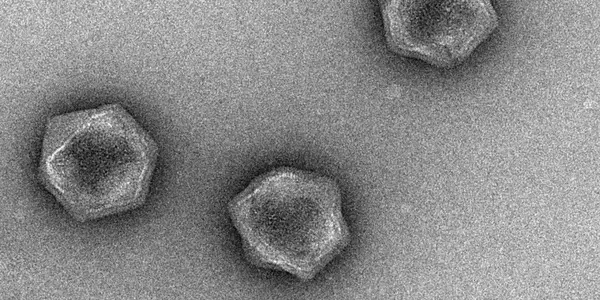
Evolution Could Make Future Viruses Even Weirder: Some Have The Building Blocks For Their Own Metabolism

Though they are called giant viruses they're still among the tiniest denizens of the microbiome. A few genes' worth of DNA or RNA folded into a shell so small you need an electron microscope to see…

Footer

  • About Us
  • Copyright and Removal
  • Privacy Policy
  • Terms

© 2006-2026 Science 2.0. All rights reserved.