Agricultural Realism

Steve Savage

Steve Savage

Trained as a plant pathologist (Ph.D. UC Davis 1982), I've worked now for >30 years in many aspects of agricultural technology (Colorado State Univ., DuPont, Mycogen, independent consultant). Since mid 2009 I've also been blogging on a variety of "su…
RSS Feed
Gorillas And The Future Of Crop Biotechnology

Gorillas And The Future Of Crop Biotechnology

There are some really cool improvements coming along in several crops that have been developed using the tools of biotechnology - GMOs if you will. Some of these innovations have consumer health benefits. Some expand ways to encourage greater produce consumption. Some reduce food waste. Some prevent crop losses through disease and reduce the need for copper sprays. These traits represent an expansion of biotech beyond the major row crops primarily grown for animal feed or for fiber to crops like apples, oranges, tomatoes, pineapples and potatoes. Whether these new options actually make it to consumers depends a great deal on decisions that will be made by gorillas.

How Wrong Is The Latest "Dirty Dozen" List?

How Wrong Is The Latest "Dirty Dozen" List?

The Environmental Working Group (EWG) says that it "helps protect your family from pesticides."

The purpose of this Applied Mythology post is to "help protect your family from dangerously misleading information from the EWG."

Six Reasons Organic Is NOT The Most Environmentally Friendly Way To Farm

Six Reasons Organic Is NOT The Most Environmentally Friendly Way To Farm

Contrary to widespread consumer belief, organic farming is not the best way to farm from an environmental point if view. The guiding principal of organic is to rely exclusively on natural inputs.  That was decided early in the 20th century, decades before before the scientific disciplines of toxicology, environmental studies and climate science emerged to inform our understanding of how farming practices impact the environment.  

No, Cows Don't Make Fertilizer

No, Cows Don't Make Fertilizer

Fertilizer that comes from cows or other animals does not really originate with them.  Manure from cows and other animals has been used as a crop fertilizer for millennia, and it is still used today for about 5% of US crop acres and for a high proportion of organic acres.  It is often spoken of as an alternative to "outside inputs" for crops and as a superior option relative to "synthetic fertilizers."  

The Muddled Debate About Pesticide And GM Crops

The Muddled Debate About Pesticide And GM Crops

Does the adoption of GM crops lead to more or less pesticide use?  This is a frequent topic of debate, but generally one that misses the point.  Both sides make the same erroneous assumption that all pesticide use is, by definition, a bad thing.  

Eight Technologies Keeping A Carcinogen Out of Your Food

Eight Technologies Keeping A Carcinogen Out of Your Food

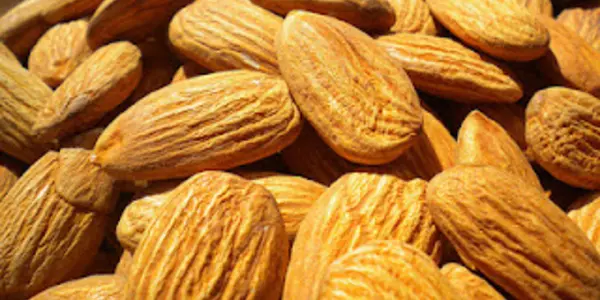
Safe, Tasty, Nutritious Almonds We Shouldn't Take For GrantedSometimes we need to hear about things that are working well in our food system.  I'd like to describe a case where sound regulation and well-applied technology combine to protect us from a significant risk posed by a natural chemical called Aflatoxin - one of the most toxic and carcinogenic chemicals known.