Agricultural Realism

Steve Savage

Steve Savage

Trained as a plant pathologist (Ph.D. UC Davis 1982), I've worked now for >30 years in many aspects of agricultural technology (Colorado State Univ., DuPont, Mycogen, independent consultant). Since mid 2009 I've also been blogging on a variety of "su…
RSS Feed
Scientists Behaving Badly

Scientists Behaving Badly

Its been a bad week for science, particularly for the science related to food production. The notoriously flawed "Seralini Study" about tumors in rats fed GMOs is being republished in another journal after having been retracted. Another paper has come out making a rather questionable link between autism and proximity to pesticide applications on farms.

A Fishy Attempt To Link Glyphosate And Celiac Disease

A Fishy Attempt To Link Glyphosate And Celiac Disease

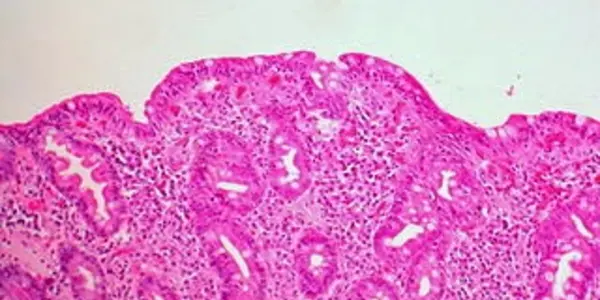
Stephanie Seneff (a computer scientist at MIT),  and Anthony Samsel (a retired consultant), have recently been attempting to link the use of the herbicide glyphosate to a long list of modern maladies. Their latest such attempt to is Celiac disease.  The overall argument for the glyphosate/Celiac link has already been quite thoroughly debunked by a Celiac expert, but there is one other good reason to dismiss the "link" which I would like to describe.  

Thoughts About Norm Borlaug On : The 100th Birthday Of "The Man Who Fed The World"

Thoughts About Norm Borlaug On : The 100th Birthday Of "The Man Who Fed The World"

Norman Borlaug would have been 100 years old today. He has been called "The Man Who Fed The World," and "The Father of The Green Revolution." Norm Borlaug was the first plant pathologist to be awarded a Nobel Prize (1970) - for contributions to world peace. For all of use who are fellow plant pathologists, his work has been particularly inspiring.

It is a good time to look back at how the challenge of feeding the world population was met during Borlaug's career, because we have a similar challenge ahead of us. The chart below shows global population from 1950 with a projection to 2100. 

Our Farmers Get An A+ For Low Pesticide Residues

Our Farmers Get An A+ For Low Pesticide Residues

Last week, the USDA released its annual Pesticide Data Program (PDP) report about pesticide residues on food. This release comes from extensive sampling of crops entering the market during 2012.

An Example Of How Much Pesticides Have Changed

An Example Of How Much Pesticides Have Changed

The pesticides that farmers use to protect their crops have changed a great deal over the last few decadesWhile improvement is something we expect from technologies as diverse as pharmaceuticals to electronics, few people are aware of the positive developments in the chemicals used for crop protection.  Dramatic change began with the establishment of the EPA in 1970 which led to the elimination of many problematic, old pesticides.  Also, there has been a steady stream of new product introductions with both safety and efficacy advantages.

Five Ways That Farmers Control Pests Other Than With Pesticides

Five Ways That Farmers Control Pests Other Than With Pesticides

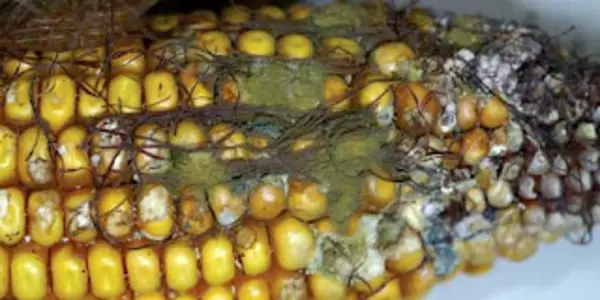
There are many pests in the world which attack plants or compete with them for the resources they need to grow.  This is true for plants growing in natural stands, but also for the plants that people grow as crops.  If pests are left unchecked, crop productivity is compromised. Without good pest control, it would take a lot more land to feed humanity - land we simply don't have. Pest damage can also compromise the storage or shelf-life of foods leading to more wasteful inefficiencies. Pests can also make foods dangerous through the production of mycotoxins (see contaminated corn below)