Between Death and Data

Oliver Knevitt

Oliver Knevitt

In a nutshell: I like fossils. But even more than than that, I like arguments about fossils. Which is why my current occupation as a PhD researcher in paleontology suits me well. My research is nominally on the Eramosa formation of Ontario, Canada, …
RSS Feed
Let's Clear Up A Few Things About Geomagnetism

Let's Clear Up A Few Things About Geomagnetism

If you're anything more than an infrequent stumbler to Science 2.0, then you will probably have noticed - if not, read - Helen's article on geomagnetic polarity reversals, which until recently has been floating in the top articles list.Whilst it's a gallant attempt to understand the ins and outs of an incredibly complex and poorly understood process, there are a number of misconceptions that I thought would be a good idea to clear up. It's clearly a topic of great interest, because there are over 400 comments on the article.Before going into these misconceptions, though, let's start with...

Ethane: A Fingerprint For Life On Exoplanets

Ethane: A Fingerprint For Life On Exoplanets

Before discussing the conclusions of this paper released this week, I'll start with a pub-quiz style question. How much of Earth's atmosphere has not been made by living things?The answer is: less than 1%, which is mostly argon. The overwhelming majority is biogenic; the nitrogen is a product of denitrifying bacteria, the oxygen from plants, and the inconspicuous CO2 is produced by everything, but especially animals.

Ancient Analogies For Global Warming?

Ancient Analogies For Global Warming?

Most people know that we have tried to judge what may happen during global warming by creating gigantic models of the Earth system, and see how it responds to forcing from different factors.Another way that we approach the problem, is, (in my opinion) a much more interesting line of research, and that is looking in the geological record to see how the Earth responded in the past to global warming events, and to use these to inform us about what may happen now.

The 5 Greatest Palaeontology Hoaxes Of All Time #3. Archaeoraptor

The 5 Greatest Palaeontology Hoaxes Of All Time #3. Archaeoraptor

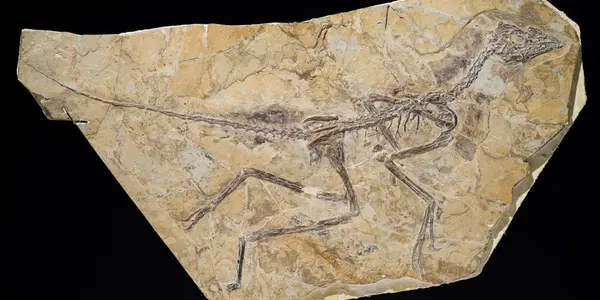
Extraordinary claims require extraordinary evidence. This is true of all science, but especially in palaeontology, where only a handful of exceptional fossils can give a disproportionate amount of weight to a hypothesis. As a consequence, palaeontologists are rightly highly suspicious of exceptional fossils, and thus new finds are, at first, treated with derision and pathological suspicion, until, after much scrutiny, they are found to make the grade.Never was this more the case than with Archeoraptor. Here was a fossil that had a lot to prove and a long way to fall. But, despite the whinings of Kent Hovind and the like, from the very start, very few people were fooled by Archeoraptor, and the whole debacle barely registered within the scientific community.

Dear BBC...

Dear BBC...

Dear BBC,Before publishing an article like this......would you take a step back and think, "Is this really what my facts are telling me?" Because, if they don't, consider your position as a self-styled centre for top quality journalism, and don't publish misleading, irresponsible things like this.And please, don't adopt the Daily mail tactic of putting a caveat halfway down the page. Or in this case, literally in the second paragraph,

Prelude To The Final 3: Of Fossils And Physicists

Prelude To The Final 3: Of Fossils And Physicists

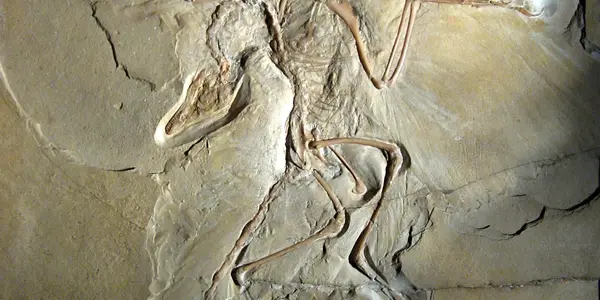
Firstly, I guess an apology is in order. Its been a hell of a long time since number 4 went out; I got rather caught up with other things and this series then languished on my list of half-written articles. So, apologies for that!But before we get cracking with the final 3, I thought I'd pick up on an episode of fakery that just wasn't. This is the tale of Archaeopteryx, who has weathered the storm and has retained its place as perhaps the greatest example of a transitional fossil that we have.

The Biggest Trilobite In The World

The Biggest Trilobite In The World

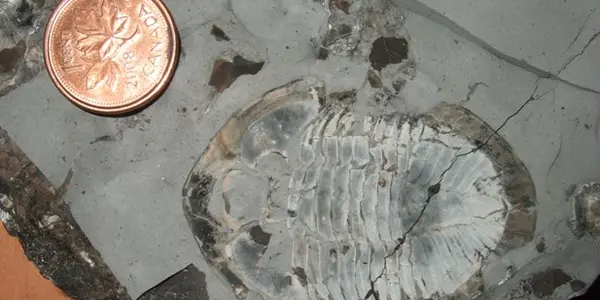
I'll share with you my most recent finds, which I found at Craigleith last weekend in a brief interlude from the fieldwork that I'm doing down the road from there:

Beware Meta-Studies: An Example From Whale Evolution

Beware Meta-Studies: An Example From Whale Evolution

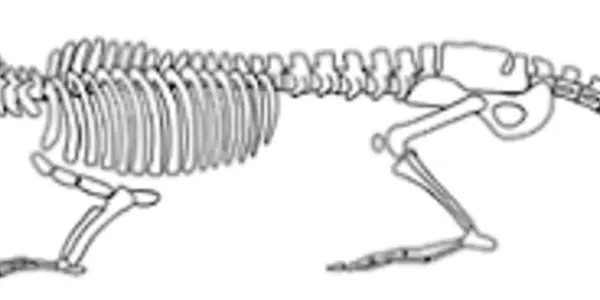
I think one of the first things that got me interested in evolutionary biology was finding out that whales used to have legs. It's pretty incredible that the sleek, powerful whales of modern day oceans had their origins in blundering land animals like cows and hippos. Nothing spoke more to me about the aeons of time that has passed than imagining generation after generation of whales tentatively playing with the water, feeding there, learning to become good swimmers, and eventually swimming in the open ocean amongst the fishes, their terrestrial history a long forgotten memory.

Chandra Wickramasinghe Is Being Sacked: Good Riddance

Chandra Wickramasinghe Is Being Sacked: Good Riddance

You may not have heard of Chandra Wickramasinghe, but he is due to be sacked alongside all of his collegues at the center for Astrobiology at the University of Cardiff.Yes, he and all his collegues were cheap (£15,000 a year, or $24,000), and yes, astrobiology is a very legitimate way to spend the money. But, on Chandra Wickramasinghe? Really? Chandra who?

A Candidate For A Darwin Award: A 370Ma Placoderm

A Candidate For A Darwin Award: A 370Ma Placoderm

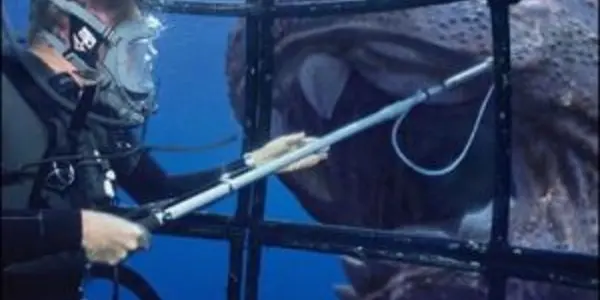
Everyone's heard of the Darwin Awards, right? It's where some poor soul dies in such a monumentally stupid way that it can be considered that they have done the human gene pool a great favour by inadvertantly altruistically killing themselves and removing their genes. Well, I have a candidate from the fossil record; a late famennian placoderm, that definitely deserves such an accolade.Firstly though, a quick primer on placoderms. In short, they were big armoured predatory fishes that were widespread in the Devonian. But, by big, I mean really big. Some of these dudes were as big as a double decker bus and would have pretty happily chomped through a car like it was a ham sandwich.

Rainforests On Mars

Rainforests On Mars

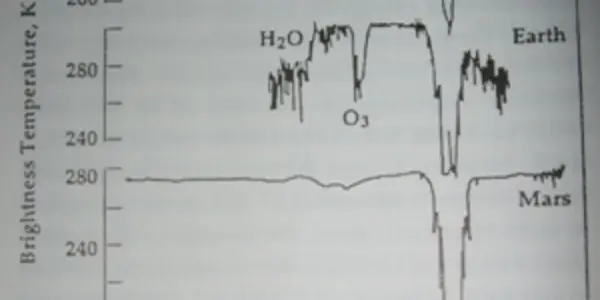
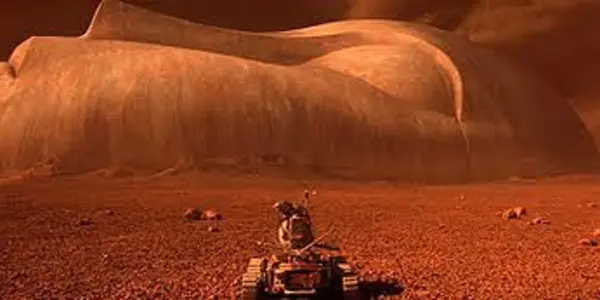
Does anybody remember that film, Mission to Mars? Its a good one. Basically, this band of astronauts tootle off to Mars to find their buddy, against all odds find him and, moreover, find that he seems to be doing just fine by growing tomatoes in a make-shift greenhouse. They then all decide to pop out to see the Face of Mars after he recounts having heard a weird sound near there.(By the way, there's a bit of a spoiler alert coming, but it is 10 or so years after the film came out, so it's fair game!)So, moving on, they go to the face and, lo and behold, the face opens, and they step inside.

Fontenelle’s Conversations (1686): Popular Science Writing At Its Very Best

Fontenelle’s Conversations (1686): Popular Science Writing At Its Very Best

Popular science writing today can be hit and miss. It can be truly awful; such as Brian Greene’s immensely dull Elegant Universe, Stephen Jay Gould’s idiosyncratically waffley Rocks of Ages, and Nassim Nicholas Taleb's misguided and rushed Black Swan (in my humble opinion). But it can be utterly sublime, such as Richard Dawkins’ The Ancestors Tale (his magum opus, in my opinion), Stephen Hawking’s A Brief History of time, and Carl Sagan’s The Cosmic Connection.Good popular science books like these are engaging, unpretentious, and inspirational, but most  of all, clever, witty, and humorous. You could argue with me on this one, but simply saying that the science will speak for itself is not good enough. I could just as well go read a nice thick textbook.