Hey, heads up Public: game-changing new science means we can probably make insects stop spreading malaria, dengue fever, and Lyme disease. Or reverse pesticide resistance in agricultural pests. Or even eliminate invasive (or otherwise undesired) species. But this has major public policy implications, and scientists want to make sure everybody knows what we’re getting into and we set up safeguards before any of this actually happens.
I have given up on categories. I did a BA in physics, a PhD in molecular biology, and now a postdoc in a bioengineering department. So call that what you will, I'm interested in using a quantitative approach to understand biology and solve problems…
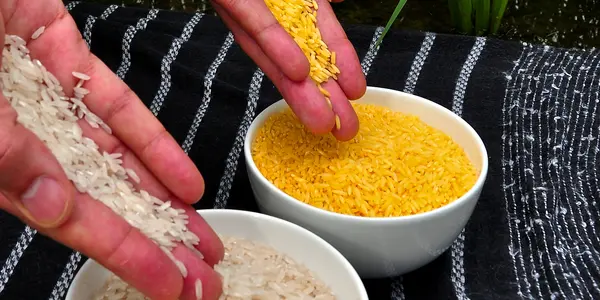
Well here's an interesting development. Mandatory labeling of GMOs (genetically modified organisms), the subject of CA Prop 37, has opened a rift between two of my favorite organizations. The AAAS (American Association for the Advancement of Science) recently released a statement opposing mandatory GMO labeling, while the UCS (Union of Concerned Scientists), remains firmly in favor. The AAAS says mandatory labeling is reserved for potential dangers, but genetic engineering is as safe as conventional breeding.
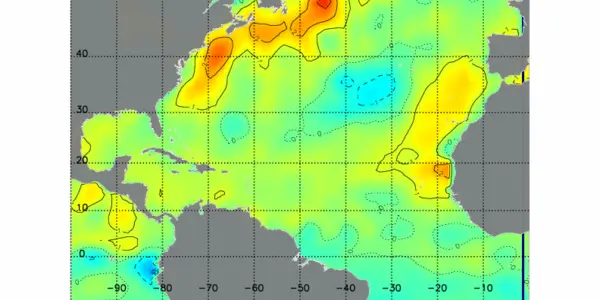
Hurricane Sandy, 2012:Massive and dangerous Hurricane Sandy has grown to record size as it barrels northeastwards along the North Carolina coast... -Jeff Masters, Weather Underground, Oct. 28 2012.Science paper, 2010:Fewer but fiercer and more-destructive hurricanes will sweep the Atlantic Basin in the 21st century as climate change continues, a new modeling study by U.S. government researchers suggests. -commentary by Richard Kerr on Bender, M.A. et al., 2010. Science, 327(5964), pp.454–458.Hurricane Sandy, 2012
Alpha Centauri is the closest star system to Earth other than our own sun. So one would think if it had planets, we would know by now, right? Wrong, apparently. Astronomers just announced the discovery of an Earth-sized planet in Alpha Centauri, although it's closer to its star than Mercury is to our sun, so unlikely to have life. However, there may actually be even more planets further out from the star! So why are we only just now discovering planets in our nearest neighboring solar system, and why don't we know yet if there are more?
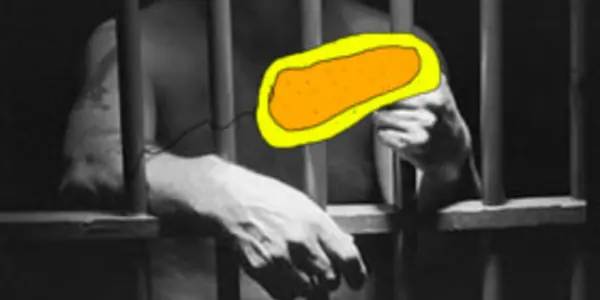
We humans take great pride in our ability to come together and cooperate as a society. Interestingly, many microbes cooperate as well. A central conundrum among scientists studying microbial cooperation has been how bacteria manage to prevent cheaters from taking over their population, even without jails or stocks or scarlet letters. Now, a new study finds a surprising genetic mechanism that manages to punish cheaters by depriving them of a private good.Bacteria manage to punish cheaters, even without overloading their prison system. (Apologies to SolieLInitiative and Raul654 of wikimedia for my poor graphics skills)
You may have heard of superfluids and superconductors, so why not supersolids? In 2004 Moses Chan and Eunseong Kim thought they had discovered that super-cooled helium ice could essentially walk through walls – a defining characteristic of a supersolid. The experiment was to make a cylinder with tiny nanopores in its walls, fill the pores with solid helium ice, suspend the cylinder from a torsional spring, and then give it a little twist. Like a kid on a swing set, the cylinder started rotating back and forth, with a frequency depending on its mass. As they supercooled the cylinder even further, they saw that the oscillation frequency changed, as if it had less mass!
Imagine, if you will, that your computer screen (or iThingie, or DroidDevice) were to suddenly explode, driving a shard of shrapnel deep into your shoulder. Very quickly, your white blood cells would sense the intruder and rush to the site of the insult, hunt down invading bacteria, and just generally do what they do. But if you think about it, these are single cells! How does a single cell sense where to go, and then keep moving in that direction?
While perusing the news last night, I was horrified to come across a set of articles telling me that less sleep is better for academic performance. If that’s the case, I should be in tip-top mental shape right now, because the reporting on that study was bad enough to keep me tossing and turning in scientific consternation.
A note to bird flu virologists: Not all of you have been approaching of this whole engineered flu pandemic controversy quite optimally. It’s understandable that you weren’t prepared for all the attention. After all, you were only answering calls from both the NIH and World Health Organization to better understand the deadly H5N1 bird flu.
Last week I was introduced to an intriguing little brain game that could very well prevent Alzheimer's disease, with the nice side effect of helping to save the world. The game was demonstrated no less than three times by a commenter on a previous article reading between the lines of some recent science-related news.
Ok, don't forget PIPA and SOPA. They're important too. But whereas PIPA and SOPA only have the potentialto be misused for censorship, RWA is designed from the ground up to block the free flow of information.RWA, the Research Work Act, would do the exact opposite of its appellation. Its sole purpose is to keep science behind a paywall, where the only ones allowed access are either residing in an ivory tower or willing and able to pay per page. This would be bad for the public, bad for science, bad for scientists, and for the economy.
The Wall Street Journal published an excellent case study in denialism on Friday, in the form of a letter from sixteen scientists seeking to perpetuate gridlock in climate policy. While nothing they have to say raises any scientific issues about climate change, the letter is interesting to peruse simply to see what arguments they use, and what that says about their motivations.The letter uses several denialist tactics, including, 1) Cherry-picked examples placed out of context,2) Unsupported claims3) Irrelevant distractions4) Implications of conspiracy, and 5) Self-portrayal as stubborn heroes fighting against the odds.