Genomicron

T Ryan Gregory

T Ryan Gregory

I am an evolutionary biologist specializing in genome size evolution at the University of Guelph in Guelph, Ontario, Canada. Be sure to visit Evolver Zone. Subscribe to this column: Genomicron
RSS Feed
A Pronounced Affection For Parasites

A Pronounced Affection For Parasites

According to Peter Olson of the Natural History Museum in London, "All free-living organisms host one or more parasites." This can be taken two ways, both of them generally true: a) that each individual multicellular organism hosts at least one individual parasite within its body, and b) that each free-living species plays host to at least one species of parasite that attacks it exclusively. Consider this second point for a moment. For each free living species there is one or more (usually several more) parasite species -- that is, as a category (polyphyletic, obviously), parasites may very well be the most diverse types of organisms on the planet.

Gecko genome size and cell size

Gecko genome size and cell size

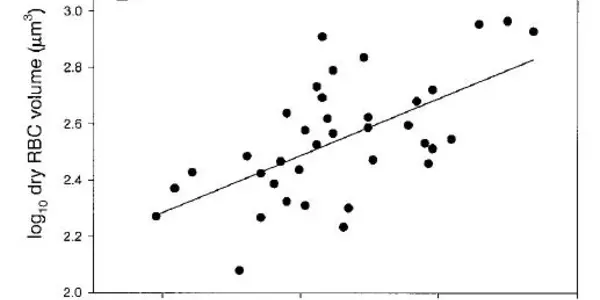
One of the many aggravations I encounter when reviewing manuscripts is that some authors greatly overstate the applicability of statistically significant patterns they report. For example, a statistically significant pattern in a small comparison of a few animals may be extrapolated in the discussion to the kingdom at large.
Today I was disappointed to see a paper that is soon to come out in Zoology that does the opposite -- i.e. takes a non-significant relationship in a handful of species and pretends that it challenges the importance of broad relationships that have been considered important for decades.
The paper in question is:

Natural Selection Before Darwin

Natural Selection Before Darwin

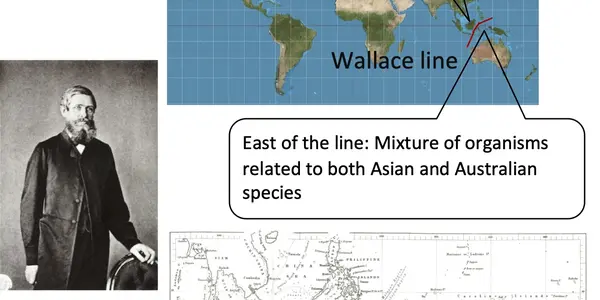
Charles Darwin (1809-1882) opened his first notebook about "the species question" in 1837, not long after his return from the voyage of the Beagle.  By 1838, he had developed the basic outline of his theory of natural selection to explain the evolution of species.  He spent the next 20 years developing the theory and marshalling evidence in favour of both the fact that species are related through common descent and his particular theory to explain this.  After receving word that another naturalist, Alfred Russel Wallace (1823-1913), had independently come upon the same theory, he assembled his work for publication, first in a joint paper with Wallace presented to the Linnean Society of London in 1858 and then his "abstract", On the Origin of Species, in 1859. Some authors have argued that Edward Blyth (1810-1873), an acquaintance of Darwin's, developed the central idea of selection in an 1835 paper in the Magazine of Natural History.  For example, Eiseley and Grote (1959) claimed that "the leading tenets of Darwin's work -- the struggle for existence, variation, natural selection and sexual selection are all fully expressed in Blyth's 1835 paper", from which they then quoted the following:

Massive Moths!  (Genomes, Not So Big)

Massive Moths! (Genomes, Not So Big)

Like several other insect orders, the Lepidoptera is staggeringly diverse -- there are about 180,000 described species in the order and an untold number that remain unknown to biologists. (For comparison, there are about 5,000 mammal species). Most people know the Lepidoptera ("leps" to entomologists) as moths and butterflies. The incompleteness of their taxonomic descriptions reflects their sheer diversity rather than academic neglect -- leps have been collected and studied for centuries. As it turns out, the distinction between moths and butterflies probably is not phylogenetically meaningful, as the "butterflies" (which includes three superfamilies: true butterflies, skipper butterflies, and moth-butterflies), though probably monophyletic as a group, may represent a clade nested within the other moths. However, I won't complain if these terms survive as they are useful in non-phylogenetic contexts.

Learning versus evolution in microbes.

Learning versus evolution in microbes.

One of my pet peeves is the common description in the media of bacteria "learning" to "outsmart" antibiotics. As anyone with a basic comprehension of evolution knows, learning has nothing to do with it. Learning is what happens during the lifetime of an individual, and it occurs in direct response to some information that the individual encounters. When bacteria become resistant to antibiotics, it is not by learning. The individual bacteria do not sense the antibiotic and change to become resistant. Rather, individual bacteria in a population that happen to be resistant because of some genetic difference (or in whom a mutation conferring resistance arises by chance or through gene transfer from another population) will survive and reproduce more effectively than individuals lacking the genetic characteristic that confers resistance.

Over many generations of this process, the gene providing resistance to the antibiotic will be found in the majority of bacteria -- not because it "spreads" and not because individual bacteria develop  resistance, but because the bacteria that are the most abundant in the population after many generations are obviously the descendants of the ancestors that left the most offspring, namely those who survived the antibiotics.

Junk DNA and the Onion Test

Junk DNA and the Onion Test

One copy of the human genome is more than 3 billion nucleotides in length, and weighs in at about 3.5 picograms (pg, or trillionths of a gram). Only about 1.5% of this is composed of our 20,000 or so protein-coding genes, though other data suggest that at least 5% has been conserved by natural selection, suggesting that a notable portion of the non-coding majority is also functional. On the other hand, it is now apparent that much of the genome residing in our cells is made up of sequences like transposable elements -- "parasites" of the genome that can move about wwithin and be copied independently of the "host" genome -- and especially their extinct remnants. One such element, Alu, is present in more than one million copies.

Platypus Sex Chromosomes And Basal-Equals-Primitive

Platypus Sex Chromosomes And Basal-Equals-Primitive

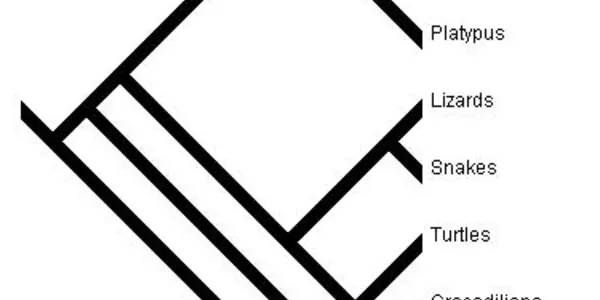
There has been considerable interest in the publication of the platypus genome, which is good. Unfortunately, much of the reporting has been distorted, which is bad. However, rather than picking on the press, I want to focus on an example from the scientific literature where a misconception about evolutionary relationships seems to creep in and generate confusion. Consider the following line, from a soon to be published paper about platypus sex chromosomes (Veyrunes et al. 2008). As the most basal mammal group, the egg-laying monotremes are ideal for determining how the therian XY system evolved.

Phylogenetic Fallacies: Branching From a Main Line

Phylogenetic Fallacies: Branching From a Main Line

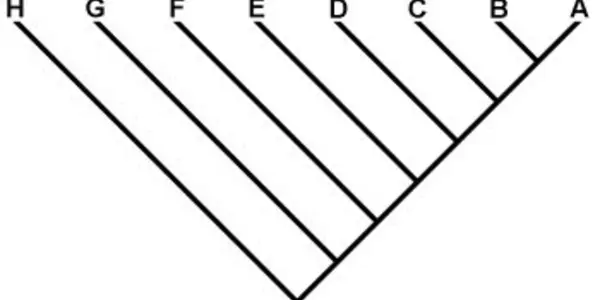
In Phylogenetic Fallacies: Early Branching Must Mean Primitive I focused on the misconception that an "early branching" lineage was necessarily "primitive" (i.e., very similar to a distant ancestor). This time, I want to discuss something slightly more subtle, but nonetheless important, with regard to interpreting phylogenies. Specifically, I want to note a problem with the very concept of one lineage "branching off from" another lineage. There can be a tendency to consider evolutionary trees as reflecting a main line with a series of "side branches". This is especially true when the tree is "unbalanced" (lineages are depicted with uneven amounts of diversity) and "ladderized" (the more diverse branches are placed on the same side of each node). The following is a general unbalanced, right-ladderized tree.

Whose genome?

Whose genome?

The term "genome" is oft-heard but seldom defined, and indeed has more than one meaning. Little wonder, then, that discussions about genome sequences and comparisons thereof can leave otherwise interested audiences more frustrated than enlightened. "What is a genome?" and "whose genome was sequenced?" are legitimate questions, and what follows is an attempt at clarification that is, by necessity, as much philosophical as scientific. Definition #1: In a broad sense, a genome can be considered as the collective set of genes, non-coding DNA sequences, and all their variants that are located within the chromosomes of members of a given species.

Guide To Translating Scientific Papers Into Plain English

Guide To Translating Scientific Papers Into Plain English

Believe it or not, scientists do not always take themselves too seriously. We can laugh at ourselves and the sometimes rigid conventions of our profession. Take, for example, this guide to translating the formal language of scientific articles into plain English. (Note: This has circulated on email among scientists a number of times over at least a 10 year period; I remember taping it on the door when I was a grad student.  An astute reader pointed out that it is originally from Graham, CD. 1957. A glossary for research reports.  Metal Progress 71: 75, though it has mutated somewhat in the interim).

Phylogenetic Fallacies: Early Branching Must Mean Primitive

Phylogenetic Fallacies: Early Branching Must Mean Primitive

Evolutionary trees, or "phylogenies", are a major part of modern evolutionary science. They depict hypotheses regarding the relationships among taxa, and are therefore important in reconstructions of the historical path of evolution (Gregory 2008a,b).
Various approaches can be taken to formulating phylogenetic hypotheses, including analyses based on morphological, fossil, and/or molecular data. These methods often agree well, but sometimes one or another can throw up some surprises and challenge previous hypotheses about the relationships among groups of organisms.
Reconstructing the tree of life is a difficult and complicated process, and one should expect there to be significant refinements and revisions along the way. This is especially true of the deepest branches of the tree, which are often the most difficult to resolve.
Case in point, the Tree of Life Web Project gives the following summary of deep branches among major animal lineages:

Non-functional DNA: Non-functional Vs. Inconsequential

Non-functional DNA: Non-functional Vs. Inconsequential

Each copy of the human genome consists of about 3,200,000,000 base pairs, and includes about 500,000 repeats of the LINE-1 transposable element (a LINE) and twice as many copies of Alu (a SINE), as compared to around 20,000 protein-coding genes. Whereas protein-coding regions represent about 1.5% of the genome, about half is made up LINE-1, Alu, and other transposable element sequences. These begin as parasites, and some continue to behave as detrimental mutagens implicated in disease. However, most of those in the human genome are no longer mobile, and it is possible that many of these persist as commensal freeloaders. Finally, it has long been expected that a significant subset of non-coding elements would be co-opted by the host and take on functional roles at the organism level, and there is increasing evidence to support this.

A notable fraction of the non-genic portion of human DNA is undoubtedly involved in regulation, chromosomal function, and other important processes, but based on what we know about non-coding DNA sequences, it remains a reasonable default assumption -- though one that should continue to be tested empirically -- that much or perhaps most of it is not functional at the organism level. This does not mean that a search for the functional segments is futile or irrelevant -- far from it, as many non-genic regions are critical for normal genomic operation and some have played an important role in many evolutionary transitions. It simply means that one must not extrapolate without warrant from discoveries involving a small fraction of sequences to the genome as a whole.