From an early age, my life’s goal was to get at “the truth.” There were only two obvious career paths: Science, or investigative journalism. I went the first route, becoming an academic researcher. Proud of the path I chose, and always admiring the other one.
After a dozen years as a market research executive, Fred Phillips was professor, dean, and vice provost at a variety of universities in the US, Europe, and South America. He is now Visiting Professor at SUNY-Stony Brook's Alan Alda Center for Science…
A research firm has just bestowed the title “world’s most
valuable insurance brand” on a mainland Chinese company. Other outfits issue
similar announcements in diverse industries, despite that in 2014 The Economist made this remark about
brands: “Their importance may be fading… no one agrees on how much they are
worth or why.”
The decline of brands: We should have seen it coming, when mass
customization first began to overshadow mass production. Scholars point to info
tech to explain the growing irrelevance of brands; online customer reviews and social
media now substitute for the “shorthand” information packages that brands once
provided.
How stupid was he?
He shut down the Center for Groundwater Research. I quote him: “You don’t need to grind water. It’s a liquid.”
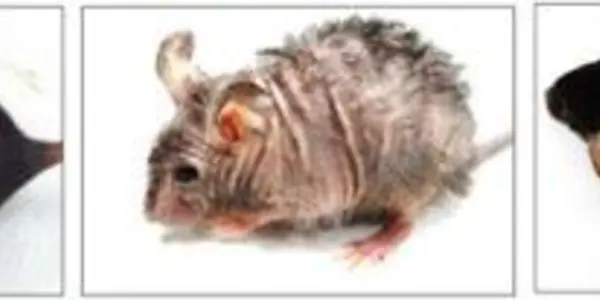
He closed our renowned Digital Signal Processing program. He was then unable to process, when faculty flashed him a certain digital signal. Next to go was the knockout mouse lab. He said, “They have some attractive mice, but none that I’d call a real knockout.”
Whenever there’s a task to be done or governance to be exercised, we tend to organize for it in threes. A single power center is unworkable, as it can easily lead to dictatorship. Two is not so good either, as a disagreement can lead to indefinite and unrefereed deadlock. Three gives us “checks and balances,” as all of us were taught in school. It’s not just the legislative, executive, and judiciary branches of the US government. Companies developing new products seek balance among the engineering, manufacturing, and marketing departments. Economic development rests on the “triple helix” interaction of the government, academic, and industrial sectors. Corporate governance depends on the triangle of shareholders, boards of directors, and managers.
A chain saw, sporting all the safety
interlocks, might still kill you if
you use it carelessly. You’re self-confident and you suffer the usual optimism
bias.
These tips will help researchers for whom English is a second language, and who work at universities and research institutes where the international publishing culture is still young.
Facebook traffic and news items tell us a lot of Americans of
northern European extraction are anxious and even fearful about the prospect
that White Americans will soon be a minority. A subset seems further offended
by court decisions bestowing civil rights on gay people. Another subset is
inflamed over removals of the Confederate battle flag from public spaces. Then
there are environmental regulations that seem to snatch job opportunities from
an already embattled middle class – and other kinds of federal regulation that
have set some Whites on anti-government, secessionist, or survivalist paths.
A true story. To protect the innocent – and the writer – I’ll use no names.
The president of a large, multi-national engineering and construction firm decided to attract more contracts by reducing customers’ risks. A sound decision, yes? It was what he did (which was to offer fixed-price contracts instead of cost-plus contracts) and how he did it (by developing his people and by continuous process improvement) that got him fired - even though the move was showing every sign of success.
So why was he dismissed? The answer lies in that ol’ stereotype of the corporation as an externality-generating machine.
Management students
entering my thesis prep course without having been involved in research before,
or taken a probability course, reliably make these mistakes. Many students
go on to do empirical quantitative theses, meaning that their misconceptions about sampling
and analysis will come back to bite them.
A guy
messes up his life, and the lives of those around him. We send him for rehabilitation:
A jail term, AA meetings, community service, anger management classes, or
restitution to victims.