From an early age, my life’s goal was to get at “the truth.” There were only two obvious career paths: Science, or investigative journalism. I went the first route, becoming an academic researcher. Proud of the path I chose, and always admiring the other one.
After a dozen years as a market research executive, Fred Phillips was professor, dean, and vice provost at a variety of universities in the US, Europe, and South America. He is now Visiting Professor at SUNY-Stony Brook's Alan Alda Center for Science…
I make the case for replacing business executives with robots.*† This is no smart-ass slur on the intellects of executives. A transformation of business soon will be upon us. In the transformed enterprises, robots will take on more and more business decisions. Humans will retain a smaller but still crucially important role.The argument involves ‘real options’ and ‘agency theory.’ Explaining them is simple, though lengthy. So let’s get started, using an illustrative example:An opportunity requires Rineu Corporation to invest $10,000 now, with an assured first-year cash flow of $6,000. The second-year cash flow is uncertain with a 50-50 chance of either a $15,000 gain or a $5,000 loss.
For innovative and high-tech startups that need financing, a worldwide drought is in the offing.Coming shortage of equity investmentThe Global Entrepreneurship Monitor reports a surge in early-stage entrepreneurial activity worldwide in 2011. Over 12 percent of US adults started a business in that year, compared to less than 8 percent in 2010. Entrepreneurship increased in three fourths of the developed countries GEM studied. Even in China and other countries where entrepreneurship was already high, entrepreneurial participation jumped 25% in 2011 [Klein].Some reports show US venture capital funding 22 percent above 2010 levels [Bigelow]. Other news stories paint the Austin VC market as hot. And yet...
“Malicious,” “diatribe,” and “preposterous” are words recently thrown at me. (How remarkable that I lived nearly 60 years before drawing this kind of vitriol. Maybe I haven’t been assertive enough!) When a scientific question has political implications, people have trouble separating the science from the politics. Anyway, it started like this…Daniel Sarewitz of Arizona State University wrote an astonishingly obtuse article in Slate (December, 2010) titled “Most scientists in this country are Democrats. That's a problem.” Sarewitz cited a 2009 Pew Research Center finding that 6 percent of U.S. scientists are Republicans and 55 percent are Democrats. He took off from there.
An organizer of the 18th Americas Conference on Information Systems (http://amcis2012.aisnet.org/) sent a CFP for a minitrack on Trust in Information Systems: A user’s trust and distrust in information systems [IS] are important components in the interactive relationship between users and their systems. A user has to trust a technology before the technology is adopted and fully used. While there is a rich literature on interpersonal trust, trust in information systems has been under-researched...
One of these loons who thinks all university research is worthless managed to get another op-ed to that effect published in the Chronicle of Higher Education. It's worth looking at, not for the article itself, but for the lengthy and emotional comment thread.
The US national debt is now at 100% of Gross National Product, in other words equal to what we produce in a year. Forty cents of every dollar the US government spends is borrowed. Horrible, cry the pundits! The government should behave more like a family with a budget, should know when to stop spending!Let’s consider, though, that the average home-owning family takes on a mortgage equal to two or three times its annual earnings. (Before the crash, this number was five, not two or three.) In the US, it’s common for this family to spend 40% of its monthly income servicing the mortgage debt. So far, then, the government is acting exactly like a family – and a fairly responsible family at that, as we’re not even talking about families that abuse credit cards.
I said there were two things keeping me busy and away from Science 2.0 for the last couple of months. The second thing was my transition to Editor-in-Chief of Technological Forecasting&Social Change, as of January 1. TFSC is the world’s premier scholarly journal on technology assessment and futures. With its long history and a current download rate of 275,000 articles per year, TFSC also is one of Elsevier’s most widely read international journals.
The Portland International Conferences on Management of Engineering and Technology (PICMET) occur in Oregon in odd-numbered years, and in diverse locales in the even. I write from lovely Phuket island in southern Thailand, as I listen to bird- and cricket song and the crashing surf of the Andaman Sea, and gather my thoughts following the close of PICMET-2010.
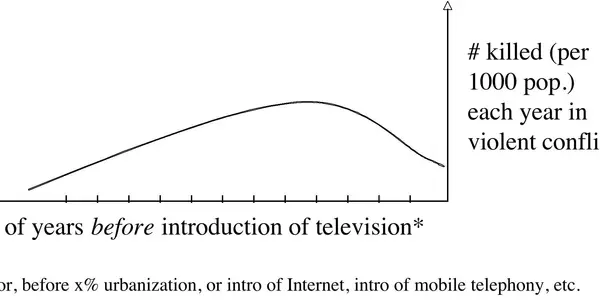
Rather than hijack Eric Diaz' excellent recent post with lengthy and tangential comments, I'll post my thoughts about the roots of war here. Machines, Organizations&Us is a column on human-machine interactions, so after laying some anthropological and ethical groundwork I'll offer speculations on relationships between technology (and our feelings about technology) and war.One of my aikido students asked me,
1. “Arizona Legislature Passes Bill Banning Ethnic Studies Programs.”I thank my Alliant University colleague Eduardo Morales for an email summarizing that story:“After making national headlines for a new law on illegal immigrants, the Arizona Legislature sent Gov. Jan Brewer a bill Thursday that would ban ethnic studies programs in the state that critics say currently advocate separatism and racial preferences. The bill, which passed 32-26 in the state House, had been approved by the Senate a day earlier.... The new bill would make it illegal for a school district to teach any courses that …[among other things] 'advocate ethnic solidarity instead of the treatment of pupils as individuals.'
A meeting of the San Diego Software Industry Council. The subject: What will Web 3.0 look like?“Why don’t we know?” asked one venture capitalist. “Are we idiots?”The VC was pandering to an in-group audience. The implied answer was, No, we’re not idiots, we are successful, sophisticated investors, entrepreneurs, and scholars of the web!But y’know what? The truth is, yes, we are idiots. We are idiots because of technology colonization, and we fall for it every time.Fifteen years ago the World Wide Web came along, and what did we do with it? We used it for push-publishing, for banner ads, and to sell stuff from web storefronts. In other words, we treated the WWW like an electronic magazine, or another television channel.