News Articles

News Account

News Account

News Releases From All Over The World, Right To You
RSS Feed
Tropical Forest Conservation Is A Rich Country Solution Paid For By Poor Indigenous People

Tropical Forest Conservation Is A Rich Country Solution Paid For By Poor Indigenous People

In ireland 100 years ago, 1 percent of the island was forest, now it is 11 percent, and Irish people have no problem with food. They even grow Spruce, which is not native, to craft and sell furniture.
Given that developed countries have lots of forest now, despite going through periods of growth where they felled far more than they planted, it smacks of hypocrisy that wealthy nations tell poor ones how vital the rainforest is.  

30 Percent Of Indians Are Anemic - Switching From Rice (Or Bioengineering Better Stuff) Would Help

30 Percent Of Indians Are Anemic - Switching From Rice (Or Bioengineering Better Stuff) Would Help

Starting in the 1960s, a Green Revolution in India led to a boom in rice and wheat production and that helped reduce hunger - but it meant demands on the water supply and pollution from fertilizer.When Indians have embraced modern technology more recently, pollution from fertilizer has gone down, but rice takes a lot of water. And "natural" rice is not great nutritionally. Nutrient deficiencies are already widespread in India today--30 percent or more are anemic--and many regions are chronically water-stressed. 

Cover Crops Enhance Soil Quality - At A Cost

Cover Crops Enhance Soil Quality - At A Cost

Replacing fallow lands with cover crops in order to increase the levels of carbon and soil nitrogen  also enhances its quality and mitigates nitrate leaching in an agricultural land, according to a new analysis. After collecting data for ten years, results indicate that such cover crops, which maintain the soil protected during winter months, reduce degradation and provide an extra organic matter after their completion, though not without cost.

500 Million Year Old Gene Could Mean A Path To New Treatments For Influenza, Arthritis - And You Can Help Name It

500 Million Year Old Gene Could Mean A Path To New Treatments For Influenza, Arthritis - And You Can Help Name It

A gene called called C6orf106, or "C6", has existed for 500 million years, but understanding how it controls the production of proteins involved in infectious diseases, cancer and diabetes is only being understood more recently. The human genome was first fully sequenced in 2003, which means there are still thousands of genes that we know very little about.Our immune system produces proteins called cytokines that help fortify the immune system and work to prevent viruses and other pathogens from replicating and causing disease. C6 regulates this process by switching off the production of certain cytokines to stop our immune response from spiralling out of control.

Biosignatures: When Will We Find Signs Of Life In Space?

Biosignatures: When Will We Find Signs Of Life In Space?

A new paper believes detection of atmospheric signatures for a few potentially habitable planets could occur before 2030.Does that mean life on other planets?Perhaps. perhaps not. We could be first in the universe, even though mathematically we should not be, just like mathematically light from infinite stars could make our sky pure white even at night. But if we are not first, the challenge becomes how to really detect anything else. We are currently unable to visit exoplanets, and since we determined 15 years ago we couldn't even return to the moon until 2020 (and then the succeeding president scrapped that mission) we are not visiting them any time soon. But we can use telescopes to remotely examine them for so-called biosignatures. 

Global Climatic Event Leads To New Geologic Time Scale, The Late Holocene Meghalayan Age

Global Climatic Event Leads To New Geologic Time Scale, The Late Holocene Meghalayan Age

Around 2,200 B.C, agricultural societies around the world experienced an abrupt cooling and a critical mega-drought. Humans had been progressing nicely since the end of the last Ice Age, and suddenly this cooling, and accompanying droughts, forced the collapse of civilizations in Egypt, Greece, Syria, Palestine, Mesopotamia, the Indus Valley, and the Yangtze River Valley, which led to migrations and regenerations in other areas. Evidence of this period, now called the 4.2 kiloyear climatic event, has been found on all seven continents and it has become the reason for the most recent unit of the Geologic Time Scale,  now called the Late Holocene Meghalayan Age.
Dinosaurs Couldn’t Stick Out Their Tongues

Dinosaurs Couldn’t Stick Out Their Tongues

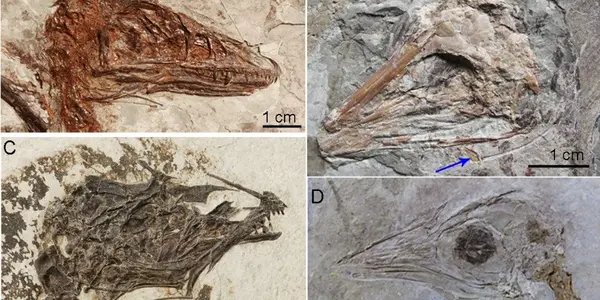
Einstein could stick out his tongue but dinosaurs could not, according to a new paper. Instead of being like modern day lizards or legendary physicists, their tongues were probably rooted to the bottoms of their mouths like alligators. The discovery was made by comparing the hyoid bones — the bones that support and ground the tongue — of modern birds and crocodiles with those of their extinct dinosaur relatives. In addition to challenging depictions of dino tongues, the research proposes a connection on the origin of flight and an increase in tongue diversity and mobility.

Polar Ice May Be Softer Than Thought, Which Could Speed Up Sea Level Rise

Polar Ice May Be Softer Than Thought, Which Could Speed Up Sea Level Rise

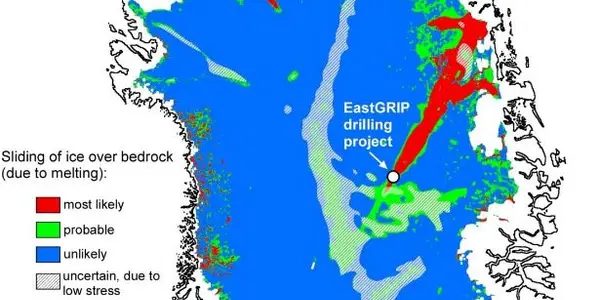
Ice seems solid to the eye, but it is really a material that flows like a viscous liquid. In the polar ice sheets, it flows towards the oceans under its own weight. Knowing how fast the ice flows is of crucial importance to predict future sea level rises, especially if climate change occurs and impacts that.For a new study, researchers used flow velocities at the surface of the northern Greenland Ice Sheet to create estimates and data from satellite images suggest that the polar ice is softer than scientists believed. 

Genetic Heart Mutations Ruled Out As Cause Of Most SIDS Cases

Genetic Heart Mutations Ruled Out As Cause Of Most SIDS Cases

Because Sudden Infant Death Syndrome (SIDS), in infants less than a year old, are tragedies without known explanation, scholars have searched for causes beyond stuffed animals in cribs or blaming parents. SIDS represents up to 80 percent of all sudden unexpected infant deaths with an five in 1,000 live births in the US. The peak incidence occurs between two months and four months of age and is more common in boys. One explanation has been heart disease caused by genetic mutations but a recent study found that is less than 5 percent of cases, much lower than the 20 percent previously estimated.

Born Capitalist? Even Before First Grade Kids Understand You Get What You Pay For

Born Capitalist? Even Before First Grade Kids Understand You Get What You Pay For

From a young age, children have a nuanced understanding of how free markets work. A new study in Child Development indicates that children as young as five incorporate market concerns—the idea that what you get is in line with what you give or offer—into their decision making, and increasingly do so with age.Some people think children are innately selfish, they want to get goodies for themselves, while others insist they are more communist, each will do more to help those who can't or won't do enough. By studying how children engage in different types of exchanges, researchers hope to discern the origins of these behaviors, as well as their developmental course.

Cardiac Arrest Is The Default For Many Unknown Deaths - But It Is Overused

Cardiac Arrest Is The Default For Many Unknown Deaths - But It Is Overused

Cardiac arrest, essentially a heart attack, appears on a lot of coroner reports but it frequently misclassified and exaggerated. A new analysis finds that 40 percent of deaths attributed to cardiac arrest are not sudden or unexpected, and nearly half of the remainder are not arrhythmic--the only situation in which CPR and defibrillators are effective. Which means they should not be considered cardiac arrest. An alarming 13.5 percent were instead overdoses.