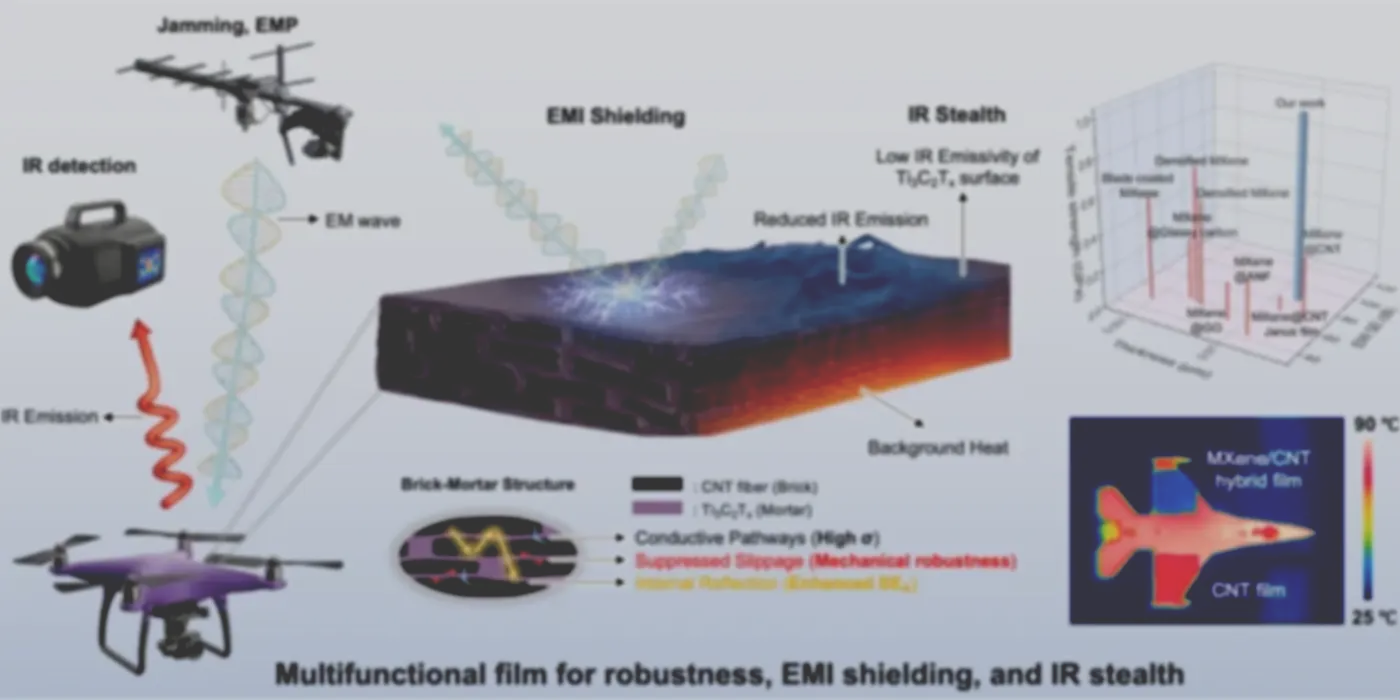
Carbon Nanotube Has EMI And Hides Heat
Researchers have developed a composite film that combines electromagnetic interference shielding, infrared stealth, and high mechanical strength using carbon nanotube fibers and MXene.
Researchers have developed a composite film that combines electromagnetic interference shielding, infrared stealth, and high mechanical strength using carbon nanotube fibers and MXene.


A report(1) released today by the Eurasian Harm Reduction Network (EHRN)(i) highlights the significant inconsistencies that exist in hepatitis C (HCV) diagnosis and treatment across Europe and beyond. In recognition of World Hepatitis Awareness Day, patient groups around the globe are united in their call for action.
The report indicates that in some European countries it is estimated that more than 90% of people who are infected with HCV have not been diagnosed (Germany 90%; Poland 98%)(ii). Not only does this put many people at risk of long-term liver damage, it also means that they may unknowingly transmit the virus to others.
The first step in the development of colon cancer is the formation of benign tumours, called adenomas, in the intestine. Over time, these tumours may progress to produce colon cancer if they undergo a series of mutations and genetic alterations.
Researchers at IRB Barcelona under the direction of Eduard Batlle, ICREA researcher and head of IRB Barcelona’s Oncology Programme, have discovered a new mechanism by which the benign tumour cells receive instructions to grow in confined compartments, and no to invade other areas of the tissue. The description of this new tumour suppression mechanism is reported in Nature Genetics.
Tiny pieces of genetic material called microRNA (miRNA), better known for its roles in cancer, could be a key to unlocking the secrets of how HIV, the AIDS virus, evades detection, hiding in the immune system. Researchers at Jefferson Medical College in Philadelphia have shown that when an individual infected with HIV receives a powerful cocktail of antiviral agents called HAART (highly active antiretroviral therapy), the virus calls on miRNAs to help it remain quiet and practically undetectable, temporarily shutting down its ability to replicate and infect.
The work may also have implications for new treatment strategies against the virus.
Countries where the main religion is Protestant Christianity have higher employment rates than those where other religions are dominant, according to University of Bath research published in the American Journal of Economics and Sociology.
These countries, which include the USA, the UK and Nordic countries such as Denmark, Sweden and Norway, have employment rates that are approximately six percentage points higher than countries where other religions are practiced by the largest proportion of the population.
The study, which is based on data from 80 countries, also showed that female employment rates are approximately 11 percentage points higher in Protestant countries.
When a child is distressed, anxious, or angry, mom and dad don’t have to respond in the same way. A new study finds that when both parents are supportive, they may shield the child from handling negative emotions.
The researchers suggest that when one parent provides little support and the other provides more support—for example, if a child becomes anxious or upset about losing a favorite toy, one parent may intervene by hugging the child and helping think of places to look for the toy, while the other parent hangs back and is available if needed—the child ends up with reduced conflicts with friends and a better understanding of negative emotions.
Determining the genetic profile of a particular lung tumor can help clinicians make the crucial decision about which chemotherapy treatment to try first.
A new study led by researchers from the Duke University Comprehensive Cancer Center and the Duke Institute for Genome Sciences & Policy (IGSP) found distinct differences in the susceptibility different tumors have to widely used chemotherapy drugs.
“We were able to predict which tumors would be most likely to respond to standard first-line therapy and which would respond better to what has traditionally been a second-line therapy, based on gene expression profiling,” said David Hsu, M.D., Ph.D. an oncologist at Duke and lead author on the publication. “This represents a big step in the move toward individualized medicine.

Materials researchers at the National Institute of Standards and Technology (NIST), together with colleagues from IBM and the Massachusetts Institute of Technology, have pushed the measurement of thin films to the edge—literally—to produce the first data on how the edges of metallic thin films contribute to their magnetic properties. Their results may impact the design of future nanoscale electronics.
Ferromagnetic thin films of metallic materials—ranging in thickness from fractions of a nanometer to several micrometers—are layered in patterns on a substrate (such as silicon) during the manufacture of many microelectronic devices that use magnetic properties, such as computer hard drives.
Researchers have long debated whether or not language and music depend on common processes in the mind. Now, researchers at Georgetown University Medical Center have found evidence that the processing of music and language do indeed depend on some of the same brain systems.
Their findings are the first to suggest that two different aspects of both music and language depend on the same two memory systems in the brain. One brain system, based in the temporal lobes, helps humans memorize information in both language and music— for example, words and meanings in language and familiar melodies in music.
The latest common wisdom on carbohydrates claims that eating so-called “bad” carbohydrates will make you fat, but University of Virginia professor Glenn Gaesser says, “that’s just nonsense.” Eating sandwiches with white bread, or an occasional doughnut, isn't going to kill you, or necessarily even lead to obesity, he said.
In an article in the October issue of the Journal of the American Dietetic Association, Gaesser analyzes peer-reviewed, scientific research on carbohydrate consumption, glycemic index and body weight and gives the first detailed review of the literature on the correlation between them. His findings run counter to the current consensus on the effects of “good” and “bad” carbohydrates.

As they root for the home team from the bleachers this fall, high school gridiron fans in the small Illinois town of Tolono don’t necessarily see anything out of the ordinary down on the field.
But just out of sight, tucked inside many of the maroon helmets worn by the Unity High School Rockets, a revolution of sorts is taking place.
This is a conceptual animation showing how polar ice reflects light from the sun. As this ice begins to melt, less sunlight gets reflected into space. It is instead absorbed into the oceans and land, raising the overall temperature, and fueling further melting.
NASA/Goddard Space Flight Center Conceptual Image Lab
As policy makers debate what levels of ozone in the air are safe for humans to breathe, studies in mice are revealing that the inhaled pollutant impairs the body’s first line of defense, making it more susceptible to subsequent foreign invaders, such as bacteria.
While it has long been known that exposure to ozone, a major component of urban air pollution, is associated with increased cardiovascular and pulmonary hospitalizations and deaths, the actual mechanisms involved remain unclear. New studies by Duke University Medical Center pulmonary researchers on the effects of ozone on the innate immune system, the body’s “tripwire” for foreign invaders, may provide part of the answer.