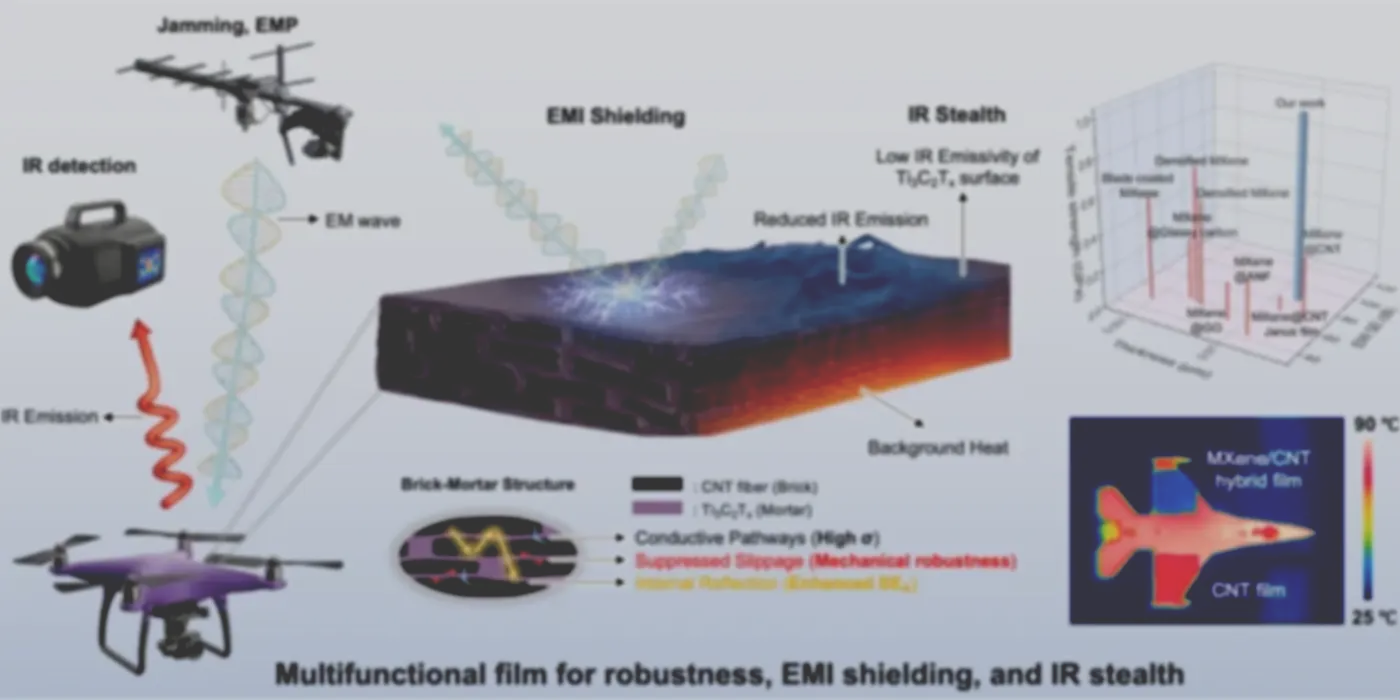
Carbon Nanotube Has EMI And Hides Heat
Researchers have developed a composite film that combines electromagnetic interference shielding, infrared stealth, and high mechanical strength using carbon nanotube fibers and MXene.
Researchers have developed a composite film that combines electromagnetic interference shielding, infrared stealth, and high mechanical strength using carbon nanotube fibers and MXene.


Pedophilia, the sexual attraction of adults to children, is a significant public health concern and it does not respond well to treatment. Additionally, the brain mechanisms underlying pedophilia are not well understood.
A new study in Biological Psychiatry is the first of its kind to use functional brain imaging to describe neural circuits contributing to pedophilia.
Using functional magnetic resonance imaging, or fMRI, Martin Walter and colleagues report that pedophilic patients showed reduced activation of the hypothalamus, a brain region involved in regulating physiologic arousal and hormone release, as compared to healthy individuals when they were viewing sexually arousing pictures of adults.
A German-American research team of biologists and geochemists has discovered hitherto unknown anaerobic bacteria in marine sediments which need only propane or butane for growth.
The hydrocarbons ethane, propane and butane – as well as the main component, methane – are the major constituents of natural gas. Biological processes may lead to the degradation of these hydrocarbons in underground petroleum reservoirs and other geological habitats.
Heinz Wilkes, a leading biogeochemist at GeoForschungsZentrum Potsdam (GFZ), points out: „The bacteria isolated here for the first time from marine sediments use sulphate instead of oxygen for respiration and utilize propane and butane as their sole source of carbon and energy.

Every now and then a space rock hits the world's media – sometimes almost literally. Threatening asteroids that zoom past the Earth, fireballs in the sky seen by hundreds of people and mysterious craters which may have been caused by impacting meteorites; all make ESA's planned mission Don Quijote look increasingly timely.
The uncertainty surrounding whether a meteorite impacted in South America recently highlights the need to know more about these pieces of natural space debris and their trajectories. ESA has always been interested in such endeavours and conducted a number of studies into how it might best help.

Researchers have discovered that even the gruesome and brutal lifestyle of the Evarcha culicivora, a blood gorging jumping spider indigenous to East Africa, can’t help but be tempted by that ‘big is beautiful’ mantra no matter what the costs.
A study recently published in Ethology found that despite the inherent risk of sexual cannibalism, virgin females were attracted to bigger males when losing their virginity before opting for the safer smaller male as a longer term mate choice.
Pick me, pick me. I am too small to eat you.

Everyone knows how a bicycle works - or so we think. But for 150 years why a moving bicycle can, all by itself, be so stable has been something of a mystery.
"Bicycle manufacturers have never been able to say precisely how a bicycle works," explains Dr Arend Schwab of the Faculty of Mechanical, Maritime and Materials Engineering (3mE). "They have always had to refine their designs purely through experimentation. In our model, they can enter into the computer all of the various factors that influence the stability and handling of their bicycle.
The majority of patients who undergo male to female sex-change surgery are happy with the results, despite the fact that complications are common, according to a study of over 200 patients in the September issue of the urology journal BJU International.
A research team from the Departments of Urology and Psychiatry at University Hospitals of Leicester NHS Trust, UK, explored the initial experiences of 222 patients who had undergone surgery and 70 who took part in detailed follow-ups.
They found that 88 per cent of patients were happy with their surgery at their first post-operative clinic visit, seven per cent were unhappy and five per cent made no comment.
"We've never seen anything quite like it," says solar physicist Lika Guhathakurta from NASA headquarters.
Last week she sat in an audience of nearly two hundred colleagues at the "Living with a Star" workshop in Boulder, Colorado, and watched in amazement as Saku Tsuneta of Japan played a movie of sunspot 10926 breaking through the turbulent surface of the sun. Before their very eyes an object as big as a planet materialized, and no one was prepared for the form it took.
"It looks like a prehistoric trilobite," said Marc De Rosa, a scientist from Lockheed Martin's Solar and Astrophysics Laboratory in Palo Alto, Calif.

Researchers in the MIT Media Lab's Biomechatronics Group have created an exoskelton device to lighten the burden for soldiers by transferring that weight directly to the ground, effectively taking a load off the back of the person wearing the device.
In the September issue of the International Journal of Humanoid Robotics, the researchers report that their prototype can successfully take on 80 percent of an 80-pound load carried on a person's back, but there's one catch: The current model impedes the natural walking gait of the person wearing it.
"You can definitely tell it's affecting your gait," said Conor Walsh, a graduate student who worked on the project, but "you do feel it taking the load off and you definitely feel less stress on your upper body."
Whether it’s a mugger or a friend who jumps out of the bushes, you’re still surprised. But your response — to flee or to hug — must be very different. Now, researchers have begun to distinguish the circuitry in the brain’s emotion center that processes surprise from the circuitry that processes the aversive or reward “valence” of a stimulus.
C. Daniel Salzman and colleagues published their findings in the September 20, 2007 issue of the journal Neuron.
“Animals and humans learn to approach and acquire pleasant stimuli and to avoid or defend against aversive ones,” wrote the researchers. “However, both pleasant and aversive stimuli can elicit arousal and attention, and their salience or intensity increases when they occur by surprise.
A team of researchers has determined through analysis of the earliest known hominid fossils outside of Africa, recently discovered in Dmanisi, Georgia, that the first human ancestors to inhabit Eurasia were more primitive than previously thought.
The fossils, dated to 1.8 million years old, show some modern aspects of lower limb morphology, such as long legs and an arched foot, but retain some primitive aspects of morphology in the shoulder and foot. The species had a small stature and brain size more similar to earlier species found in Africa.
"Thus, the earliest known hominins to have lived outside Africa in temperate zones of Eurasia did not yet display the full set of derived skeletal features," the researchers conclude.
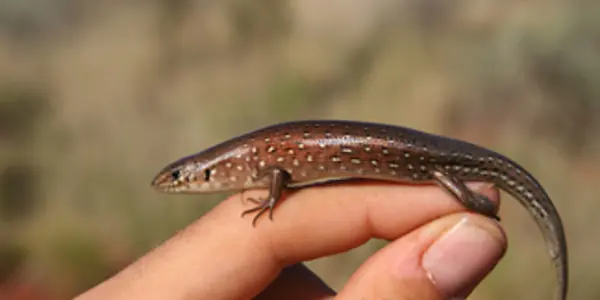
A new study of finger-sized Australian lizards sheds light on one of the most striking yet largely unexplained patterns in nature: Why is it that some groups of animals have evolved into hundreds, even thousands of species, while other groups include only a few?
The study takes a look at Australia's most diverse group of vertebrates -- more than 252 species of lizards called skinks. Researchers at the Cornell Lab of Ornithology have found evidence that the "drying up" of Australia over the past 20 million years triggered this explosive diversification.
Skinks have incredible species diversity throughout the Australian deserts. In fact, this group contains so many species that most do not even have a common English name.
A win for embryonic stem cell research may be the kind of symbolic pyrrhic victory politicans engage in after bold action is no longer necessary.
It may not be necessary if research from Weill Cornell Medical College in New York City holds up. They say adult stem cells found in a male patient's testicles might someday be used to create a wide range of tissue types to help him fight disease -- getting around the need for more controversial embryonic stem cells.
Using spermatogonial progenitor stem cells (SPCs) obtained from the mouse's testes, the researchers were able to redirect the cells' development in the lab to form so-called "multi-potent adult spermatogonial-derived stem cells" (MASCs).