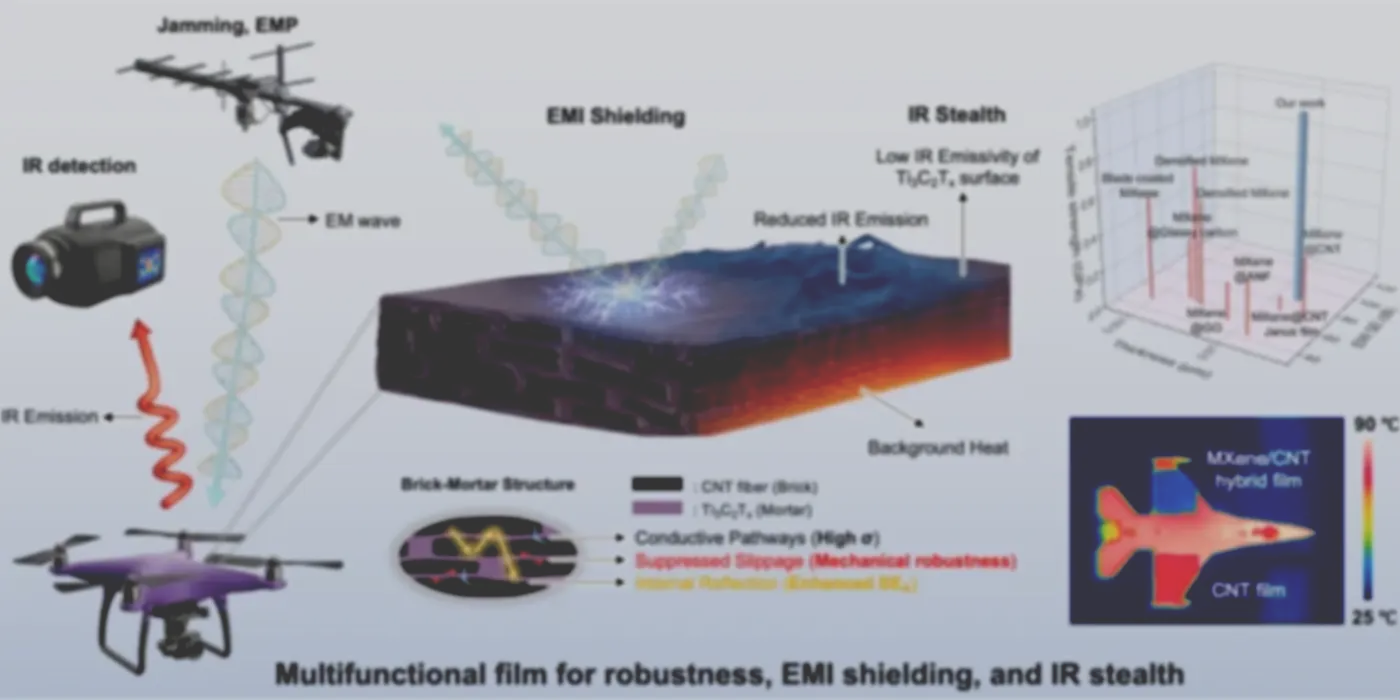
Carbon Nanotube Has EMI And Hides Heat
Researchers have developed a composite film that combines electromagnetic interference shielding, infrared stealth, and high mechanical strength using carbon nanotube fibers and MXene.
Researchers have developed a composite film that combines electromagnetic interference shielding, infrared stealth, and high mechanical strength using carbon nanotube fibers and MXene.


Biofuels are a wash environmentally and a negative economically because they requite subsidies to be competitive but there is one way they are a boon: the increase in world agriculture prices caused by the global boom in biofuels could benefit many of the world’s rural poor, according to a new book, Biofuels for Transport: Global Potential and Implications for Energy and Agriculture, written by the Worldwatch Institute.
“Decades of declining agricultural prices have been reversed thanks to the growing use of biofuels,” says Christopher Flavin, president of the Institute. “Farmers in some of the poorest nations have been decimated by U.S. and European subsidies to crops such as corn, cotton, and sugar.
Scientists believe that shortly after Earth was formed, it had a glowing surface of molten rock extending down hundreds of miles. As that surface cooled, a rigid crust was produced near the surface and solidified slowly downward to complete the now-solid planet.
Some scientists have suggested that Earth lost all of its initial gases, either during the molten stage or as a consequence of a massive collision, and that the catastrophically expelled gases formed our early atmosphere and oceans. Others contend that this early “degassing” was incomplete, and that primordial gases still remain sequestered at great depth to this day. New research by E. Bruce Watson, Institute Professor of Science at Rensselaer, supports this latter theory.
Researchers at the University of Bristol say their analysis of sediments from a British bog suggest that methane emissions increased around 55 million years ago due to intense global warming - not the other way around, as some have said.
Dr Richard Pancost and colleagues show that carbon isotope values of hopanoids – compounds made by bacteria – suddenly decrease in a manner that can only be explained by switching to a diet of methane. This suggests that methane emissions must have increased at that time.
Their data point is an important one but shouldn't be overstated, he said.
Approximately one third of the total carbon dioxide (CO2) emissions in the world come from energy production. It's possible to make CO2-free gas-powered plants but that relies on it being removed from the waste gases and deposited in the ground, an expensive and not environmentally friendly method since current techniques require the use of chemicals.
A patent-pending membrane technology based on the human lung is going to change that. Researchers at The Norwegian University of Science and Technology (NTNU) in Trondheim say the new membrane uses nanotechnology and is made from a plastic material. It captures CO2 but lets other waste gases pass freely.
Biologists have found a major clue in a 50-year-old mystery about what happens to green sea turtles after they crawl out of their sandy nests and vanish into the surf, only to reappear several years later relatively close to shore.
Three University of Florida sea turtle scientists say they found the clue by analyzing chemical elements ingrained in the turtles’ shells. Their conclusion: The turtles spend their first three to five “lost years” in the open ocean, feeding on jellyfish and other creatures as carnivores. Only after this period do they move closer to shore and switch to a vegetarian diet of sea grass – the period in their lives when they have long been observed and studied.
A molecular “recycling plant” permits nerve cells in the brain to carry out two seemingly contradictory functions – changeable enough to record new experiences, yet permanent enough to maintain these memories over time.
The discovery of this molecular recycling plant provides new insights into how the basic units of learning and memory function. Individual memories are “burned onto” hundreds of receptors that are constantly in motion around nerve synapses – gaps between individual nerve cells crucial for signals to travel throughout the brain.
While the visual regions of the brain have been intensively mapped, many important regions for auditory processing remain terra incognita. Now, researchers have identified the region responsible for a key auditory process—perceiving “sound space,” the location of sounds. The findings settle a controversy in earlier studies that failed to establish the auditory region, called the planum temporale, as responsible for perceiving auditory space.
Leon Y. Deouell and colleagues published their findings in the September 20, 2007 issue of the journal Neuron, published by Cell Press.
Studies by other researchers had shown that the planum temporale was activated when people were asked to perform tasks in which they located sounds in space.
Retrieving material for composting from open dumps across the developing world could reduce the environmental impact of growing mountains of waste, according to researchers in India.
People in the developing world are encouraged to compost garden waste or dispose of it in "green" garbage bins for collection and processing. In the developing world, the problems are very different. Open dumps are prevalent and have a poor environmental record, according to environmental engineer Kurian Joseph and colleagues at Anna University in Chennai, India.
Joseph's team is proposing landfill mining as a viable means of rehabilitating these open dumps.
Your mother called it 'settling.' Crosby, Stills, Nash and Young said “If you can’t be with the one you love, love the one you’re with.” Let's face it, not everyone can have their perfect mate so you have to make do.
Yet in the animal kingdom, females and males apparently have ways to compensate that increase the chance their offspring will survive even if the parents are not genetic ideals.
Patricia Adair Gowaty calls it the "Compensation Hypothesis."
Imagine turning a bad micro-organism, like E. coli, into a micro-factory that produces pharmaceutical compounds to fight aging or obesity.
University at Buffalo researchers say they can do it and have filed for a patent.
First Wave Technologies, Inc. recently received a Phase I Small Business Innovation Research (SBIR) grant from the National Science Foundation to focus on the biosynthesis of a popular group of flavonoids called isoflavonoids.
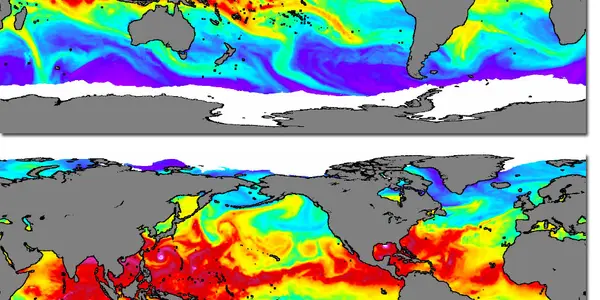
Observations and climate model results confirm that human-induced warming of the planet is having a pronounced effect on the atmosphere’s total moisture content.
“When you heat the planet, you increase the ability of the atmosphere to hold moisture,” said Benjamin Santer, lead author from Lawrence Livermore National Laboratory’s Program for Climate Modeling and Intercomparison. “The atmosphere’s water vapor content has increased by about 0.41 kilograms per cubic meter (kg/m²) per decade since 1988, and natural variability in climate just can’t explain this moisture change.

Phosgene is most famous for being part of the chemical arsenal used in the trenches during World War I - generals preferred it over chlorine because soldiers coughed less and therefore inhaled more. It was still stockpiled in military arsenals after the Second World War but its presence in the atmosphere today is due to man-made chlorinated hydrocarbons used in the chemical industry.
Phosgene still plays a major role in the preparation of pharmaceuticals, herbicides, insecticides, synthetic foams, resins and polymers.
Professor Peter Bernath of the Department of Chemistry at the University of York and a research team have carried out the first study of the global distribution of the gas.