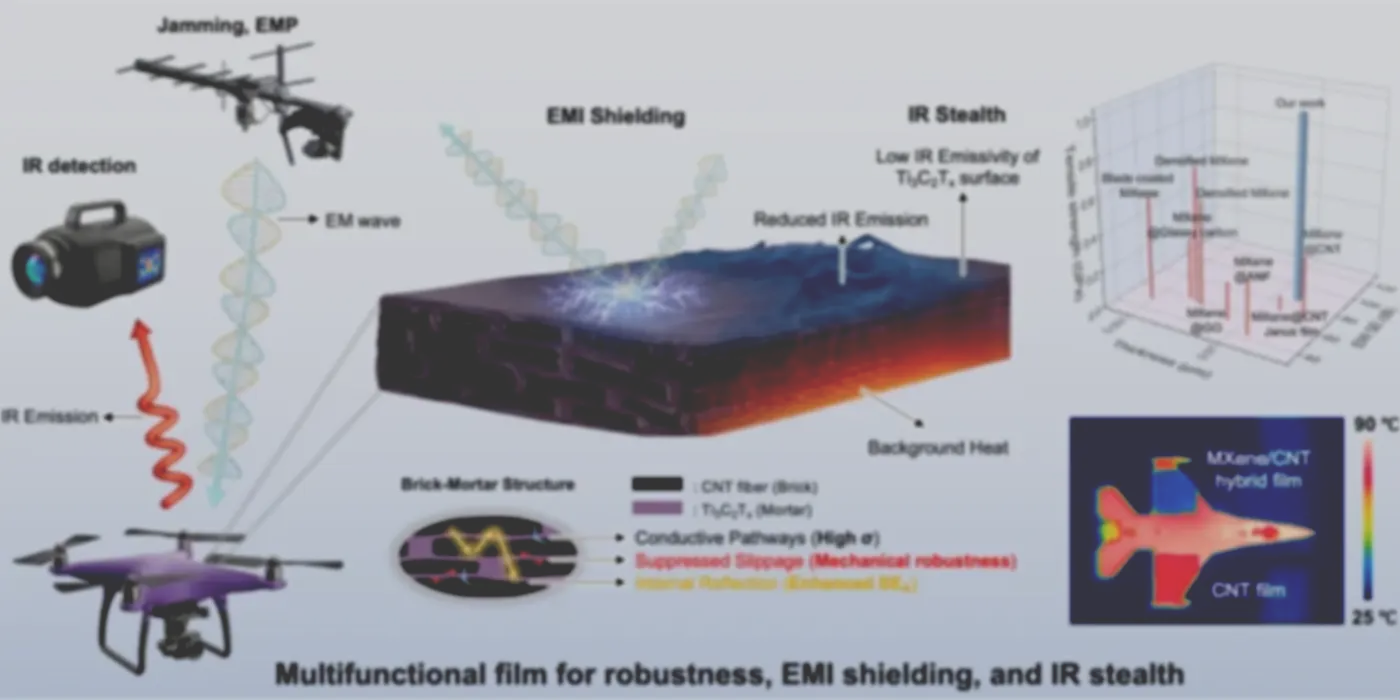
Carbon Nanotube Has EMI And Hides Heat
Researchers have developed a composite film that combines electromagnetic interference shielding, infrared stealth, and high mechanical strength using carbon nanotube fibers and MXene.
Researchers have developed a composite film that combines electromagnetic interference shielding, infrared stealth, and high mechanical strength using carbon nanotube fibers and MXene.


Sounds like heresy, right? "Renewable and nuclear heresies" is the name of the paper written by Jesse Ausubel, Director, Program for the Human Environment for the Rockefeller University in New York.
Ausubel was one of the main organizers of the first UN World Climate Conference in Geneva (1979) so he was an early proponent of getting the global warming issue on scientific and political agendas. Following that, he led the Climate Task of the Resources and Environment Program of the International Institute for Applied Systems Analysis (1979-1981), an East-West think-tank created by the U.S. and USSR academies of sciences.
He's as green as it gets.
The emergence of nanotechnology brings with it the opportunity to manipulate materials at practically the molecular level. So, could a nanotech computer be built?
Robert Blick and colleagues in the department of Electrical & Computer Engineering at the University of Wisconsin-Madison think so. They propose a new type of electromechanical computer built from components a millionth the thickness of the human hair.
Mechanical? Before silicon chips or even transistors there were fictional dreams of levers, ratchets and cogs, complete with brass fittings that could solve mysteriers.
Researchers at the Monell Chemical Senses Center have identified a genetically-transmitted metabolic defect that can lead to obesity in some individuals. The defect involves decreased production of liver enzymes needed to burn fat and may help to explain why some people become obese while others remain thin.
The global obesity epidemic is thought to be caused in part by the increased availability and intake of high calorie foods rich in fat and carbohydrates. These foods promote weight gain in humans and other animals, leading to a diet-induced obesity. The propensity to gain weight and become obese when consuming a high-fat diet is at least partially controlled by genes.

Supermassive black holes have been discovered to grow more rapidly in young galaxy clusters, according to new results from NASA's Chandra X-ray Observatory. These "fast-track" supermassive black holes can have a big influence on the galaxies and clusters that they live in.
Using Chandra, scientists surveyed a sample of clusters and counted the fraction of galaxies with rapidly growing supermassive black holes, known as active galactic nuclei (or AGN). The data show, for the first time, that younger, more distant galaxy clusters contained far more AGN than older, nearby ones.
Galaxy clusters are some of the largest structures in the Universe, consisting of many individual galaxies, a few of which contain AGN.
In the psychological phenomenon known as “synesthesia,” individuals’ sensory systems are a bit more intertwined than usual. Some people, for example, report seeing colors when musical notes are played.
One of the most common forms is grapheme-color synesthesia, in which letters or numbers (collectively called “graphemes”) are highlighted with particular colors. Although synesthesia has been well documented, it is unknown whether these experiences, reported as vivid and realistic, are actually being perceived or if they are a byproduct of some other psychological mechanism such as memory.

As any child knows, to answer the question “how many,” one must start by adding up individual objects in a group. This cognitive ability is shared by animals as diverse as humans and birds. Surprisingly, the exact brain mechanisms responsible for this process remained unknown until now.
Jamie Roitman, Elizabeth Brannon, and Michael Platt from the University of Illinois at Chicago report novel evidence for the existence of “accumulator neurons,” which respond to increasing numbers of items in a display with progressively increasing activity, in the parietal cortex of monkeys.
Neurons in the lateral intraparietal area of the monkey brain have been shown to integrate information about space and time.
Colloidal silver is peddled as a cold medicine, decongestant, all-around germ fighter, and a kind of cure-all. Is there any legitimate reason for taking the dietary supplement? The short answer is no, and there may be some serious and strange side effects, reports the August 2007 issue of the Harvard Health Letter.
Silver has several uses in conventional medicine. Silver sulfadiazine is used to treat serious burns. Fabric impregnated with silver is sometimes used as a dressing for wounds or skin infections. And silver nitrate is occasionally used to treat warts and corns.
But there’s no proof that taking colloidal silver by mouth has any benefits.

Michael Hofreiter from the Max Planck Institute for Evolutionary Anthropology in Germany, and colleagues from Switzerland and the United States, announce the sequencing of the complete mitochondrial genome of the mastodon (Mammut americanum), a recently extinct relative of the living elephants that diverged about 26 million years ago.
The sequence was obtained from a tooth dated to 50,000–130,000 years ago, increasing the specimen age for which such palaeogenomic analyses have been done by almost a complete glacial cycle.
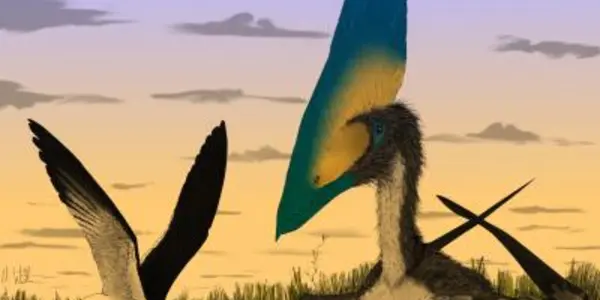
Scientists at the University of Sheffield, collaborating with colleagues at the Universities of Portsmouth and Reading, have taken a step back in time and provided a new insight into the lifestyle of a prehistoric flying reptile.
Using new physical and mathematical modelling, Dr Stuart Humphries from the University of Sheffield, along with scientists from the Universities of Portsmouth and Reading, has shown that suggestions that extinct pterosaurs gathered their food by ‘skimming’ the surface of the ocean with their beaks are inaccurate.
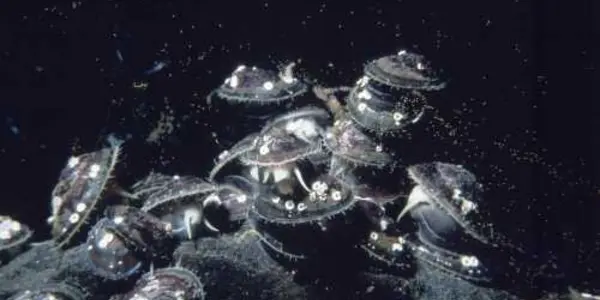
A limpet no bigger than a coin could reveal the possible fate of cold-blooded Antarctic marine animals according to new research.
Compared to their temperate and tropical cousins, cold-blooded polar marine animals are incapable of fast growth. Until now scientists assumed that a lack of food in winter was the major limiting factor. Studies of the protein-making abilities of limpets in both the sea around the British Antarctic Survey’s (BAS) Rothera Research Station and in the laboratory aquarium reveal that these animals cannot make proteins – the building blocks of growth - efficiently.
Lead author Dr Keiron Fraser from BAS says,“This is an important step forward in our understanding of the complex biodiversity of Antarctica’s unique ecosystem.
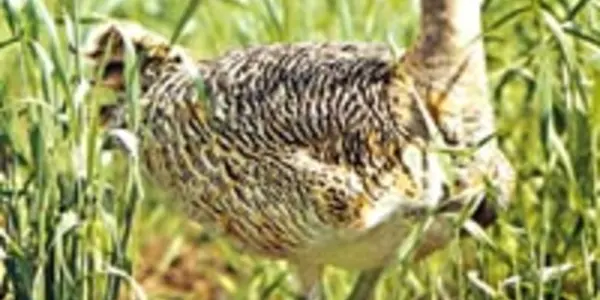
The scientist involved in helping re-introduce the Great Bustard to the UK is “delighted” that birds released at a secret Wiltshire location have laid their first eggs.
Dr Tamas Szekely from the University of Bath says that the announcement from the Great Bustard Group comes a year earlier than predicted, and shows that the project is making good progress.
The Great Bustard is the world’s largest flying bird and although it was hunted as a trophy until it became extinct in the UK in the 1830s, it still lives in stable populations in eastern Europe.
Female Great Bustard at nest (credit: IUCN Bustard Specialist Group)

There is little disagreement that the body’s maintenance and repair systems deteriorate with age, even as there is plenty of disagreement as to why.
Stem cells combat the aging process by replenishing old or damaged cells—particularly in the skin, gut, and blood—with a fresh supply to maintain and repair tissue. Unfortunately, new evidence published in the open-access journal PLoS Biology suggests that this regenerative capacity also declines with age as stem cells acquire functional defects.