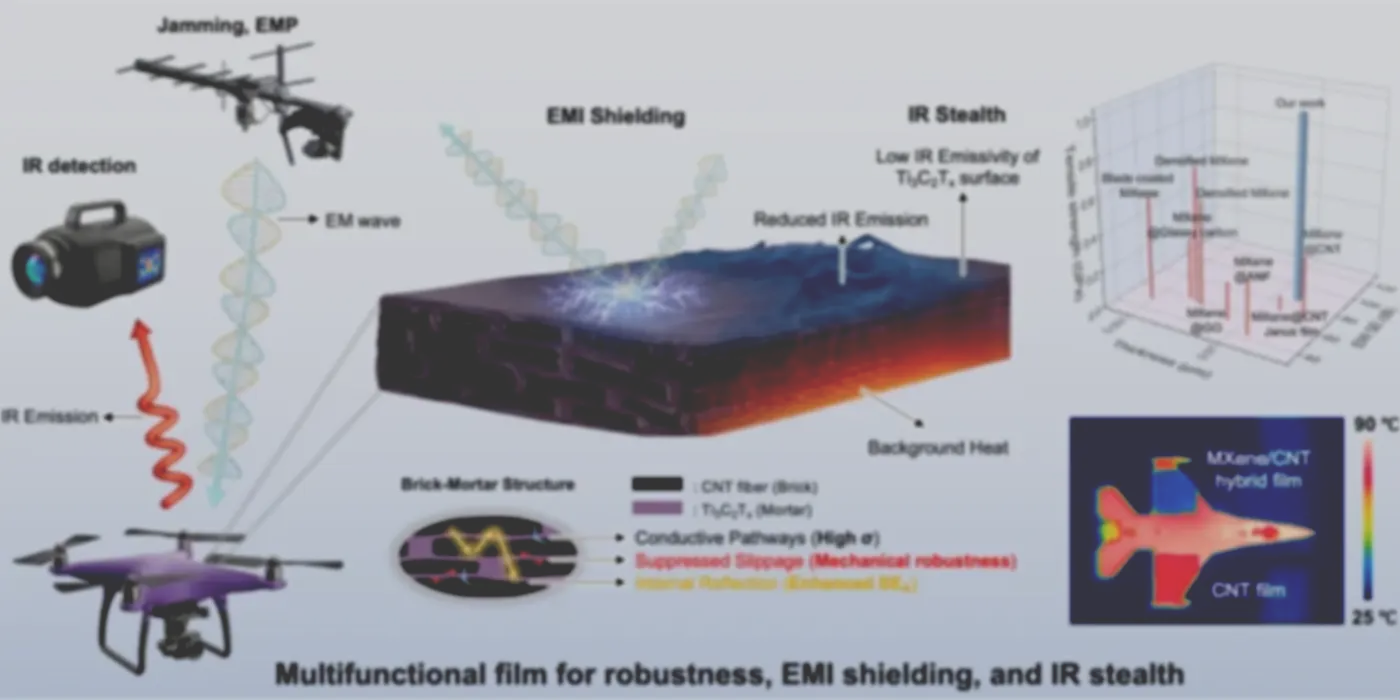
Carbon Nanotube Has EMI And Hides Heat
Researchers have developed a composite film that combines electromagnetic interference shielding, infrared stealth, and high mechanical strength using carbon nanotube fibers and MXene.
Researchers have developed a composite film that combines electromagnetic interference shielding, infrared stealth, and high mechanical strength using carbon nanotube fibers and MXene.


Removing invasive predators from island breeding colonies could save more seabirds for less cost than reductions in fishing, a study of Australia’s Eastern Tuna and Billfish Fishery (ETBF) has found.
According to one of the authors of a paper on the findings in the August edition of Frontiers in Ecology and Environment, CSIRO scientist Dr Chris Wilcox, a major challenge for fisheries worldwide is to reduce their impact on ‘bycatch’ species such as seabirds.
“Australian Commonwealth fisheries have made strong efforts towards reducing bycatch, including modifying fishing gear and restricting areas and periods of fishing, but these measures are not always effective, leading to costly interventions such as fishery closure,” Dr Wilcox says.
Faster growth, darker leaves, a different way of branching - wild varieties of the plant Arabidopsis thaliana are often substantially different from the laboratory strain of this small mustard plant, a favorite of many plant biologists.
Which detailed differences distinguish the genomes of strains from the polar circle or the subtropics, from America, Africa or Asia has been investigated for the first time by research teams from TÃbingen, Germany, and California led by Detlef Weigel from the Max Planck Institute for Developmental Biology.

People with bipolar disorder – or manic depression – suffer from an accelerated shrinking of their brain, researchers at the University of Edinburgh have found.
The study shows for the first time that bipolar disorder – a condition characterised by periods of depression and periods of mania – is associated with a reduction in brain tissue and proves that the changes get progressively worse with each relapse.
This discovery has implications not only for the way we research the disease, but may also impact the way this condition is treated.
At very young ages, children’s defiant behavior toward their mothers may not be a bad thing. This defiance may in fact reflect children’s emerging autonomy and a confidence that they can control events that are important to them.
Those are the findings of a new study conducted by researchers at the University of Texas at Austin and the University of Michigan.
To understand how very young children react to being controlled by their parents, the researchers videotaped 119 mostly middle-class mothers as they interacted with their 14- to 27-month-old children. Mothers were asked to have their children avoid a set of attractive toys and, when play time was over, to get their children to help them clean up those toys they had been allowed to use.
Two NASA robots are surveying a rocky, isolated polar desert within a crater in the Arctic Circle. The study will help scientists learn how robots could evaluate potential outposts on the moon or Mars.
The robots, K10 Black and K10 Red, carry 3-D laser scanners and ground-penetrating radar. The team arrived at Haughton Crater at Devon Island, Canada, on July 12 and will operate the machines until July 31. Scientists chose the polar region because of the extreme environmental conditions, lack of infrastructure and resources, and geologic features. Also, Haughton Crater is geographically similar to Shackleton Crater at the South Pole of the moon. Both are impact craters that measure roughly 12.4 miles in diameter.
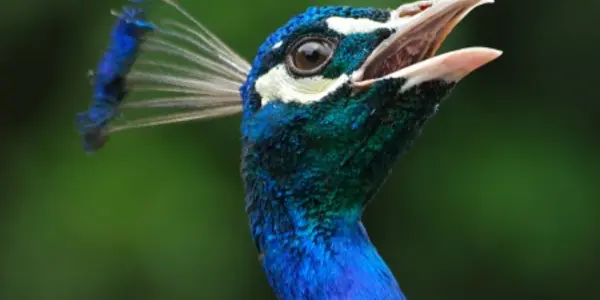
Even in the Animal Kingdom, there are some common sense rules. The more likely to get a big return, for example, the more work will be invested. That goes for male-female relationships as well.
A French team of behavioral ecologists demonstrated that in the Peafowl. They found that females with attractive mates invested more resources in their eggs than females paired with unattractive mates. They laid larger eggs and deposited more testosterone in egg yolk, potentially offering a better prospective to their offspring.
Adeline Loyau, Michel Saint Jalme, Robert Mauget, and Gabriele Sorci of the National Museum of Natural History and the Laboratory of Evolutive Parasitology, Paris, investigated maternal investment in the peafowl (Pavo cristatus).
Scientists have discovered two species of groundwater amphipods that are found solely in Iceland. These finding can only be explained by these animals surviving glaciations in some kind of refugium under the glaciers.
Many scientists believe that the ice ages exterminated all life on land and in freshwater in large parts of the Northern Hemisphere, especially on ocean islands such as Iceland. Scientists at Holar University College and the University of Iceland have challenged that belief, at least when looking at groundwater animals.
They have discovered two species of groundwater amphipods in Iceland that are the only animals species found solely in Iceland.
Researchers at the University of Pennsylvania School of Medicine are the first to observe and measure the internal motion inside proteins, or its “dark energy.” This research, appearing in the current issue of Nature has revealed how the internal motion of proteins affects their function and overturns the standard view of protein structure-function relationships, suggesting why rational drug design has been so difficult.
The situation is akin to the discussion in astrophysics in which theoreticians predict that there is dark matter, or energy, that no one has yet seen,” says senior author A. Joshua Wand, PhD, Benjamin Rush Professor of Biochemistry.
A typical human mouth teems with as many as 700 different species of microbes. A handful of these have been specifically implicated in promoting gum disease, dental cavities, and bad breath, but for the most part, the make-up of this complex ecosystem and its impact on human health remain largely unexplored.
A new device created by Howard Hughes Medical Institute (HHMI) researchers, however, may make some of the most reclusive members of this and other microscopic communities much more accessible for laboratory study.
Ice loss from glaciers and ice caps is expected to cause more global sea rise during this century than the massive Greenland and Antarctic ice sheets, according to a new University of Colorado at Boulder study.
The researchers concluded that glaciers and ice caps are currently contributing about 60 percent of the world’s ice to the oceans and the rate has been markedly accelerating in the past decade, said Emeritus Professor Mark Meier of CU-Boulder’s Institute of Arctic and Alpine Research, lead study author. The contribution is presently about 100 cubic miles of ice annually -- a volume nearly equal to the water in Lake Erie -- and is rising by about three cubic miles per year.
The genetic makeup of any species is more like customized open source code than something that is fixed and can be easily documented. The parts of our 'code' that have withstood the test of time and the parts have undergone rapid evolutionary change has been difficult to assess.
Staying with the metapohor, an international team of researchers has developed a simple method to comb whole genomes for all the software fixes and security patches accumulated over time. In a first trial run, the scientists catalogued the genetic variations in 23 strains of the mustard weed Arabidopsis thaliana that were collected from the wild all over the world.
Game over. Computer scientists at the University of Alberta have solved checkers, the popular board game with a history that dates back to 3,000 B.C.
After 18-and-a-half years and sifting through 500 billion billion (a five followed by 20 zeroes) checkers positions, Dr. Jonathan Schaeffer and colleagues have built a checkers-playing computer program that cannot be beaten. Completed in late April this year, the program, Chinook, may be played to a draw but will never be defeated.
"This is a tremendous achievement—a truly significant advance in artificial intelligence," said Dr.