Carbon Nanotube Has EMI And Hides Heat
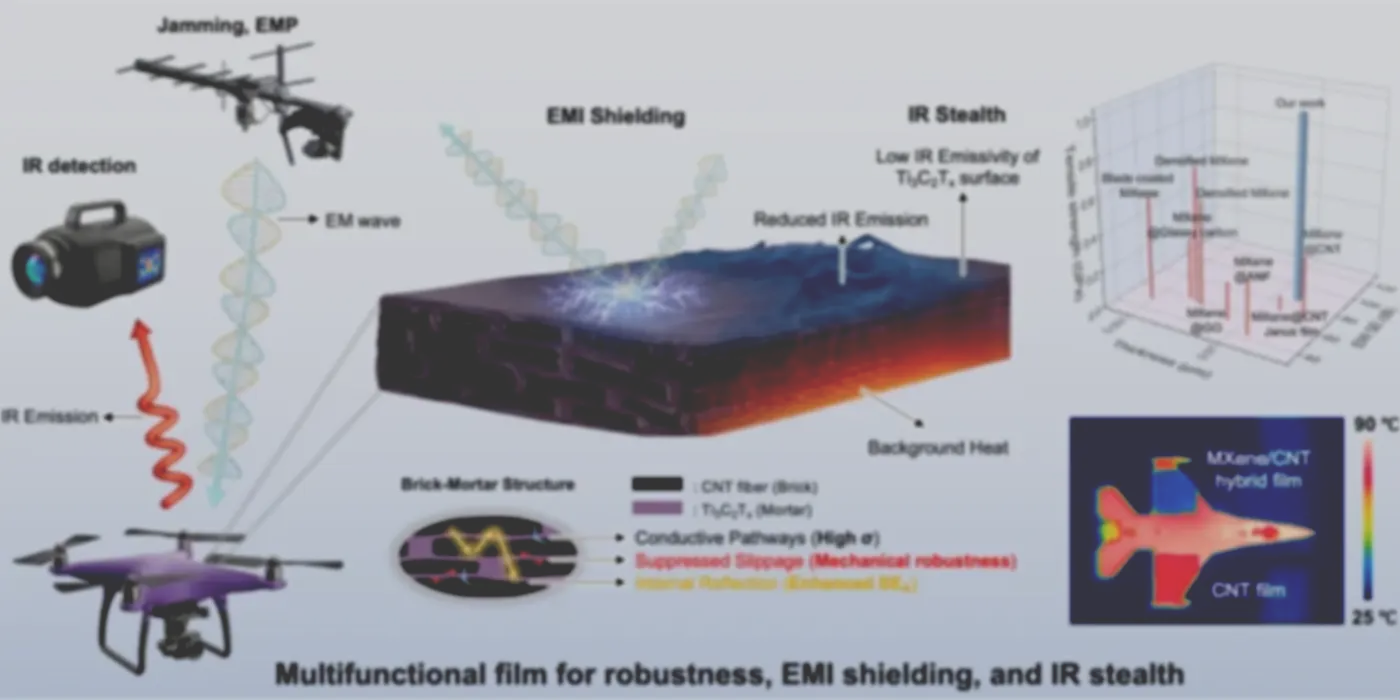
Researchers have developed a composite film that combines electromagnetic interference shielding, infrared stealth, and high mechanical strength using carbon nanotube fibers and MXene.
Researchers have developed a composite film that combines electromagnetic interference shielding, infrared stealth, and high mechanical strength using carbon nanotube fibers and MXene.


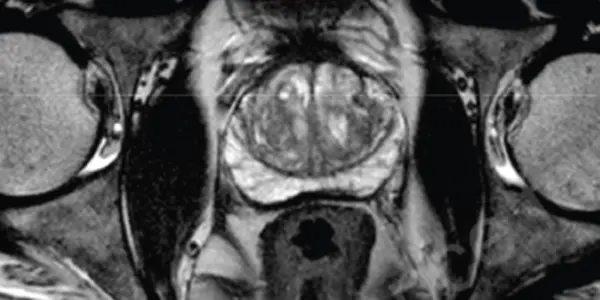
A team of biomedical engineers at Virginia Tech and the University of California at Berkeley has developed a new minimally invasive method of treating cancer, and they anticipate clinical trials on individuals with prostate cancer will begin soon.
The process, called Irreversible Electroporation (IRE), was invented by two engineers, Rafael V. Davalos, a faculty member of the Virginia Tech–Wake Forest University School of Biomedical Engineering and Science (SBES), and Boris Rubinsky, a bioengineering professor at the University of California, Berkeley.
Electroporation is a phenomenon known for decades that increases the permeability of a cell from none to a reversible opening to an irreversible opening. With the latter, the cell will die.

For the first time, a team of experts is preparing to create tsunami in a controlled environment in order to study their effects on buildings and coastlines - ultimately paving the way for the design of new structures better able to withstand their impact.
Dr Tiziana Rossetto, UCL Department of Civil & Environmental Engineering, unveiled plans to develop an innovative new tsunami generator capable of creating scaled-down versions of the devastating waves. The UCL team will be working with marine engineering specialists HR Wallingford (HRW) throughout the project.
“Tsunami are water waves generated by earthquakes, underwater landslides, volcanic eruptions or major debris slides,” said Dr Rossetto.
Older adults who have difficulty identifying common odors may have a greater risk of developing problems with thinking, learning and memory, according to a report in the July issue of Archives of General Psychiatry.
Mild cognitive impairment—or a decline in thinking, learning and memory abilities—is increasingly recognized as a precursor to Alzheimer’s disease, according to background information in the article. Impairments in the ability to recognize odors have been associated with more rapid cognitive decline and also with the development transition from mild cognitive impairment to Alzheimer’s disease. However, little is known about factors that predict the development of mild cognitive impairment.
Cooperation in animals has long been a major focus in evolutionary biology. In particular, reciprocal altruism, where helpful acts are contingent upon the likelihood of getting help in return, is especially intriguing because it is open to cheaters.
In a new study published this week Claudia Rutte and Michael Taborsky demonstrate the first evidence for generalized reciprocal cooperation in non-humans. The authors show that rats who received help in the past were more likely to help another unknown partner.
Researchers at the University of Utah and elsewhere have developed a new way to predict when vegetation dries to the point it is most vulnerable to large-scale fires in the Santa Monica Mountains near Los Angeles. And this year’s forecast says the highest-risk fire period will begin July 13 – weeks earlier than usual.
Despite that, the new study also shows that unlike other areas of the western United States, global warming has not caused any apparent long-term trend toward early fire seasons in the Santa Monicas.
The scientists eventually hope to expand their unique fire-risk forecasting method to all of Southern California and beyond.
We’ve all wondered how a seemingly healthy person can actually be at high risk for heart disease or a heart attack. Now researchers have uncovered a new clue to this mystery. The culprit: myeloperoxidase (MPO), a protein secreted by white blood cells that both signals inflammation and releases a bleach-like substance that damages the cardiovascular system.
Although MPO is intended to kill harmful bacteria, it may instead inflame the body’s arteries and cripple protective substances in the blood, according to a study published in the Journal of the American College of Cardiology (JACC). As a result, long before conventional risk factors set off alarms, elevated MPO levels signal that harmful plaque has been building up.
How precise are tests used to diagnose learning disability, progressive brain disease or impairment from head injury?
Timothy Salthouse, PhD, a noted cognitive psychologist at the University of Virginia, has demonstrated that giving a test only once isn’t enough to get a clear picture of someone’s mental functioning. It appears that repeating tests over a short period may give a more accurate range of scores, improving diagnostic workups.
Salthouse gave 16 common cognitive and neuropsychological tests to evenly divided participants (90 in the first, 1600 in the second) into groups of ages 18-39, 50-59 and 60-97 years old.
Psychologists from the University of Exeter have identified an 'early warning signal' in the brain that helps us avoid repeating previous mistakes. Published in the Journal of Cognitive Neuroscience, their research identifies, for the first time, a mechanism in the brain that reacts in just 0.1 seconds to things that have resulted in us making errors in the past.
Previous research has shown that we learn more about things for which we initially make incorrect predictions than for things for which our initial predictions are correct. The element of surprise in discovering we are wrong is conducive to learning, but this research is the first to show how amazingly rapid our brain’s response can be.
A vital molecule for resistance to food allergy has been identified and offers a potential target for therapy.
There is currently no way to treat food allergy and the only way for sufferers to manage the problem is to avoid certain foods and make sure they have injectable adrenaline at hand.
Scientists led by Dr Claudio Nicoletti at the Institute of Food Research in Norwich have found that a molecule called Interleukin-12 (IL-12) is absent during allergic responses. Dr Nicoletti suggests that by delivering an allergen in the presence of IL-12, allergic reactions could be brought back under control.
Did another universe collapse give birth to the one we live in today?
"My paper introduces a new mathematical model that we can use to derive new details about the properties of a quantum state as it travels through the Big Bounce, which replaces the classical idea of a Big Bang as the beginning of our universe," said Martin Bojowald, assistant professor of physics at Penn State.
In what they call a “stunning research advance,” investigators at Georgetown University Medical Center have been able to use simple, non-toxic chemical injections to add and remove fat in targeted areas on the bodies of laboratory animals.
They say the discovery could revolutionize human cosmetic and reconstructive plastic surgery and treatment of diseases associated with human obesity.
Investigators say these findings may also, over the long-term, lead to better control of metabolic syndrome, which is a collection of risk factors that increase a patient’s chances of developing heart disease, stroke, and diabetes.
In the last 40 years, scientists have perfected ways to determine the knot-like structure of enzymes, but they’ve been stumped trying to translate the structure into an understanding of function – what the enzyme actually does in the body. This puzzle has hindered drug discovery, since many of the most successful drugs work by blocking enzyme action.