Carbon Nanotube Has EMI And Hides Heat
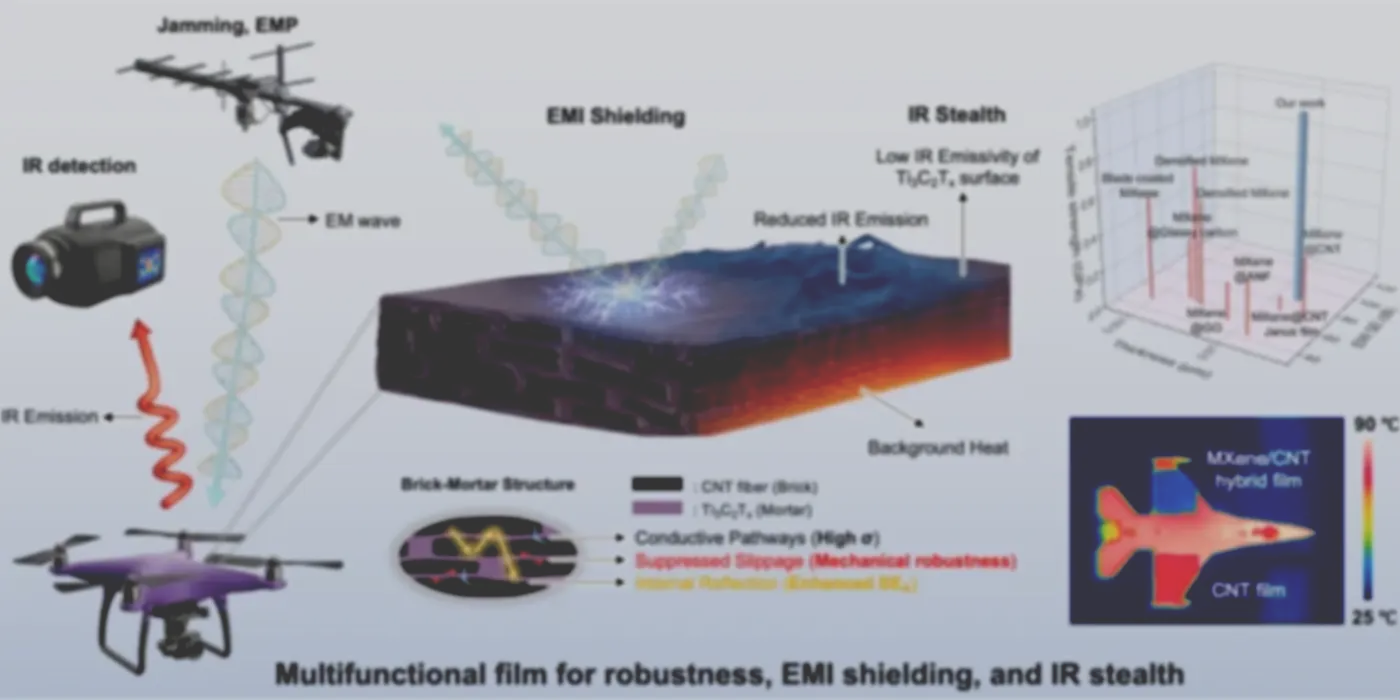
Researchers have developed a composite film that combines electromagnetic interference shielding, infrared stealth, and high mechanical strength using carbon nanotube fibers and MXene.
Researchers have developed a composite film that combines electromagnetic interference shielding, infrared stealth, and high mechanical strength using carbon nanotube fibers and MXene.


In May, Nobel Laureate James D. Watson, the scientist who co-discovered the structure of DNA, became the first person to receive his own complete personal genome -- all three billion base pairs of his DNA code sequenced. The cost was $1 million, and the process took two months.
A million dollars for a map of all your genes is way out of reach for most people. The National Institutes of Health would like to bring it down to $1,000 by the year 2014, but plenty of technological hurdles remain before you’ll be able to secure your genetic blueprint for this more affordable price.
A factor in immune cells regulates human semen and seems to determine whether a man will be fertile, according to a new study.
Yousef Al-Abed, PhD, and his colleagues at The Feinstein Institute for Medical Research have isolated an immune substance called macrophage migration inhibitory factor (MIF) in semen samples from infertile and reproductively healthy men. MIF is key to helping sperm mature, which is necessary for its union with an egg. The finding could lead to a diagnostic test to determine fertility status.

Using echo-sounding equipment to create images and maps of areas below the ocean floor, researchers have begun to unravel a new story about the Antarctic Ice Sheet.
Images of areas below the Eastern Ross Sea, next to West Antarctica, provide evidence that the subcontinent was involved in the general growth of the Antarctic Ice Sheet as it formed many millions of years ago, according to scientists at the University of California, Santa Barbara. The National Science Foundation provided funding for the project.
Changes in Antarctica, an area that contains approximately 90 percent of the world’s ice, are particularly important for understanding some implications of global warming.
The Genographic Project is studying the genetic signatures of ancient human migrations and creating an open-source research database. It allows members of the public to participate in a real-time anthropological genetics study by submitting personal samples for analysis and donating the genetic results to the database.
In the first scientific publication from the project they report on genotyping human mitochondrial DNA during the first 18 months of the project.
To making sorting and cataloguing so much data easier, they created the Nearest Neighbor haplogroup prediction tool. The accurate classification of genetic lineages into distinct branches on the human family tree, known as haplogroups, has long been a struggle for anthropologists.
About 250 years before Daniel Massey built his farm house in Huntingdon County, Pennsylvania, his great-grandfather came to the New World as an indentured servant. 150 years later, Penn State's Archaeological Field School is excavating Daniel's house to see how far he came from those humble beginnings.
"I think historic archaeology can engage a little more directly than the prehistoric archaeology we sometimes do," says Dr. Claire Milner, director of the field school and director of exhibits and curator of Penn State's Matson Museum of anthropology. "It is more obvious and immediate who the people were and what the artifacts are."
Student measures artifact location for mapping.
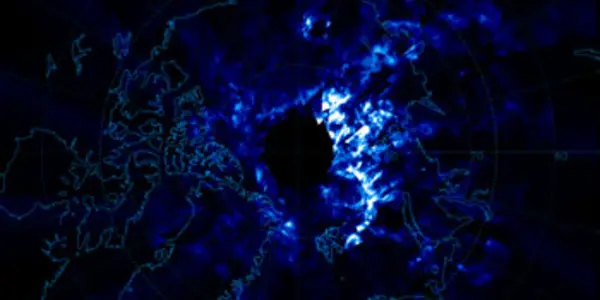
A NASA satellite has captured the first occurrence this summer of mysterious iridescent polar clouds that form 50 miles above Earth's surface.
The first observations of these clouds by the Aeronomy of Ice in the Mesosphere (AIM) satellite occurred above 70 degrees north on May 25. Observers on the ground began seeing the clouds on June 6 over northern Europe. AIM is the first satellite mission dedicated to the study of these unusual clouds.
These mystifying clouds are called Polar Mesospheric Clouds, or PMCs, when they are viewed from space and referred to as "night-shining" clouds, or noctilucent clouds, when viewed by observers on Earth. The clouds form during the Northern Hemisphere's summer season that begins in mid-May and extends through the end of August.
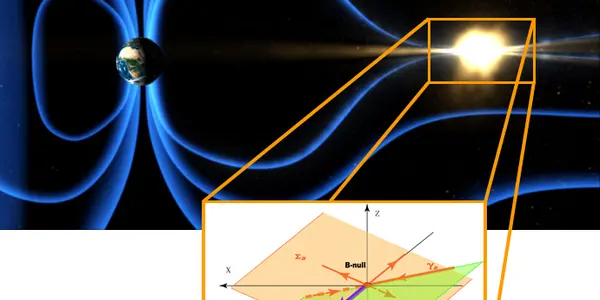
Scientists have obtained the first-ever 3D pictures of magnetic reconnection events, the dances on the solar winds of near-Earth space.
In magnetic reconnection, magnetic field lines from different magnetic domains collide and reconnect, mixing previously separated plasma. Plasma is a gas composed of ions and electrons but is electrically neutral, spread over large distances in space and guided by the action of magnetic and electric fields.
Magnetic reconnection converts the energy of the magnetic field into particle energy, generating jets and heating the plasma.
Researchers in the group "Alcoholism and drug addiction" of the University of Granada have shown that a hereditary lack of endorphin is a genetic predisposition to become addicted to alcohol.
Beta-endorphin is a kind of “morphine” released by the brain in response to several situations, such as pain. In this way, beta-endorphins can be considered “endogenous analgesics” to numb or dull pains.
Researchers at the Netherlands Cancer Institute - Antoni van Leeuwenhoek Hospital (NKI-AVL) have made the discovery that tuberculosis and leprosy bacteria follow a different path into the host cell than that which for forty years scientists had always maintained.
The insight has huge implications for an understanding of these diseases and for more effective medicines to combat TB, leprosy and even cervical cancer.
High-resolution electron microscopes and tomography have enabled Peters, Van der Wel and their colleagues to map the cell's internal organisation. Knowledge of differing cell organelles that also play a role in the development of cancer is important when trying to understand fundamental cell processes.
Researchers from the European Molecular Biology Laboratory now reveal that the hypothalamus and its hormones are not purely vertebrate inventions, but have their evolutionary roots in marine, worm-like ancestors.
Hormones control growth, metabolism, reproduction and many other important biological processes. In humans, and all other vertebrates, the chemical signals are produced by specialized brain centers such as the hypothalamus and secreted into the blood stream that distributes them around the body.
Hormone-secreting brain centers are much older than expected and likely evolved from multifunctional cells of the last common ancestor of vertebrates - flies and worms.
The so-called Ret Chip, the world's first genetic chip to be produced for diagnosing hereditary diseases of the retina in a genetic examination, will become available in mid-July. The chip is the largest to be used to date for the diagnosis of human hereditary disorders. It was developed by a team of scientists headed by Professor Bernhard Weber at the Institute for Human Genetics at the University Hospital Regensburg.
In Europe roughly one child in 4,000 is born with a hereditary retina disorder. The most common disorder is retinitis pigmentosa, of which there are a number of different variants. Although ophthalmologists can diagnose the destruction of nerve cells in the retina, in most cases they can’t offer patients any treatment.
The core of the gaming industry has always been young men with plenty of free time but increasingly investors and developers are trying to attract the casual gamers, including women, who have less time and infrequent contiguous blocks but are still interesting in being part of the gaming experience.
This new genre is called ‘casual games’ and is attracting players from all around the world. "These new games are quick to learn and the focus is on fun rather than on making the games difficult or time consuming", explains lecturer Jesper Juul, who has through his research placed a focus on computer game design at the IT University of Copenhagen.