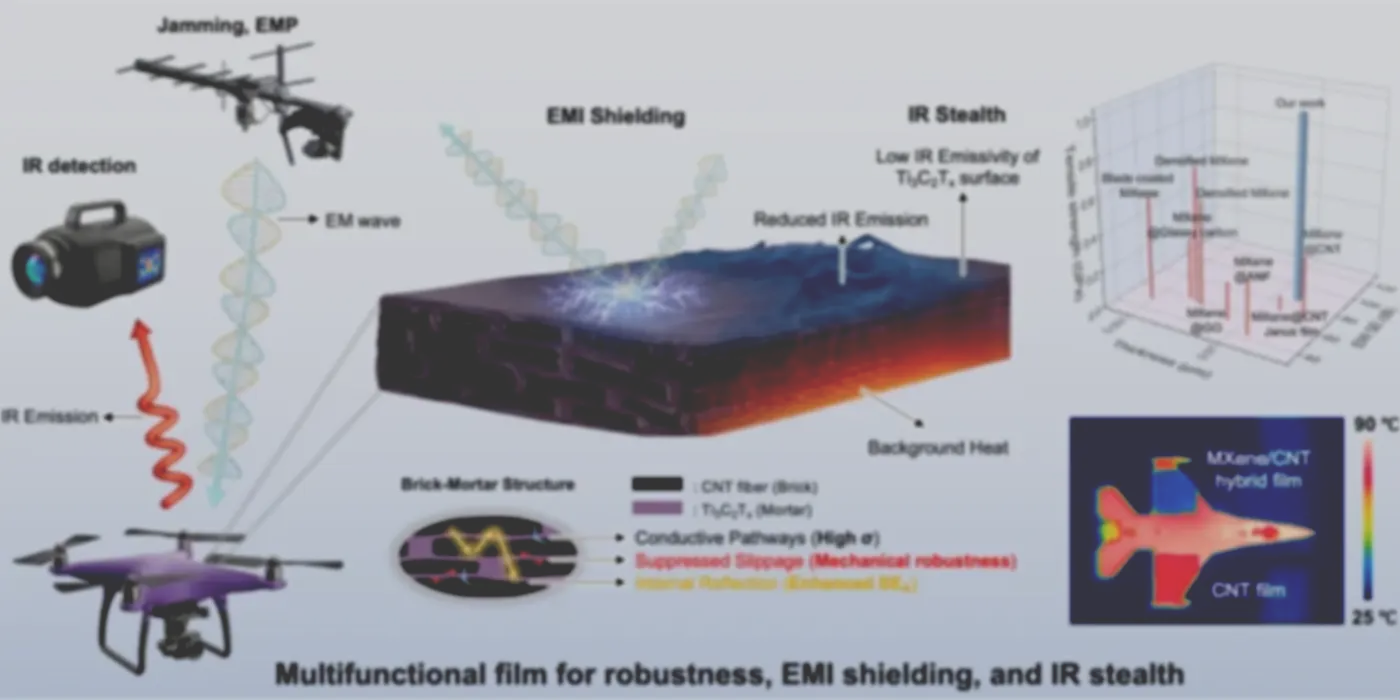
Carbon Nanotube Has EMI And Hides Heat
Researchers have developed a composite film that combines electromagnetic interference shielding, infrared stealth, and high mechanical strength using carbon nanotube fibers and MXene.
Researchers have developed a composite film that combines electromagnetic interference shielding, infrared stealth, and high mechanical strength using carbon nanotube fibers and MXene.


Any machinist will tell you that a little grease goes a long way toward making a tool work better. And that may soon hold true for plastic electronics as well.
Carnegie Mellon University chemists have found that grease can make some innovative plastics vastly better electrical conductors. They outline a chemical process that could become widely adopted to produce the next generation of tiny switches for transistors in radio frequency identification tags, flexible screen displays, and debit or key cards.
In a host of neurological diseases, including multiple sclerosis (MS) and several neuropathies, the protective covering surrounding the nerves – an insulating material called myelin – is damaged.
Scientists at the Weizmann Institute of Science have now discovered an important new line of communication between nervous system cells that is crucial to the development of myelinated nerves – a discovery that may aid in restoring the normal function of the affected nerve fibers.
Researchers have used nanotechnology to create transparent transistors and circuits, a step that promises a broad range of applications, from e-paper and flexible color screens for consumer electronics to "smart cards" and "heads-up" displays in auto windshields.
The transistors are made of single "nanowires," or tiny cylindrical structures that were assembled on glass or thin films of flexible plastic.
"The nanowires themselves are transparent, the contacts we put on them are transparent and the glass or plastic substrate is transparent," said David Janes, a researcher at Purdue University's Birck Nanotechnology Center and a professor in the School of Electrical and Computer Engineering.
Umbilical cord blood may safely preserve insulin production in children newly diagnosed with type 1 diabetes, according to findings from a small national pilot study .
University of Florida researchers sought to determine whether it is feasible to use a patient’s own cord blood stem cells to neutralize the body’s autoimmune attack on the pancreas and help restore the organ’s ability to make insulin, which regulates how the body uses sugar and other nutrients for energy.
“This is the first attempt at using cord blood as a potential therapy for type 1 diabetes. We hope these cells can either lessen the immune system’s attack on the pancreas or possibly introduce stem cells that can differentiate into insulin-producing cells,” said pediatric endocrinologist Dr.
Treatment with intravenous bisphosphonates — drugs used to reduce harm done to bones by cancer or cancer therapy — increases the risk of jaw or facial bone disease or infection, a large-scale comparative study by researchers at the University of Texas Medical Branch at Galveston (UTMB) has found.
Drawing on the National Cancer Institute’s Surveillance, Epidemiology and End Results (SEER) database linked to Medicare insurance claims, investigators from the UTMB Center for Population Health and Health Disparities compared more than 14,000 cancer patients treated with two types of intravenous bisphosphonates (pamidronate and zoledronic acid) with nearly 27,000 cancer patients who did not receive the drugs.
Researchers at UT Southwestern Medical Center have determined how a substance derived from the bark of the South American lapacho tree kills certain kinds of cancer cells, findings that also suggest a novel treatment for the most common type of lung cancer.
The compound, called beta-lapachone, has shown promising anti-cancer properties and is currently being used in a clinical trial to examine its effectiveness against pancreatic cancer in humans. Until now, however, researchers didn’t know the mechanism of how the compound killed cancer cells.

Constipated? In the early 19th century, the apothecary would most likely have prescribed you calomel, or mercurous chloride, as a purgative, regardless of its toxicity. Because it worked. It was also useful as an insecticide.
This was the sort of thing being concocted at the Apothecaries’ Hall in Blackfriars, then a major center for drug manufacturing in London, says Anna Simmons, a historian of science at the Open University in Milton Keynes.
In the first scientific publication from The Genographic Project, a five-year effort to understand the human journey, researchers report their experience of genotyping human mitochondrial DNA during the first 18 months of the project.
Writing in PLoS Genetics, Doron Behar and colleagues describe the procedures used to generate, manage and analyze the genetic data from 78,590 public participants. They also provide the first anthropological insights in this unprecedented effort to map humanity’s genetic journey through the ages.
The first U.S. study to transplant a potent form of purified adult stem cells into the heart muscle of patients with severe angina provided evidence that the procedure is safe and produced a reduction in angina pain as well as improved functioning in patients' daily lives, reports the lead researcher at Northwestern University's Feinberg School of Medicine.
Within three to six weeks after the severe angina patients were injected with their own stem cells, many who used to experience pain just from walking to the refrigerator, now only had pain when they climbed two flights of stairs.
A unique study by researchers at the University of York and Hull York Medical School has confirmed a link between depression and low levels of folate, a vitamin which comes from vegetables.
In research published in the July edition of the Journal of Epidemiology and Community Health, the York team led by Dr Simon Gilbody, concluded that there was a link between depression and low folate levels, following a review of 11 previous studies involving 15,315 participants.

During flowering four different types of floral organs need to be formed:
Sepals, which protect the inner organs;
The frequently ornamental petals;
Stamens, which produce pollen and;
The carpels, the female reproductive unit.
This process is orchestrated by a large number of genes.
A synthetic version of a molecule found in the egg cells of the Northern Leopard frog (Rana pipiens) could provide the world with the first drug treatment for brain tumours.
Known as Amphinase, the molecule recognises the sugary coating found on a tumour cell and binds to its surface before invading the cell and inactivating the RNA it contains, causing the tumour to die.
Although it could potentially be used as a treatment for many forms of cancer, Amphinase offers greatest hope in the treatment of brain tumours, for which complex surgery and chemotherapy are the only current treatments.
Amphinase molecule. Credit: Professor Ravi Acharya, University of Bath