Carbon Nanotube Has EMI And Hides Heat
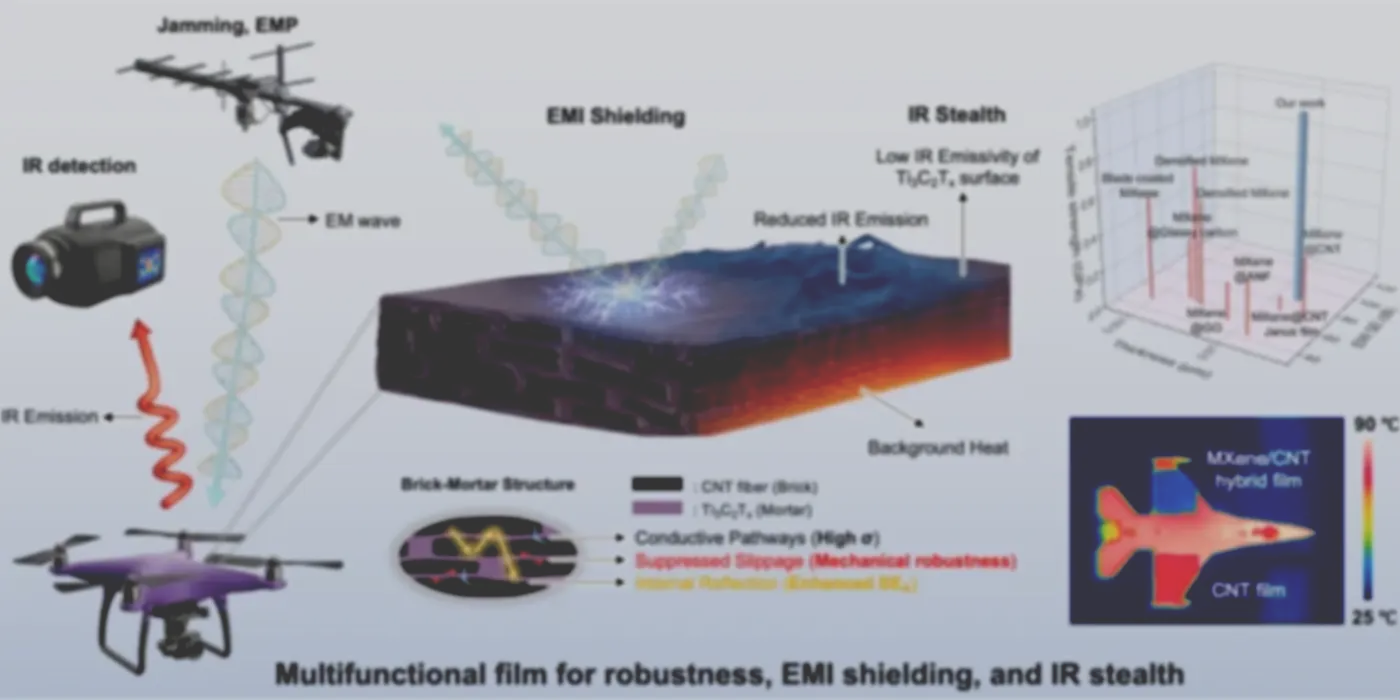
Researchers have developed a composite film that combines electromagnetic interference shielding, infrared stealth, and high mechanical strength using carbon nanotube fibers and MXene.
Researchers have developed a composite film that combines electromagnetic interference shielding, infrared stealth, and high mechanical strength using carbon nanotube fibers and MXene.


Fibromyalgia is a chronic, widespread pain in muscles and soft tissues accompanied by fatigue that does not manifest any structural damage in an organ.
It affects approximately 2% of the US population, is an example of a class of maladies called CSS. These diseases are based on neurochemical abnormalities and include irritable bowel syndrome, migraine and restless legs syndrome.
Twenty-five years ago, Muhammad B. Yunus, MD, and colleagues published the first controlled study of the clinical characteristics of fibromyalgia syndrome.
Now Yunus and his team have done a critical review of over 225 publications and the author’s broad experience in fibromyalgia and related diseases.

We all have tastes we love, and tastes we hate. And yet, our "taste" for certain flavors and foods can change over time, as we get older or we get tired of eating the same old thing.
A University of Michigan study gives evidence about what's going on in the brain when we taste something we like, or develop a liking for something we once hated.
And although the study used rats instead of people, it has direct implications for understanding the way we perceive pleasure – and the reasons why some people develop problems, such as drug abuse, depression or anorexia, that knock their pleasure response off balance.
Pediatricians now have a practical tool to help determine whether children with chronic diseases like Crohn’s, juvenile arthritis and anorexia nervosa – or those undergoing cancer treatment – are at increased risk for bone mass deficiencies, fracture or osteoporosis as they get older, according to a new study.
“There is a huge demand for this information among clinicians because in almost any chronic condition in children affecting growth, inflammation, or involving cancer survivors, they have problem bones,’’ said Heidi Kalkwarf, Ph.D., associate professor of Community and General Pediatrics at Cincinnati Children’s, and lead author of the research report.
You have 60 days to make a difference. That's the amount of time the USDA is going to allow for comments on its amendments to add 38 inorganic ingredients to organic food.
Sound like it doesn't make sense?
Here's why it does, according to the USDA.
The 38 minor ingredients contained in the interim final rule are non-organic, agricultural ingredients that may be considered for use in an “organic” processed product. A minor ingredient cannot comprise more than 5 percent of an “organic” product.
Before an organic handling operation can consider using a non-organic, agricultural minor ingredient, the organic form of the ingredient must be first sourced and confirmed unavailable.
CTS-21166, an experimental drug to treat Alzheimer's disease, began the first phase of human clinical trials this week.
"Millions of people suffer from this devastating disease and treatment options are very limited," said Arun Ghosh, a Purdue professor who led the creation of the treatment molecule. "Current drugs manage the symptoms, but this could be the first disease-modifying therapy. It may be able to prevent and reverse the disease."
Ghosh and Jordan Tang founded biopharmaceutical company Zapaq, which merged with Athenagen in 2006 to form CoMentis. CoMentis is handling the clinical trials.
University of Nottingham researchers want to eliminate animals in laboratory research and they're rebuilding their lab to do it.
By improving the use of cell and tissue cultures, computer modelling, cell and molecular biology, epidemiology and other methods, they intend to show they can completely remove animals from medical research — while still working to defeat diseases that affect millions of people.
The laboratory is called FRAME – Fund for the Replacement of Animals in Medical Experiments - and they've been quietly advocating reduced animal testing for 25 years.
Researchers at UCSD have patented a strategy for developing a human vaccine to prevent against Human Cytomegalovirus (hCMV) infection and disease.
CMV, a type of herpes virus, is the leading viral cause of birth defects and a serious problem in patients with compromised immune systems. The body’s natural immunity doesn’t protect against infection by the virus, estimated to be present in 50 to 75 percent of all adults.
“Until now, scientists haven’t been able to develop a vaccine to protect against CMV,” said Deborah H. Spector, Ph.D., UCSD Professor of Cellular and Molecular Medicine and faculty member of the Skaggs School of Pharmacy and Pharmaceutical Sciences.
Misstatements and ignorance claiming that families "cause" eating disorders is like blaming parents for diabetes or asthma or cancer says an international group of eating disorders researchers.
Recent damaging statements by fashion model Gisele Bundchen stating that unsupportive families cause anorexia nervosa only perpetuate misconceptions and further stigmatize eating disorders.

CERN Director General Robert Aymar announced that the Large Hadron Collider (LHC) will start up in May 2008 despite the fact that a low-energy run originally scheduled for this year has been dropped due to delays, coupled with the failure in March of a pressure test in one of the machine’s components.
In that instance, a magnet assembly known as the inner triplet, provided to CERN as part of the contribution of the US to the LHC project, failed a pressure test. A repair has been identified and is currently being implemented.
The LHC is a scientific instrument of unprecedented complexity, and at 27 kilometers in circumference, is the world’s largest superconducting installation.
Researchers at the University of Pennsylvania School of Medicine have identified proteins in the rod and cones of the eye that could lead to the discovery of the genetic causes of a host of inherited eye diseases. The investigators hope to gain a clearer understanding of what goes wrong at the most basic level in these diseases that cause blindness and other disorders.
Specifically, they have identified and measured the types and amounts of proteins in the light-sensing parts of the eye’s retina. These light-sensitive structures, called photoreceptor sensory cilia, enable the rod and cone cells of the retina to detect light.

Our brain consists of billions of nerve cells enabling to learn, remember and reason. Every time we think and experience, touch, smell or fear, millions of neurons in our brain becomes active.
These nerve cells communicate with each other by chemical and electrical impulses to compute incoming sensory information and integrate it via distinct brain regions.

A bee’s favorite color can help it to find more food from the flowers in their environment, according to new research from Queen Mary, University of London.
Dr Nigel Raine and Professor Lars Chittka from Queen Mary’s School of Biological and Chemical Sciences studied nine bumblebee (Bombus terrestris) colonies from southern Germany, and found that the colonies which favored purple blooms were more successful foragers.
Dr Raine explains: “In the area we studied, violet flowers produced the most nectar - far more than the next most rewarding flower color (blue).