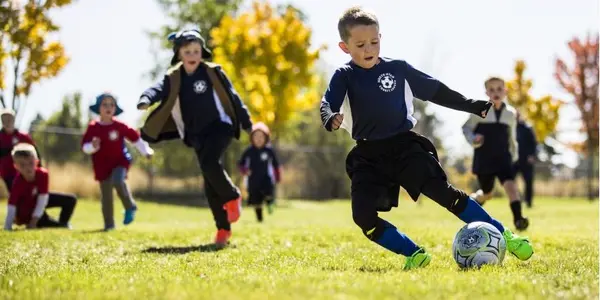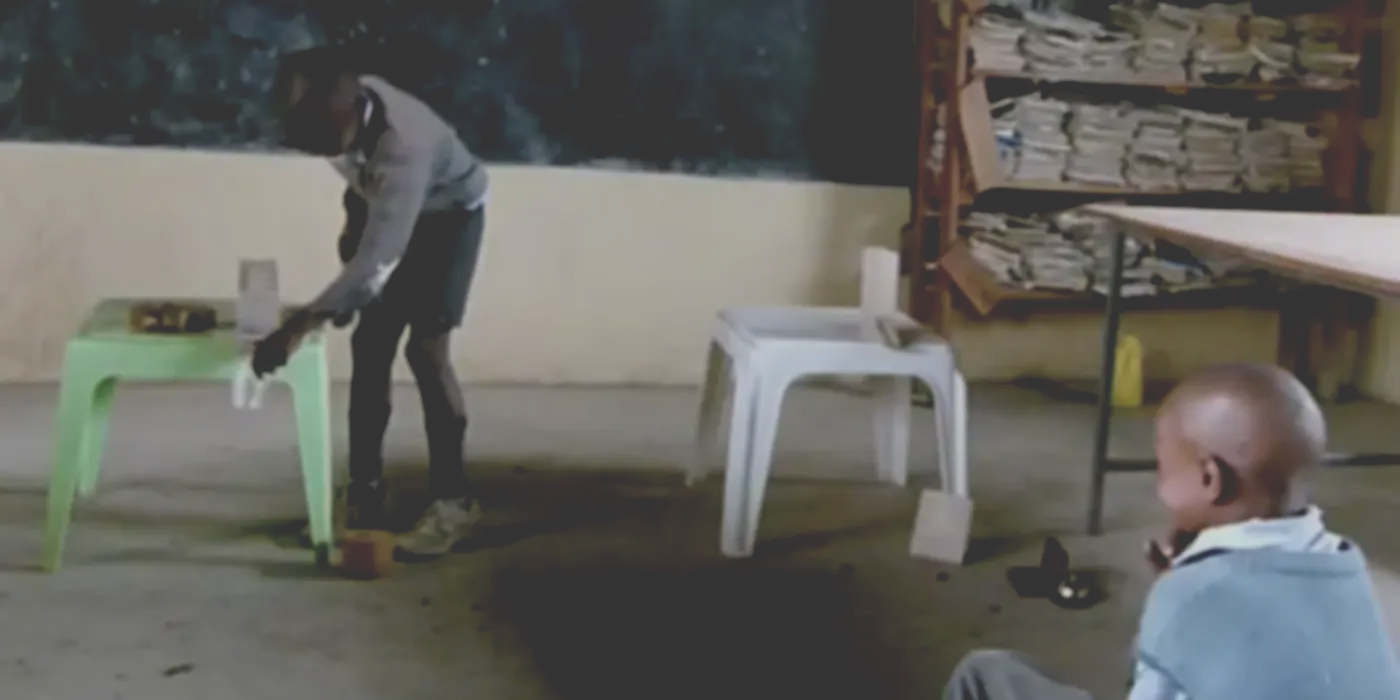
Kids Helping Kids Is Universal - But Cultures Help Differently
A simple game reveals a universal instinct in kids
A simple game reveals a universal instinct in kids


American CO2 emissions have plummeted thanks to natural gas and energy emissions from coal have not been this low since the early 1980s, but a decades long war against energy science meant nuclear power - a truly viable emissions-free source - was scuttled and that meant more coal plants starting in the early 1990s, which meant more CO2.

The bacterium Clostridium difficile causes antibiotic-related diarrhea and is a growing problem in the hospital environment and elsewhere in the community. Understanding how the microbe colonizes the human gut when other "healthy" microbes have been destroyed during a course of antibiotics might lead to new ways to control infection.

Magnetic resonance imaging (MRI) is the medical application of nuclear magnetic resonance spectroscopy and a powerful diagnostic tool. It works by resonantly exciting hydrogen atoms and measuring the relaxation time -- different materials return to equilibrium at different rates; this is how contrast develops (i.e. between soft and hard tissue). By comparing the measurements to a known spectrum of relaxation times, medical professionals can determine whether the imaged tissue is muscle, bone, or even a cancerous growth.

In Psychological Science, results from 7,752 pairs of identical and non-identical twins (a total of 15,504 children) from the Medical Research Council (MRC) funded Twins Early Development Study (TEDS) showed that how 4-year old children draw pictures of a child was an indicator of intelligence at age 14 - and the link between drawing and later intelligence was influenced by genes.
Two new vaccines can prevent the transmission of meningitis from person to person by reducing 'carriage' of the responsible bacteria in the nose and throats of the population.
Meningitis can be a devastating condition. The most common causes of meningitis are viral infections that usually get better without treatment but bacterial meningitis infections are extremely serious and may result in death or brain damage, even if treated.
Climate change has happened throughout history, there are abandoned cities in places we would consider inhospitable, but they weren't at the times. As the climate changed, it has altered habitats not just for birds and bees and everything in between, but humans as well.
1990 is not some special time in world history, despite some claims that fixing one greenhouse gas would prevent climate change. Researchers at the University of Wisconsin-Madison and Aarhus University in Denmark say that by looking at estimates of climate and land-use change speeds they can determine the potential combined impacts of both climate and land-use change on plants, animals and ecosystems across the country.
Both mother and baby are at increased risk for complications of flu infection during pregnancy and prenatal care providers say they advise women to get the flu vaccine, but many pregnant women don't do it.
Robert Arao, MPH, a biostatistician at Group Health Research Institute, did a statewide survey to assess what doctors think and do about flu vaccines for pregnant women.

A parasitic fungus - Ophiocordyceps camponoti-rufipedis, known as the "zombie ant fungus" - must kill its ant hosts outside their nest to reproduce and transmit their infection,so they manipulate its victims to die in the vicinity of the colony, ensuring a constant supply of potential new hosts, according to a new paper.
Previous research shows that zombie ant fungi control the behavior of carpenter ant workers -- Camponotus rufipes -- to die with precision attached to leaves in the understory of tropical forests, noted study lead author Raquel Loreto, doctoral candidate in entomology, Penn State's College of Agricultural Sciences.

The small body size associated with the African pygmy phenotype is probably a selective adaptation for rainforest hunter-gatherers, according to a new study, but since all African pygmy phenotypes do not have the same genetic underpinning it is likely a more recent adaptation than previously thought, according to a new paper in the Proceedings of the National Academies of Science.
A phenotype is the outward expression of genetic makeup and while two individuals with the same phenotype may look alike, their genes may differ substantially. The pygmy phenotype exists in many parts of Africa, Southeast Asia, the Philippines and perhaps South America and is usually associated with rainforest hunter-gathers rather than people who farm.
The "Great Recession" and over 90 million Americans unemployed has impacted everything except the stock market and hole sales of wealthy elites, but 40 percent of elders reported a decrease in "financial strain" between 2006 and 2010.

Men and women differ in plenty of ways,and scientists have long known that genetic differences buried deep within our DNA underlie these distinctions but past research has primarily focused on understanding how the genes that encode proteins act as sex determinants. In a new Genetics paper, scientists show that a subset of very small genes encoding short RNA molecules -
miRNAs
- also play a key role in differentiating male and female tissues in the fruit fly.
A miRNA is a short segment of RNA that fine-tunes the activation of one or several protein-coding genes. miRNAs are able to silence the genes they target and, in doing so, orchestrate complex genetic programs that are the basis of development.

The downside to electric cars is both cost and driving range. Cost simply takes time and adoption; as has been shown in every technology from agriculture to computers, it only gets affordable for the masses after enough rich people have uptake. Driving range is a show-stopper for many, though. The stories in Silicon Valley of 'charge rage', where employees at companies are firing off angry emails at each other over available plugs rather than working, have made fewer companies want to install charging stations at all. But without them, many people can't get home.