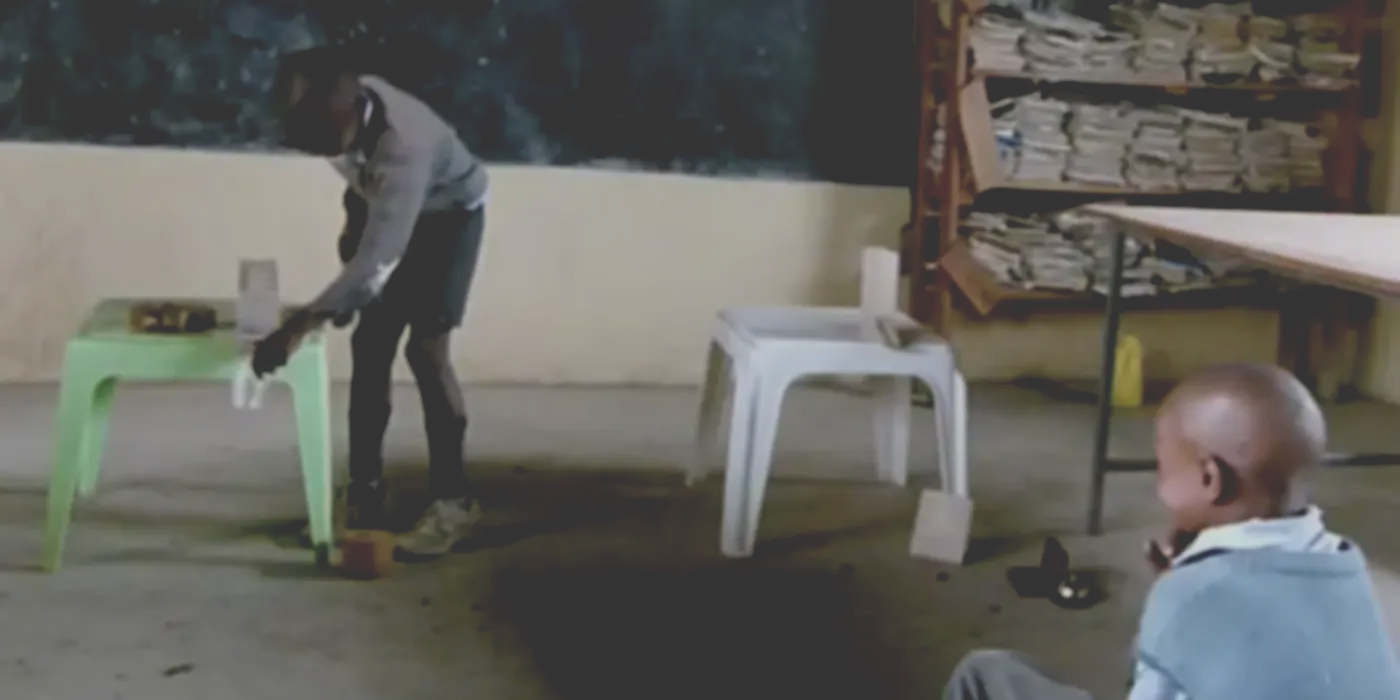
Kids Helping Kids Is Universal - But Cultures Help Differently
A simple game reveals a universal instinct in kids
A simple game reveals a universal instinct in kids


Researchers have discovered new evidence to suggest that the origins of mummification started in ancient Egypt 1,500 years earlier than previously thought.
Traditional theories on ancient Egyptian mummification suggest that in prehistory -- the Late Neolithic and Predynastic periods between c. 4500 and 3100 B.C. -- bodies were desiccated naturally through the action of the hot, dry desert sand.
Scientific evidence for the early use of resins in artificial mummification has, until now, been limited to isolated occurrences during the late Old Kingdom (c. 2200 BC). Their use became more apparent during the Middle Kingdom (c. 2000-1600 BC).

In quantitative genetics, genomic prediction is a statistical approach to predicting the value of an economically important trait in a plant, such as yield or disease resistance. The method works if the trait is heritable, as many traits tend to be, and can be performed early in the life cycle of the plant, helping reduce costs.
A research team led by plant geneticists at the University of California, Riverside and Huazhong Agricultural University, China, has used the method to predict the performance of hybrid rice (for example, the yield, growth-rate and disease resistance). The new technology could potentially revolutionize hybrid breeding in agriculture.

Scientists have identified a gene, Lhx1, that regulates sleep and wake rhythms.
The discovery of the role Lhx1 provides scientists with a potential therapeutic target to help night-shift workers or jet lagged travelers adjust to time differences more quickly. T
Every cell in the body has a "clock" – an abundance of proteins that dip or rise rhythmically over approximately 24 hours. The master clock responsible for establishing these cyclic circadian rhythms and keeping all the body's cells in sync is the suprachiasmatic nucleus (SCN), a small, densely packed region of about 20,000 neurons housed in the brain's hypothalamus.

A long lasting foreshock series controlled the rupture process of this year's great earthquake near Iquique in northern Chile, according to an international research team
The earthquake was heralded by a three quarter year long foreshock series of ever increasing magnitudes culminating in a Mw 6.7 event two weeks before the mainshock.
The mainshock (magnitude 8.2) finally broke, on April 1st, a central piece out of the most important seismic gap along the South American subduction zone. The study reveals that the Iquique earthquake occurred in a region where the two colliding tectonic plates where only partly locked.
Attention Deficit Hyperactivity Disorder (ADHD) is so commonly diagnosed – and overdiagnosed, and misdiagnosed – that it is hard to know what is based on evidence and what is based on teachers and concerned parents reacting to children that don't like to sit around and do nothing.
Actual clinical ADHD used to be rare but now it is a common problem of "pill culture" in psychiatry and the most common behavioral disorder label given to children in America, according to the Centers for Disease Control and Prevention.
Not that you want to do this but there is an easy way to speed up a woman's reproductive timing - just get a clock.
Not one of those modern digital things, an actual ticking clock will literally do it, says a paper upcoming in Human Nature.
It turns out that the tick-tock of the metaphor has some basis in reality. Or not. The authors also claim that poor women are more likely to be affected by this ticking sound. And the authors are psychologists so beware of mainstream media making grand biological claims based on this.

Interpreting snow depth records from past decades is as much art as science. Even into the 1990s, Soviets on Arctic drifting sea ice used meter sticks and handwritten logs to record snow depth. Today, things are a lot more accurate. Airborne measurements are validated by researchers on the ground using automated probes similar to a ski pole.
Accuracy is important. The public has become concerned about what is happening at the poles, and so research led by NASA and the University of Washington combined data collected by ice buoys and NASA aircraft with historic data from ice floes staffed by Soviet scientists since the late 1950s through the early 1990s to track changes over decades.
In the 1950s and '60s, economics in America really had a heyday. Tinkering is easy when the economy is good. By the 1970s, it was realized that economics truly was, as historian Thomas Carlyle labeled it in the 19th century, a "dismal science" - except leave off the science.

Materials scientists have long sought to form glass from pure, monoatomic metals and Scott X. Mao, a Professor of Mechanical Engineering and Materials Science at the University of Pittsburgh, and colleagues have done it.
How was it accomplished? It's long been conjectured that any metallic liquid can be vitrified into a glassy state provided that the cooling rate is sufficiently high. As is said about the original alchemy, turning lead into gold, it is now simply a matter of having enough energy. But this of vitrification single-element metallic liquids has needed more than just high energy.

Natural gas proliferation has been a huge boon for the environment - CO2 emissions have plummeted among the U.S. energy sector, primarily because coal emissions have been knocked back to early 1980s levels. But there are concerns by environmentalists that modern hydraulic fracturing ("fracking") has risks, and it has been implicated in everything from earthquakes to methane in water even to claims it will cause the earth to deflate.

Bacteria in the gut help the body to digest food, and stimulate the immune system. A PhD project at the National Food Institute, Technical University of Denmark, examines whether modulations of the gut bacterial composition affect intestinal integrity, i.e. the ability of the body to maintain a well-regulated barrier function that hinders bacteria from entering the body unintentionally.The human gut contains more than 100 trillion bacteria, which help the body digest food, produce vitamins protect against disease-provoking bacteria in food, and stimulate the immune system. All these bacteria are separated from the rest of the body by the intestinal wall, which functions as a selective barrier aimed at allowing only useful substances to pass and be absorbed in the body.
Researchers have create a molecule that can cause cancer cells to self-destruct by carrying sodium and chloride ions into the cells.Synthetic ion transporters have been created before, but this is the first time researchers have demonstrated how an influx of salt into a cell triggers cell death. These synthetic ion transporters could point the way to new anticancer drugs while also benefiting patients with cystic fibrosis.Study co-author Professor Philip Gale, of the University of Southampton, says, "This work shows how chloride transporters can work with sodium channels in cell membranes to cause an influx of salt into a cell. We found we can trigger cell death with salt."