Run and Tumble

Stephanie Pulford

Stephanie Pulford

As engineering grad student at UCDavis, I am interested in the common ground between biology and machinery. Incidentally, my column's title refers to the way bacteria navigate-- first they "run" full-steam in one direction, then they re-evaluate, an…
RSS Feed
Snarge on the Runway: Birdstrikes, Airplanes And Why We Don't Put Screens In Front Of Engines

Snarge on the Runway: Birdstrikes, Airplanes And Why We Don't Put Screens In Front Of Engines

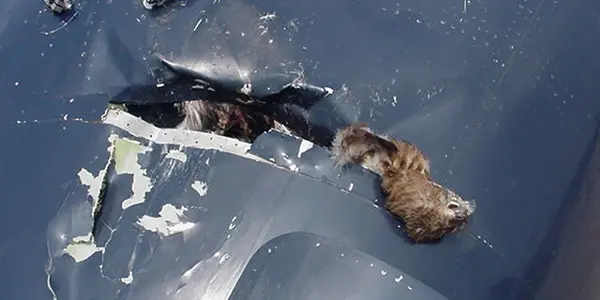
Captain Chesley "Sully" Sullenberger's heroic Hudson River landing was a good reminder that a twenty pound bird at 200 miles per hour is not so different from a bowling ball shot from a cannon. The results range from minor dents to Flight 1549's disabled engines to the damage below: double-lapped, 1/16” reinforced aluminum totally blown through, and feathers clear to the cockpit.

Nature Loves A Straight Line: Geodesics in Biology

Nature Loves A Straight Line: Geodesics in Biology

My elementary school art teacher used to discourage the use of rulers, claiming that “there are no straight lines in nature”.  Mr. Dugan, your own cells are here to tell you it’s not true.  Systems of taut fibers and light struts— as straight as the bars and chains of a swingset—are omnipresent in biological forms.These organic analogs to popsicle sticks and rubber bands often occur in interwoven networks reminiscent of the geodesic domes that Buckminster Fuller promoted in the 1950’s.  Since form follows function, it’s hardly surprising that these natural geodesics offer the same benefits in nature that they do in architecture: high strength, dynamic stability, and material frugality.