Run and Tumble

Stephanie Pulford

Stephanie Pulford

As engineering grad student at UCDavis, I am interested in the common ground between biology and machinery. Incidentally, my column's title refers to the way bacteria navigate-- first they "run" full-steam in one direction, then they re-evaluate, an…
RSS Feed
Singing Cicadas: Now I Know How John Bonham’s Neighbors Felt

Singing Cicadas: Now I Know How John Bonham’s Neighbors Felt

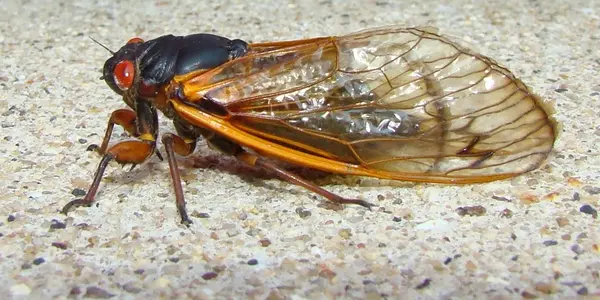
Welcome to what has become Inadvertent Cicada Week in this column.  Obviously, I'm fascinated by them.  This started around the summer of 2003, when I was completely addicted to a certain farm-simulator game for the Nintendo SP.  During virtual summer on my virtual farm the game's music was overpowered by a jarring REEEREEEREEEREEEEEEE sound, intended to represent Japan’s singing cicadas.  When I finally managed to turn my Gameboy off to get some good ol’ grad student day-sleep in the relative stillness of central Pennsylvania, I found that the REEEREEEEEEEE noise had followed me.

Nanofabrication Eats Bugs Like You For Breakfast

Nanofabrication Eats Bugs Like You For Breakfast

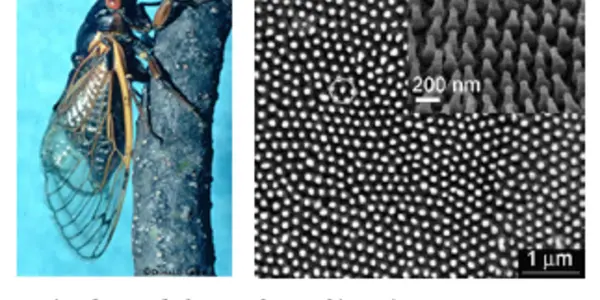
Cicadas might have used their wily prime number scheme to dodge 2 and 4 year predators, but what about a predator with continual exponential growth? The microcircuitry industry has reliably doubled the density of transistors on a chip every 2 years, as observed by Gordon E. Moore in 1965. This exponential density growth trend is known as Moore’s law, and satisfying it requires that nanofabrication techniques are constantly embraced, devoured, then cast aside. 

Math Separates Magicicadas from Regularcicadas

Math Separates Magicicadas from Regularcicadas

Cicadas are nature’s candy—fat meaty bugs straight out of a Temple of Doom buffet.  Though most cicadas worldwide live typical insect lives, the Magicicada genus in the eastern US has a special power move to counterbalance its deliciousness: periodicity. 

The Real Reason Gnomes Don't Wear Bras

The Real Reason Gnomes Don't Wear Bras

First published in Dutch in 1976, Gnomes by Wil Huygens and Rien Poortlivet remains the definitive tome on these reticent woodland denizens.  A classic of fiction science, this lavishly detailed field notebook of the physiology, habits, and habitat of gnomes as observed over 20 years of firsthand observation.  The physician-illustrator team wastes no time in addressing questions of physiological scale:

Walk It Off, Motor Proteins!

Walk It Off, Motor Proteins!

Mechanically, walking is a complicated feat.  We take for granted that a carefree cascade of one-footed falls adds up to steady rapid locomotion.Replicating a dynamically stable foot-over-foot walk has become a holy grail for roboticists—remember the hype about ASIMO? Researchers at Penn State are taking a shortcut to nanoscale bipedal drones thanks to to motor proteins, the walking caravan molecules within our cells.

Autosub - The Yellow Submarine in Antarctica

Autosub - The Yellow Submarine in Antarctica

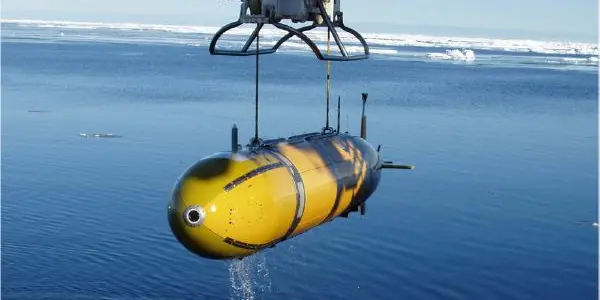
The Antarctic landmass is losing its frontier status.  Housing thousands of decreasingly rugged inhabitants in heated, internet-ready comfort, it’s been so well-mapped that we even know where to find the donuts.  Underwater, however, is a different story.  Harsh temperatures, currents, pressure and ice surfaces have kept the submerged landscapes of glaciers inaccessible to all but penguins and Morgan Freeman’s voiceover.A joint US-British team has nominated a new Ernest Shackleford to explore the uncharted Antarctic underwater.  But this time around, he’s a robot.

When Micro-Cyborgs Attack!

When Micro-Cyborgs Attack!

Half-biological and half-synthetic, an army of thousands of wrecking balls are contained within Dr. Metin Sitti's Carnegie Mellon laboratory.  Once incited, they keep moving to the death.  They run on sugar.  And they can all be taken down by penicillin. Sitti’s army is a cadre of Serratia marcensens bacteria-coated polystyrene microbeads, propelled by the bacteria’s innate restlessness.  To Sitti, recruiting bacteria to form the propulsion side of a microprojectile is more than a fun day in the lab.  These tiny living robots are the foundation for the future of biointegrated micromachines.

Building Frankentissue With Inside-Out Cells

Building Frankentissue With Inside-Out Cells

 Cells keep up with the Joneses.  The peer pressure of signals from complementary cells tells a stem cell how and when to differentiate and grow. Dr. Carolyn Bertozzi and her team at Lawrence Berkeley laboratory are using molecular self-organization tendencies to give cells the orderly neighborhoods they desire.   However, this microscopic community has an unusual dress code-- the cells display DNA on the outside of their membranes, which allows them to keep each other in line.

To Nap Or Not To Nap?

To Nap Or Not To Nap?

The latest news on napping would have you believe that it’s a harbinger of doom.  The Research Institute at the California Pacific Medical center studied communities of elderly women and linked napping and excess sleep in general to increased death from anything. By this logic, the entire nap-happy nation of Spain should watch out for falling pianos.

“X-ray Vision Carrots” vs. McDonald’s Carrots: Branding Vegetables For Kids

“X-ray Vision Carrots” vs. McDonald’s Carrots: Branding Vegetables For Kids

It’s been a while since Popeye taught us to eat our spinach; vegetables are due for a makeover.  “Whatever sparks their imagination seems to spark their appetite,” says Cornell researcher Colin Payne of a new study led by Brian Wansink of Cornell’s Food and Branding lab.  This research shows that children eat significantly more vegetables when their food has been excitingly renamed.

Everquest 2, Twitter, Quizilla: Information Cornucopia For Behavioral Science

Everquest 2, Twitter, Quizilla: Information Cornucopia For Behavioral Science

Internet phenomena has long been used by advertisers to gather data, form hypotheses, and test them in the form of ad serving—science is starting to get smart to the data-gathering possibilities spawned by voluntary internet activity. The most recent headline to this effect is Everquest 2 research at U of Minnesota. Jaideep Srivastava, et al are using Everquest chat logs for social network analysis, similar to the way community interactions among flesh-and-blood people.