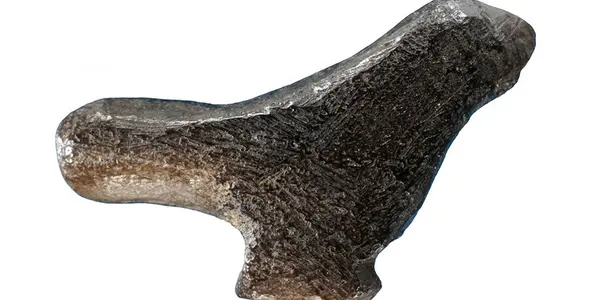
In 53 B.C., a member of Rome's First Triumverate, Marcus Licinius Crassus, wanted to show himself the equal of fellow rulers Caesar And Pompey. Both those generals were spectacular in the field and Pompey had married Caesar's daughter, which made them even closer,(1) so Crassus decided to seek fame and (an even greater) fortune by violating existing treaties and invading Parthia/Persia (what modern rulers call Iran) over the objections of the Senate.
He did not achieve greater glory. An Arab chieftain instead gave him directions that led them into the desert and they were eventually cut down by mounted archers and heavy cavalry.
That ended his story but some argue that was not the end of the Romans in the east. It may instead have been the beginning of a Lost Roman Legion in China.
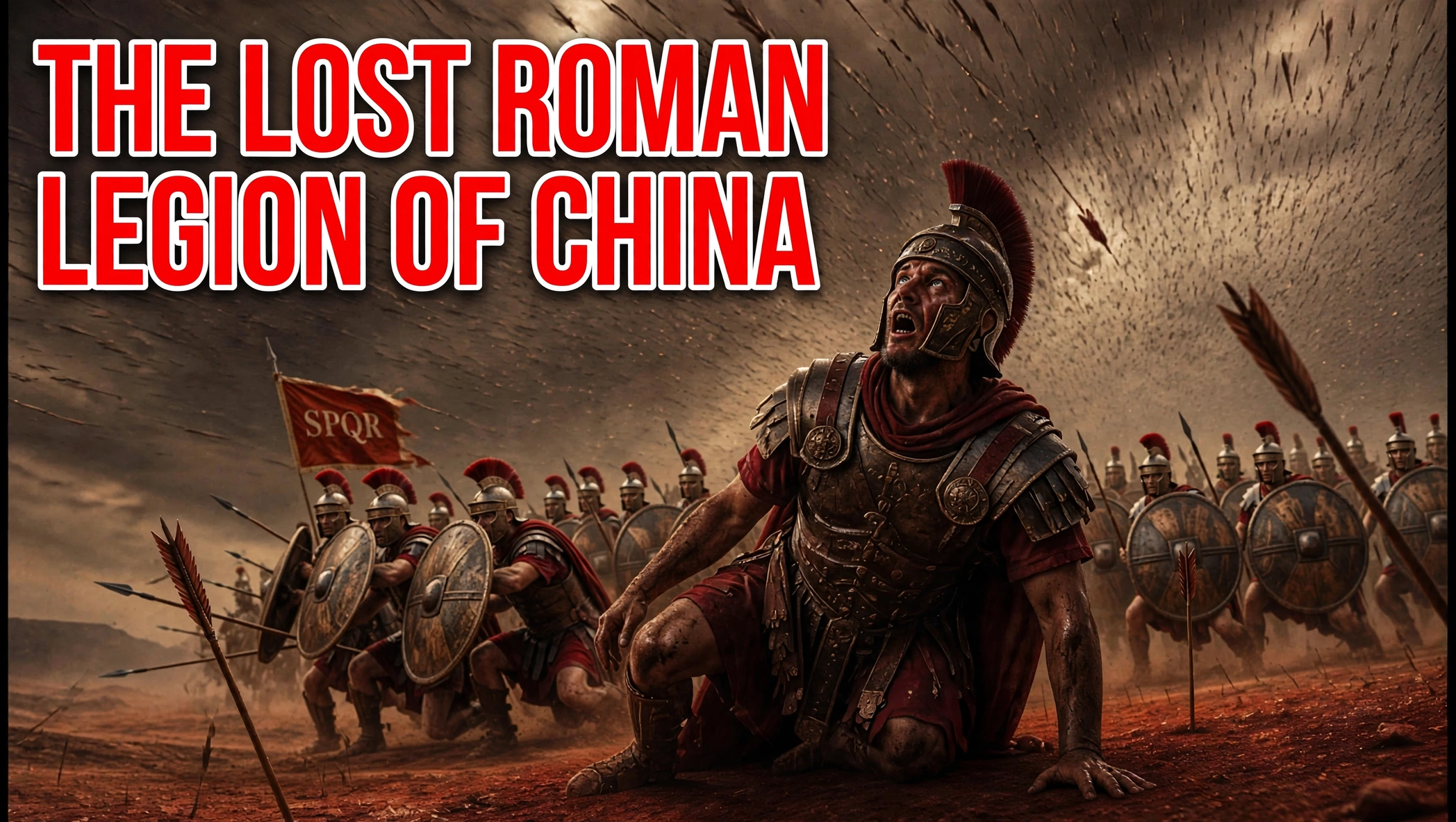
Image using Grok and MetaAI. The spears have six fingers, that's always a give-away.
Asians knew of Romans and had their own terms for those exotic traders. "Liqian" is a name associated with the far west. And their description of a battle there and a tactical formation used by an enemy matched the tetsudo ("tortoise") of Rome; large rectangular shields deployed in unison to create a wall. The defenders were forced to surrender but Roman pottery from ancient times has been unearthed and descendants still claim ancestry from these Romans. Many have physical featutes that look more European than Asian.
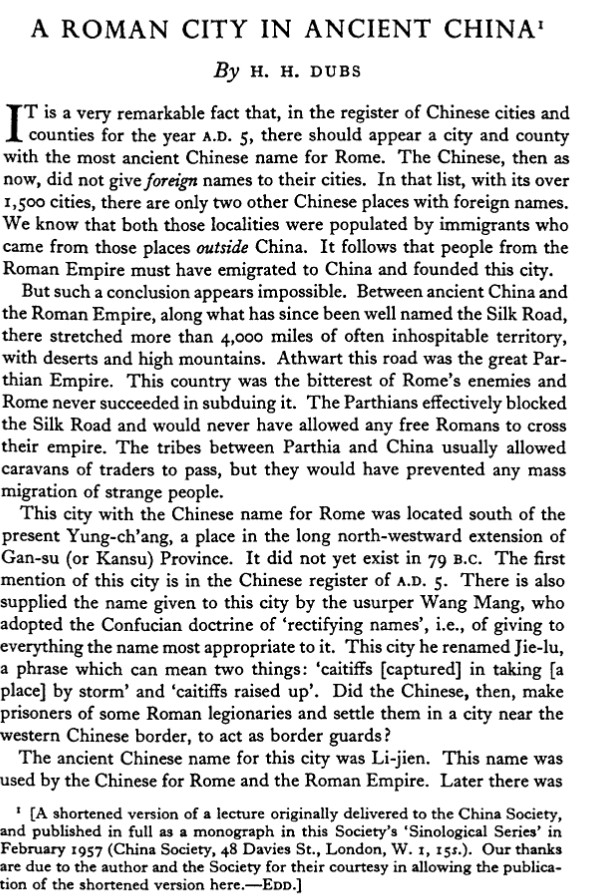
Are there claims real? They are as real as any native claims. DNA tests can only show results from a test population against who may have simply moved to an area, that is why Native Americans rightly avoid biology and say heritage is only acceptance. They have a point. Science is not relevant to identity. If DNA testing is the standard, there was no Lost Roman Legion that settled there. Yet Chinese records write that the captured soldiers using the strange defensive formation were mercenaries, so they certainly could have been sold to the Han by the Iranians.
The more likely explanation is that trade had existed for a long time, the trading route was called the Silk Road because of that stuff from the butts of Chinese worms. Some traders likely did settle there so artifacts were likely the result of normal trade. Still, this belief of a Lost Roman Legion that went to China has been around for a lot longer than 70 years, and fun stories are written in the margins. It's certainly a key tourist attraction and like King Arthur in Glastonbury, you sell what people want to buy. Which means the Lost Roman Legion is there to stay now whether they ever were originally or not.
Citation: Zhou R, An L, Wang X, Shao W, Lin G, Yu W, Yi L, Xu S, Xu J, Xie X. Testing the hypothesis of an ancient Roman soldier origin of the Liqian people in northwest China: a Y-chromosome perspective. J Hum Genet. 2007;52(7):584-591. doi: 10.1007/s10038-007-0155-0. Epub 2007 Jun 20. PMID: 17579807.
NOTE:
(1) Temporarily. They eventually had a falling out. When Caesar was returning from his holdings north of Rome, the Senate ordered him to disband his army and enter the city as a lone citizen. He knew what that meant; Pompey was seizing power and wanted to charge him with treason. He did not comply, he instead made the decision to confront Pompey and the Senate. He reportedly said "Alea iacta est" ("the die is cast) and both that and 'crossing the Rubicon' are part of the popular lexicon while no one talks about Crassus. Yet had he stayed he could have watched Caesar and Pompey fight it out and then taken power from both. Instead, Caesar routed Pompey and the Republic became an Empire.